3. The Turning Point in the War and Asia
Although the Japanese military had achieved a series of victories in the early stages of the war, it suffered a defeat at the Battle of Midway in June 1942. In February 1943, Japan was forced to withdraw from Guadalcanal and retreat along the front lines. In response to the Allied counteroffensive, Japan revised its strategy and adopted the “Outline to Guide Greater East Asia Policy.” It recognized the independence of the Philippines and Burma among its occupied territories and, in October, it convened the Greater East Asia Conference to seek the cooperation of Asian nations in the war effort.
[Document 28] Shift in Policy Toward China
“Part 1: Reference Materials—Cabinet Preparatory Documents / 7, Fundamental Guidelines for Dealing with China in Order to Complete the Great East Asian War, December 21, Shōwa 17 [1942]” (Ref. C12120194300) Images 1–4
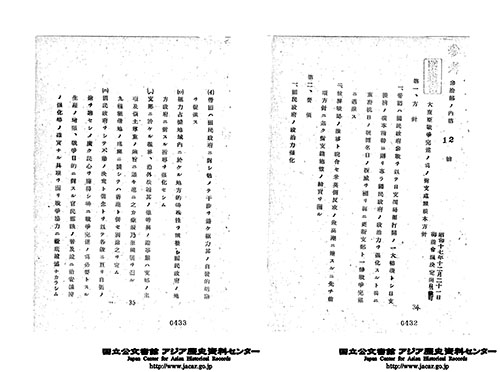
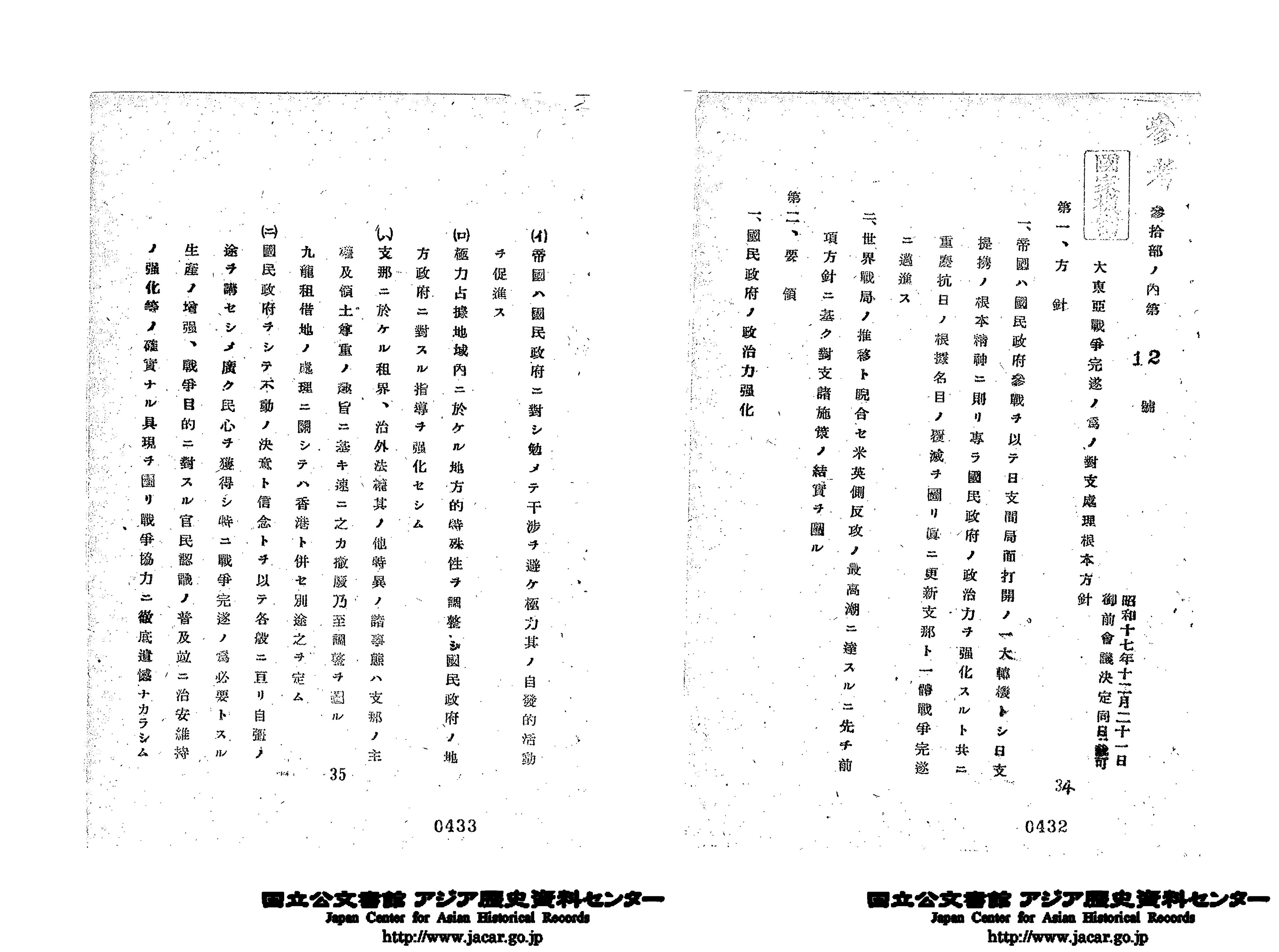
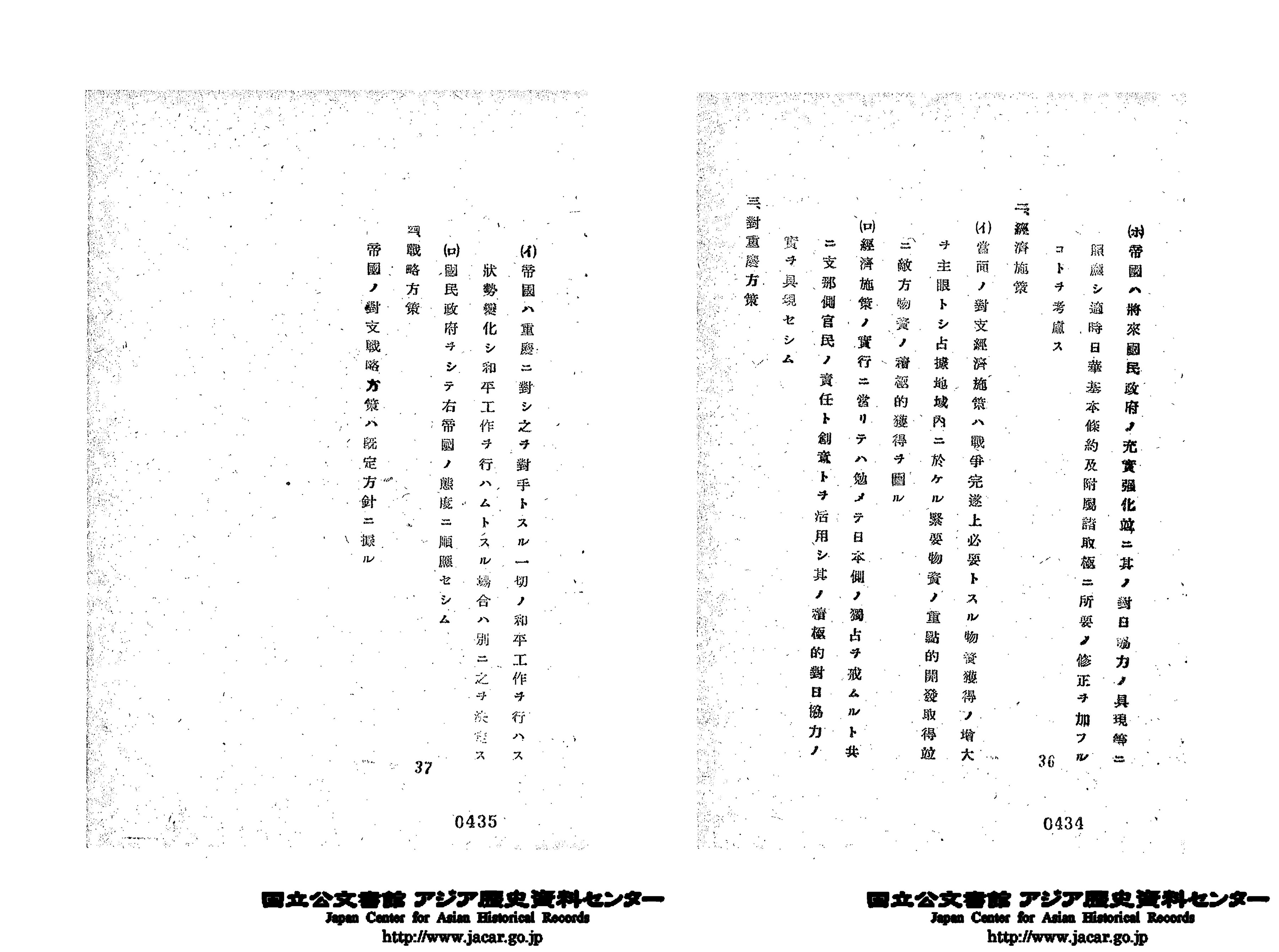
On December 21, 1942, a new policy toward China, titled “Fundamental Guidelines for Dealing with China in Order to Complete the Great East Asian War,” was decided at an Imperial Conference. It sought to recognize the autonomy and freedom of the Nationalist Government in Nanjing (Wang Jingwei regime) and to take measures to restore its sovereignty, such as the abolition of extraterritorial rights.
[Document 29] Policy on Burmese Independence
“3. Some Considerations Regarding the Guiding Principles for the Independence of Burma (Ministry of Foreign Affairs, Political Affairs Bureau, Fifth Division)” (Ref. B02032943900), Image 2
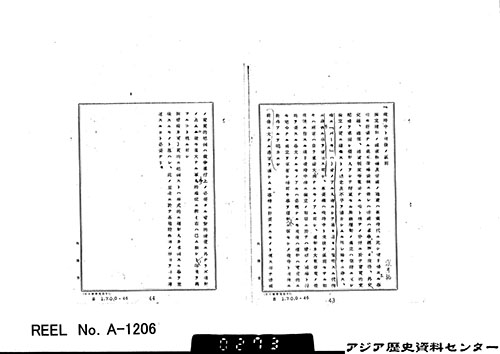
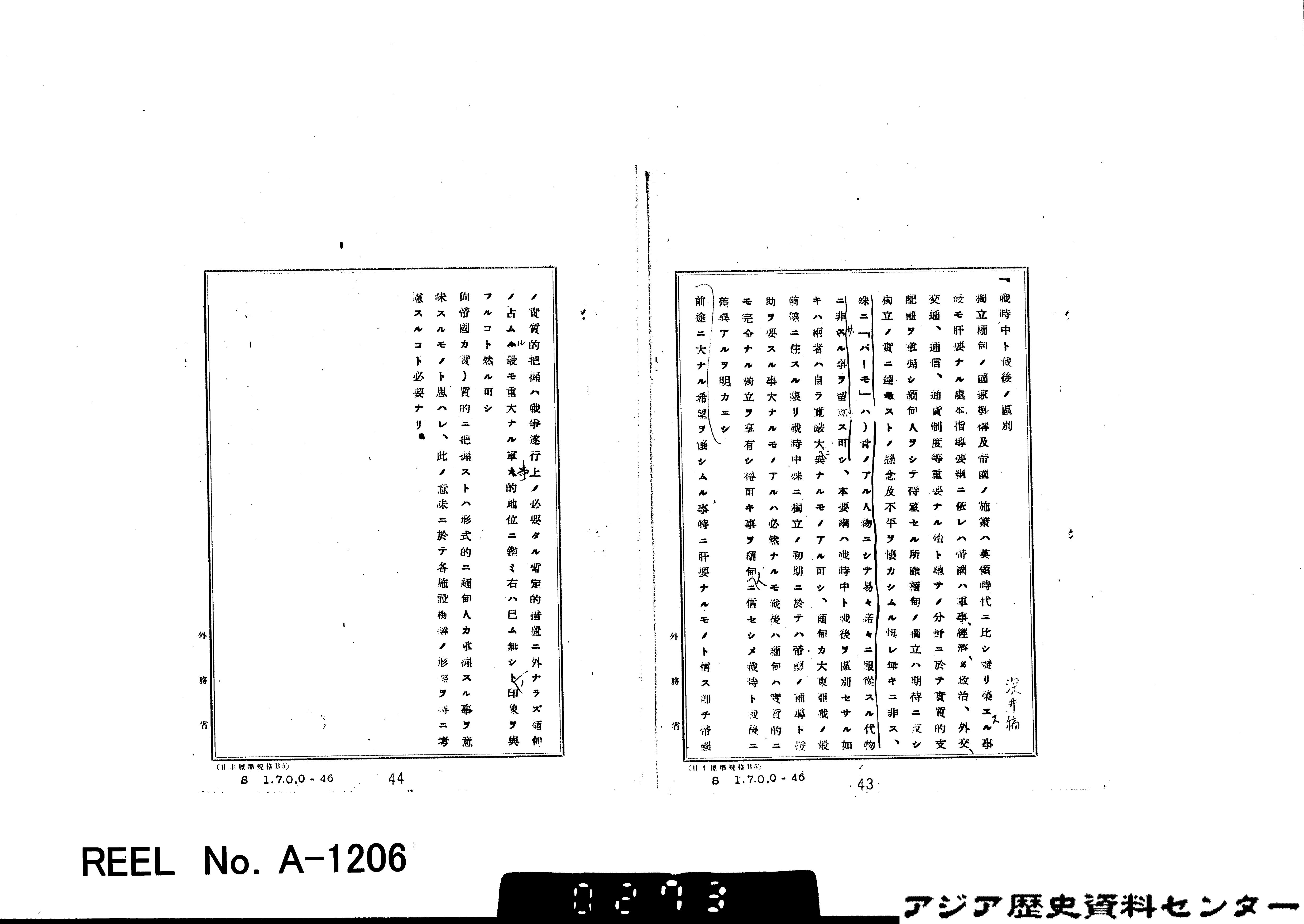
On March 10, 1943, the “Guiding Principles for the Independence of Burma” (Ref. C14060855000) was adopted with a view toward Burmese independence. This document contains the Ministry of Foreign Affairs’ Political Affairs Bureau’s analysis of that outline and is dated February 24. It contains statements such as needing to give the impression that Japan’s de facto control over Burma would be unavoidable as a temporary wartime measure, and that it should be borne in mind that the sitting prime minister Ba Maw was a “staunch person and not someone who would simply obey without question.”
Prior to the outbreak of war, the Philippines was scheduled to gain independence from the United States, and Burma was slated to become a British self-governing colony.
[Documents 30 and 31] Ba Maw’s Visit to Japan
“Shashin Shūhō No. 265” (Ref. A06031086000), 1st image; “Shashin Shūhō No. 266” (Ref. A06031086100), 4th image
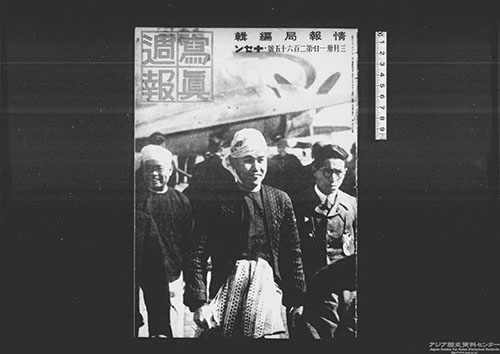
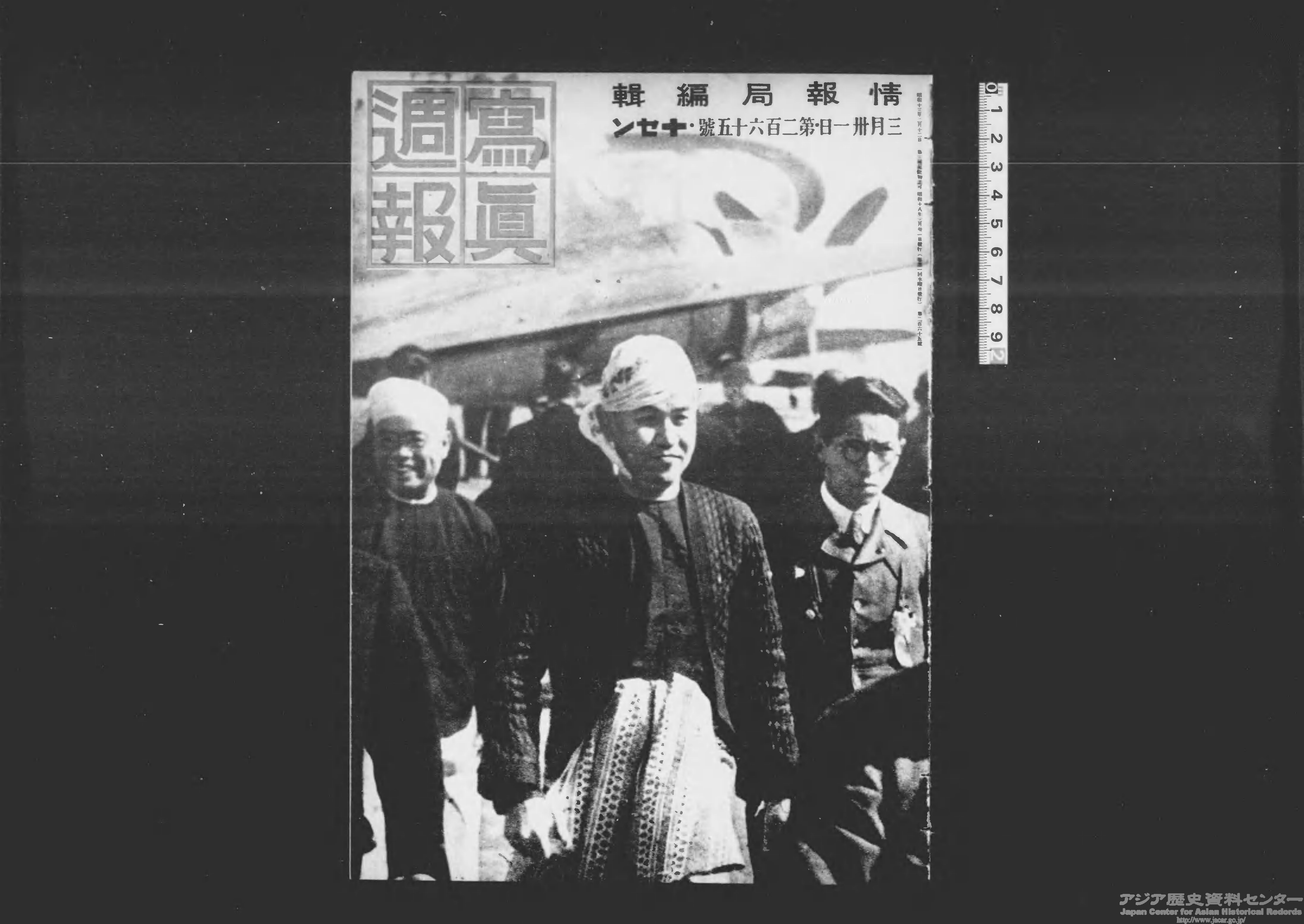
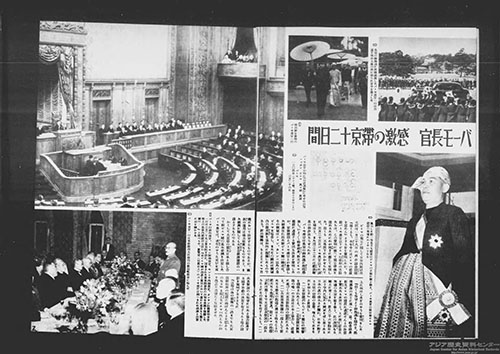
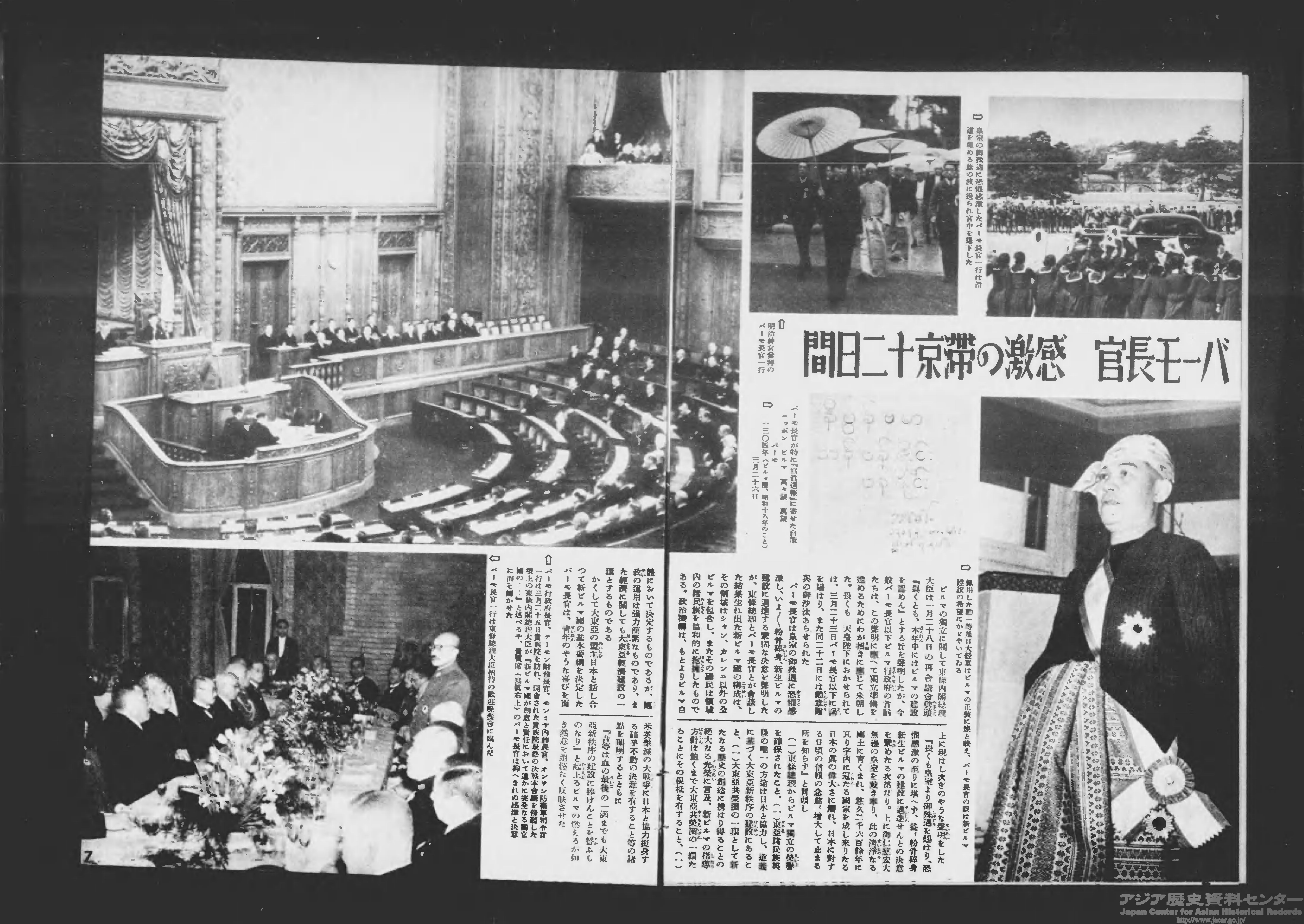
In March 1943, Burmese Minister Ba Maw visited Japan to discuss Burmese independence. Shashin Shūhō reported this on the cover of its March 31 issue and in the pages of its April 7 issue.
[Document 32] Outline to Guide Greater East Asia Policy
“May 31, Shōwa 18: Outline to Guide Greater East Asia Policy” (Ref. C12120280400), Images 1–4
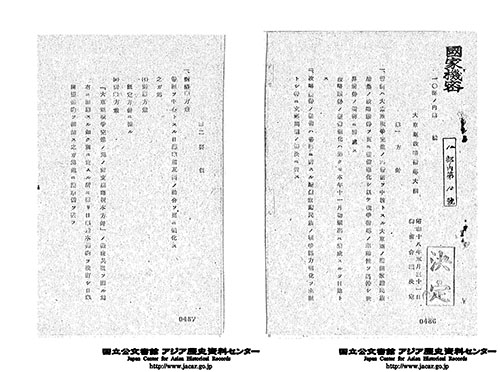
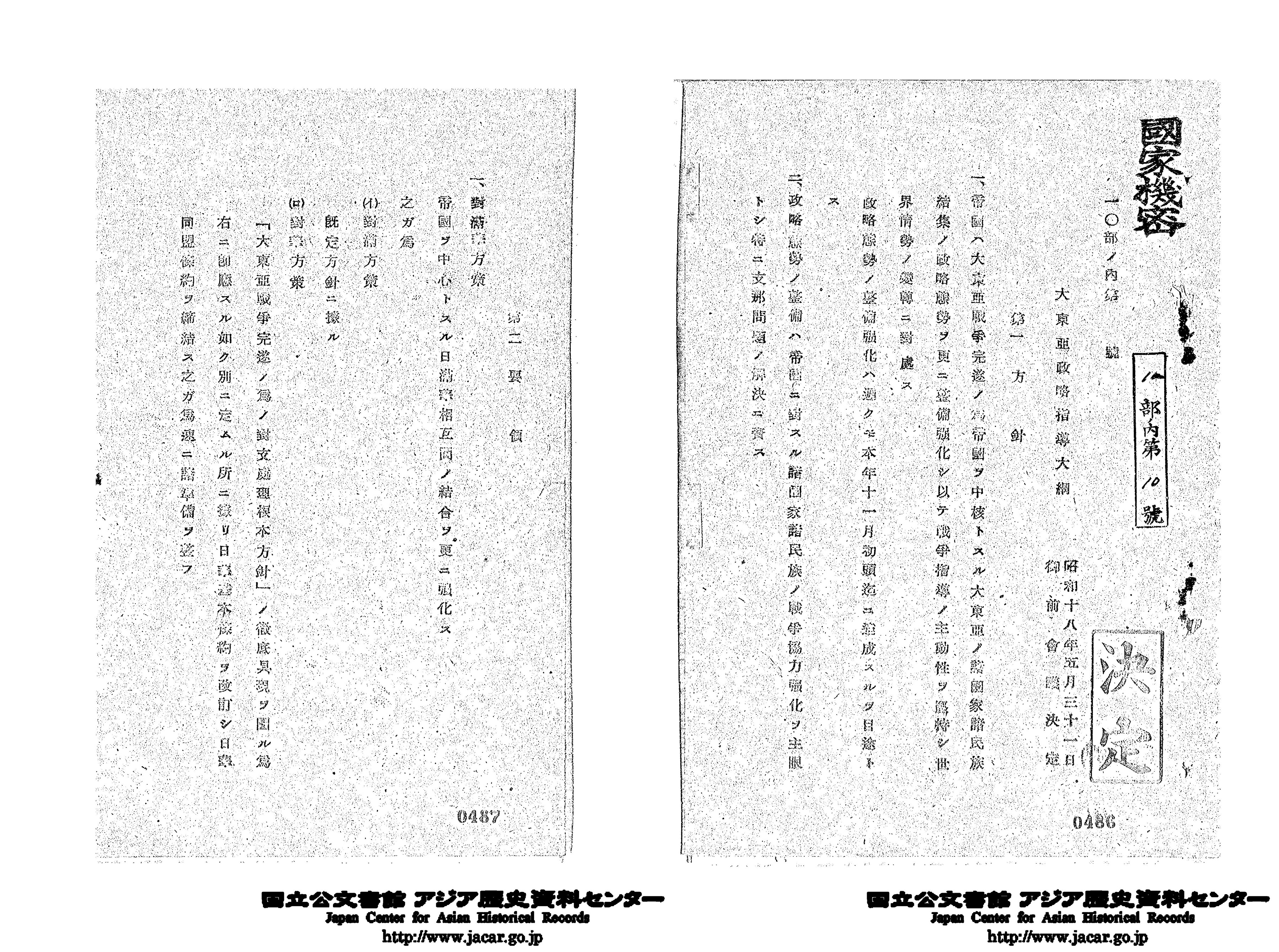
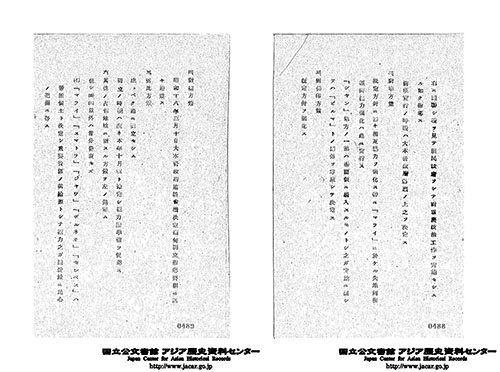
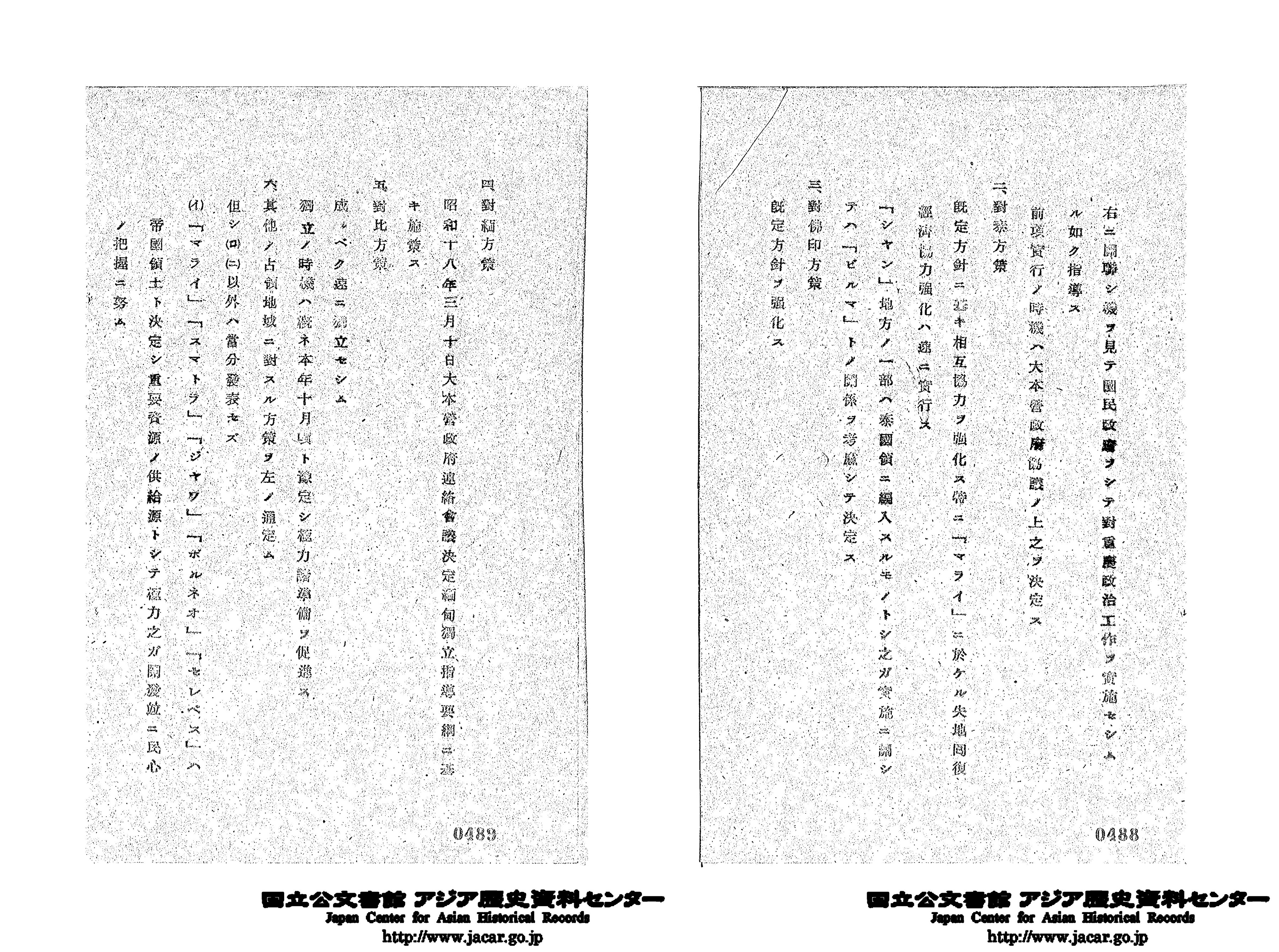
On May 31, 1943, the “Outline to Guide Greater East Asia Policy” were adopted at an Imperial Conference. It set forth a policy to establish and strengthen a “strategic framework for uniting the nations and peoples of the Greater East Asia under the leadership of the Empire.”
The document states that the goal was to conclude an alliance treaty with the Wang Jingwei regime, that Burma and the Philippines would be granted independence, and that Malaya, Sumatra, Java, Borneo, and Celebes would become imperial territories (Prime Minister Kuniaki Koiso later declared in September 1944 that Indonesia’s future independence would be recognized).
[Document 33] Situation in the Philippines
“Part 3: Reference Materials for Question and Answer Sessions—For the Chief-of-Staff’s Reference / 16, General Situation in the Philippine Islands” (Ref. C12120195400) Images 1–2
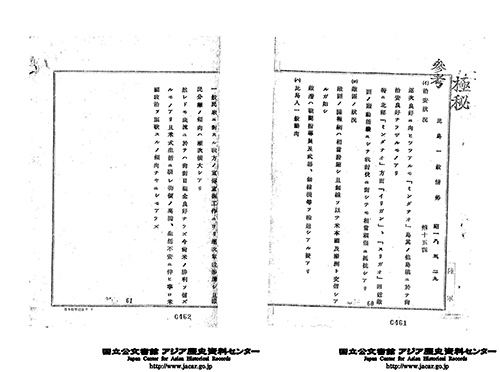
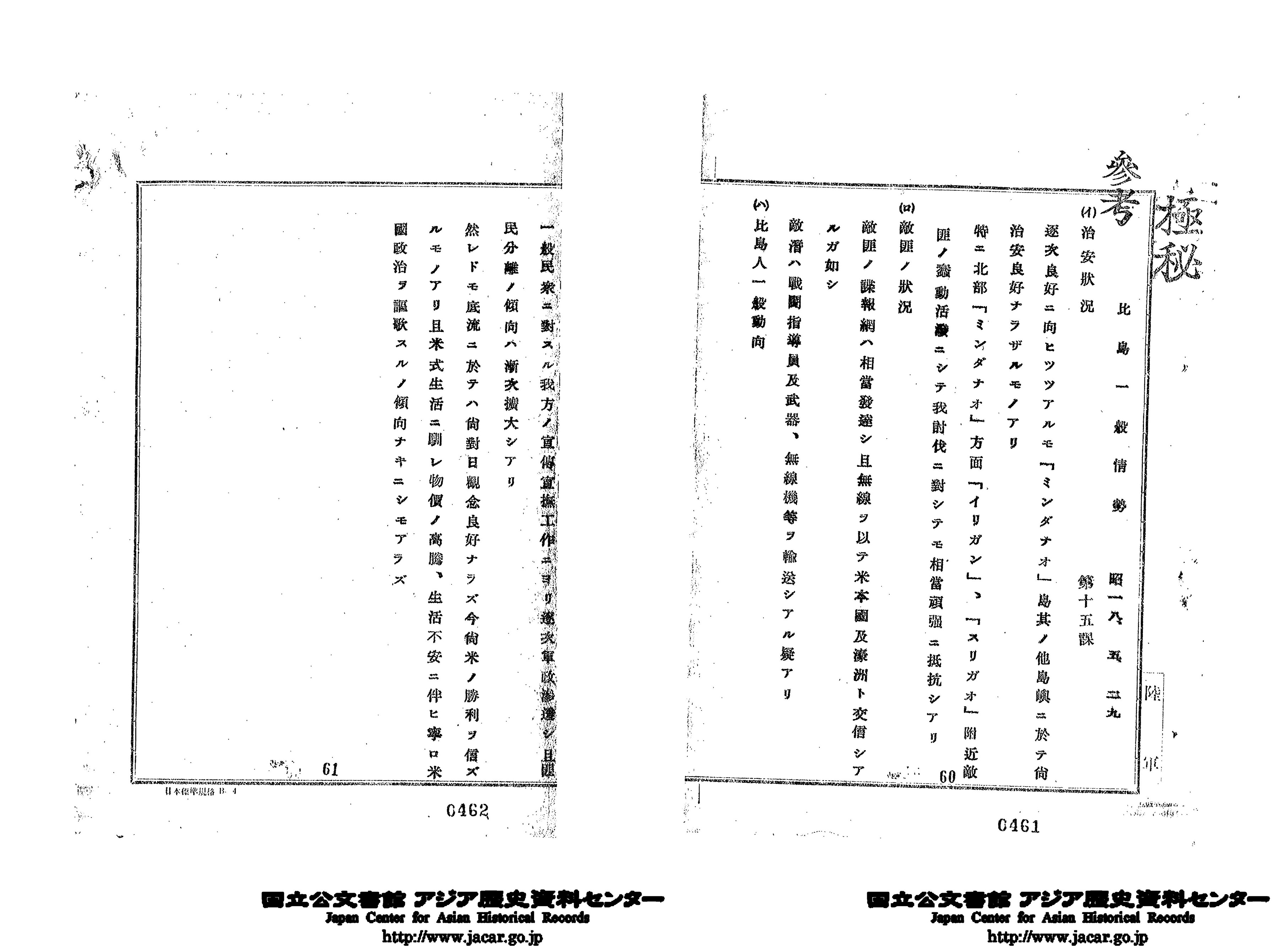
This document summarizes the situation in the Philippines and was used as reference material for the question-and-answer session with the Chief of the Army General Staff during the Imperial Conference on May 31, at which the “Outline to Guide Greater East Asia Policy” was adopted. It includes remarks about “resistance by enemy bandits” (guerrilla resistance was continuing in the Philippines) and on how “underlying public sentiment toward Japan remains unfavorable, and there are still those who believe in an American victory.”
Regarding Philippine independence, the “Guidelines for Philippine Independence” (Ref. C12120219900) were adopted on June 26.
[Documents 34 and 35] News reports on the declarations of independence in Burma and the Philippines
“Shashin Shūhō, Issue No. 286” (Ref. A06031088100), Images 2–3
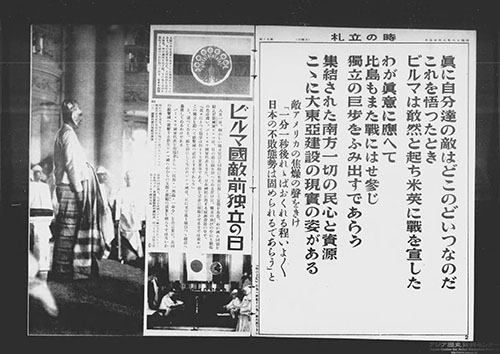
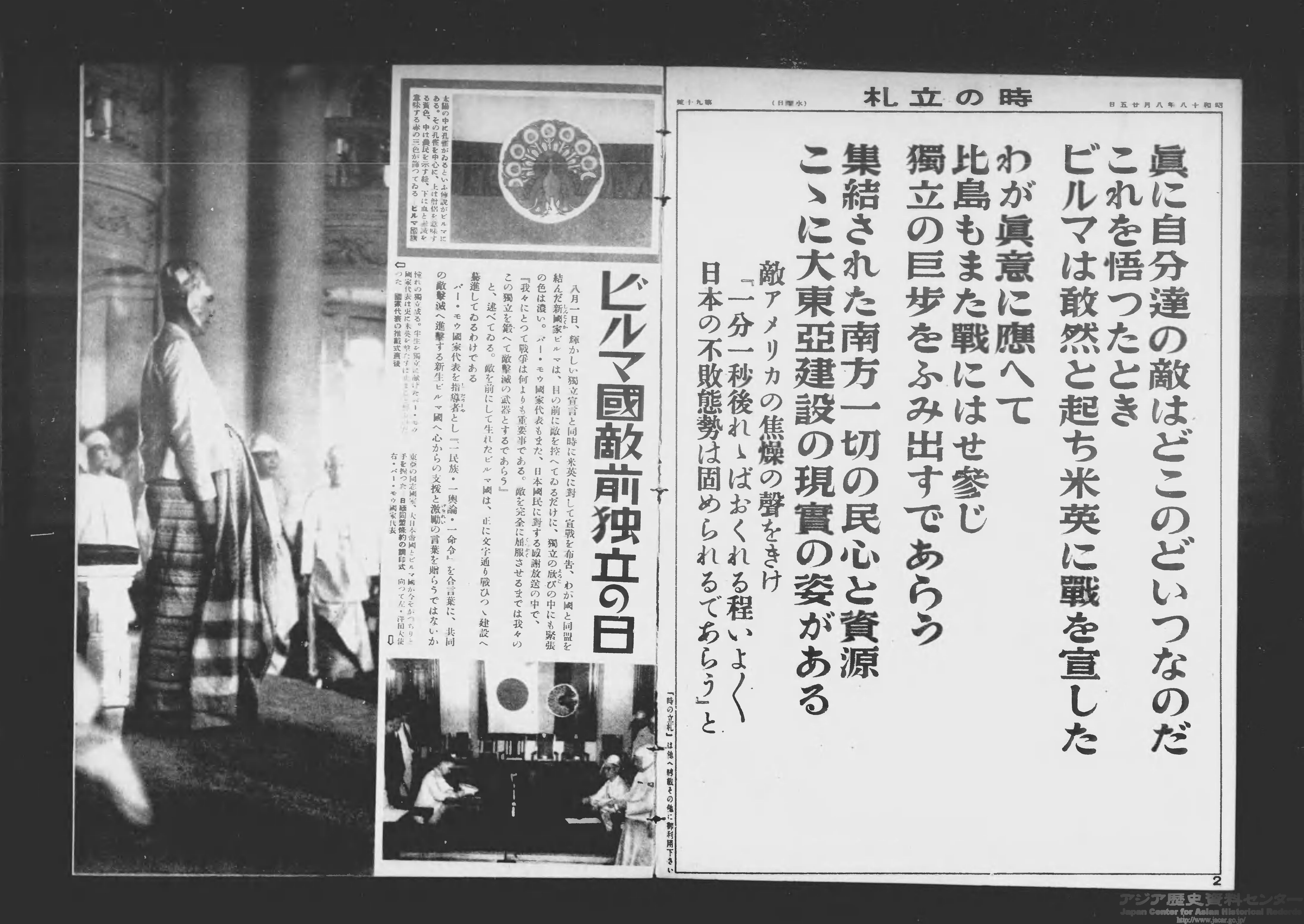
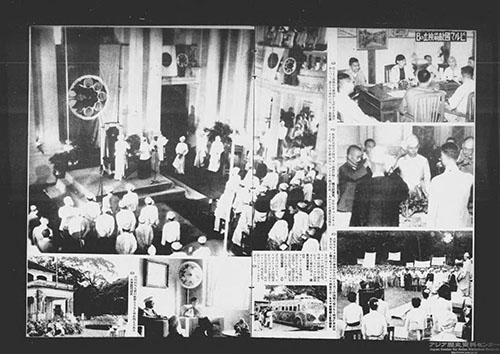
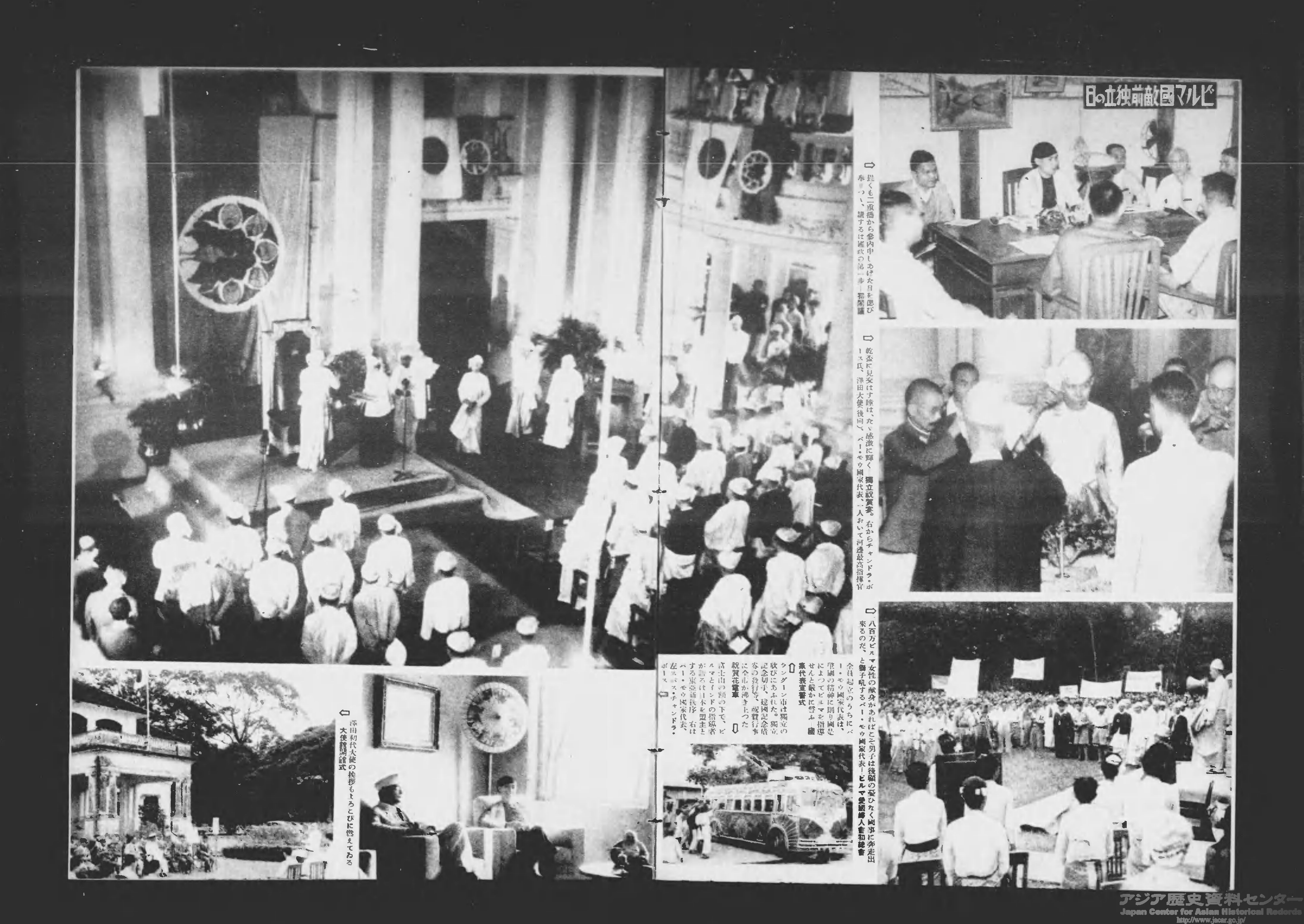
“Shashin Shūhō, Issue No. 295” (Ref. A06031089000), Images 1 and 3
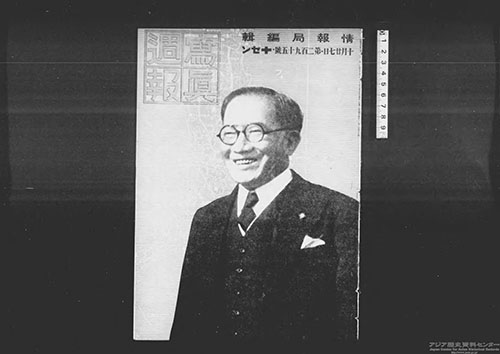
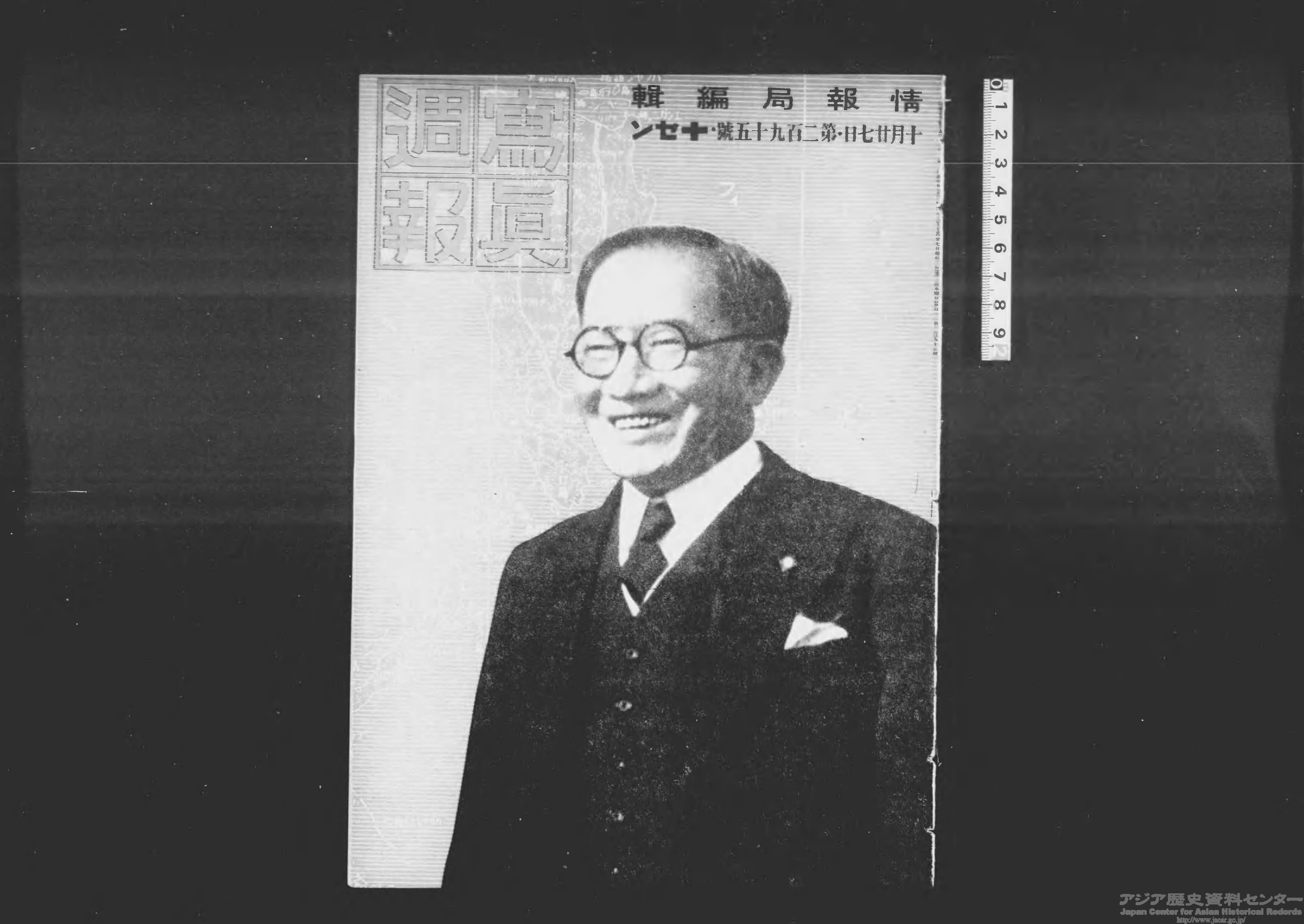
In Burma, independence was declared on August 1 with Ba Maw as head of state. Shashin Shūhō reported on this under the title “The Day Burma Declared Independence in the Face of Enemy Nations” (August 25, 1943 issue).
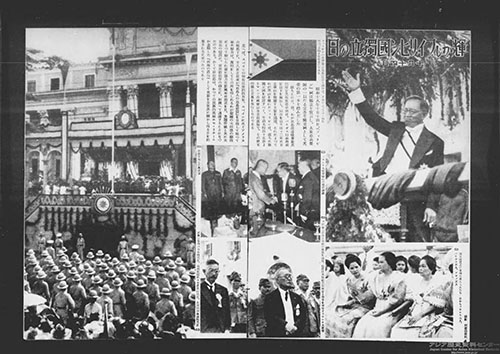
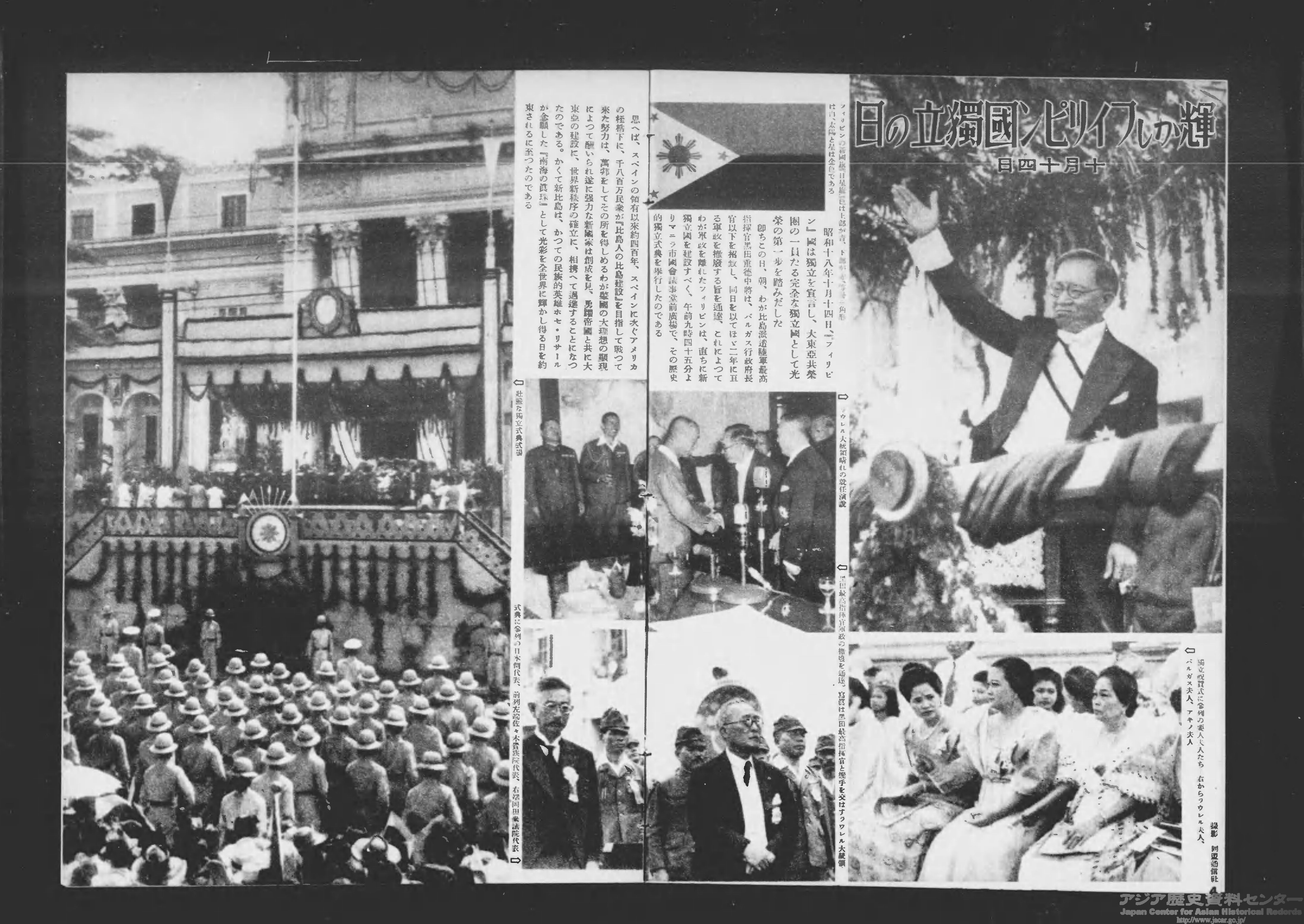
Independence was declared in the Philippines on October 14. The cover of the October 27 issue of Shashin Shūhō featured President Jose P. Laurel, and the issue included an article titled “The Glorious Day of Philippine Independence.”
[Documents 36 and 37] Bose and the Provisional Government of Free India
“Shashin Shūhō No. 297” (Ref. A06031089200), 4th image; “Shashin Shūhō No. 298” (Ref. A06031089300), 1st image
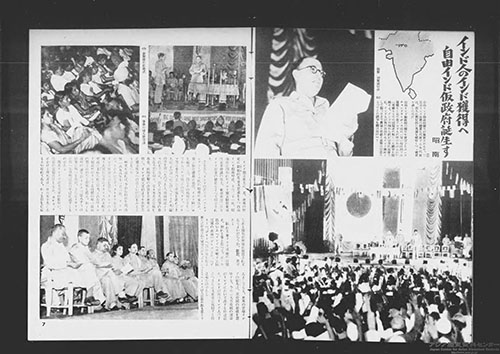
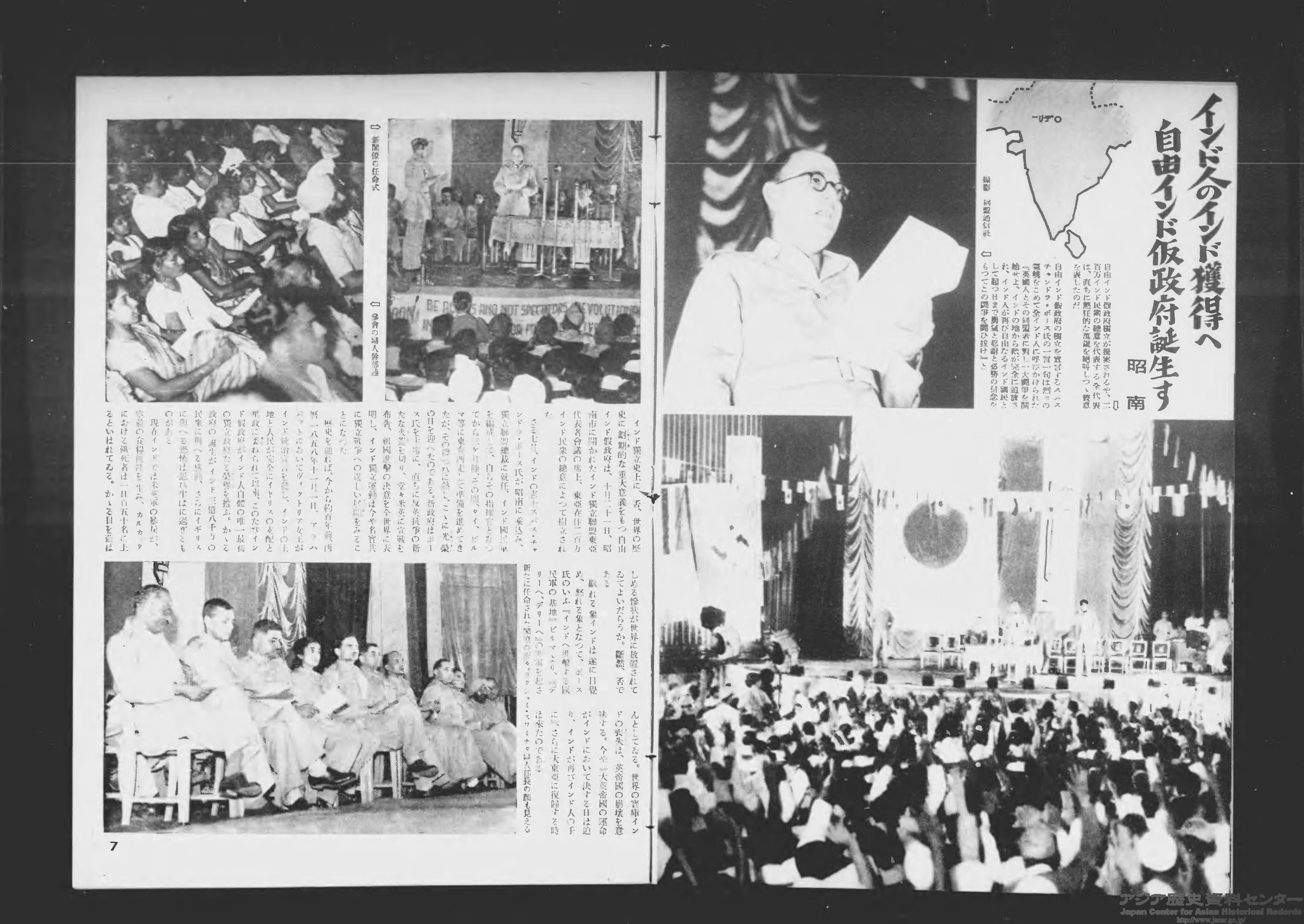
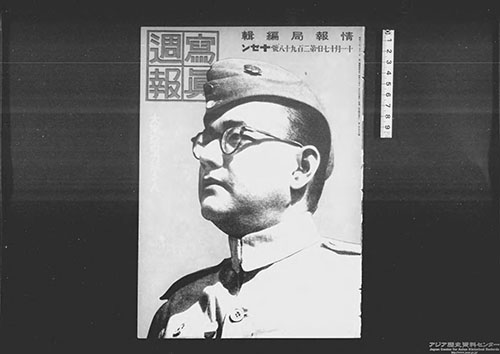
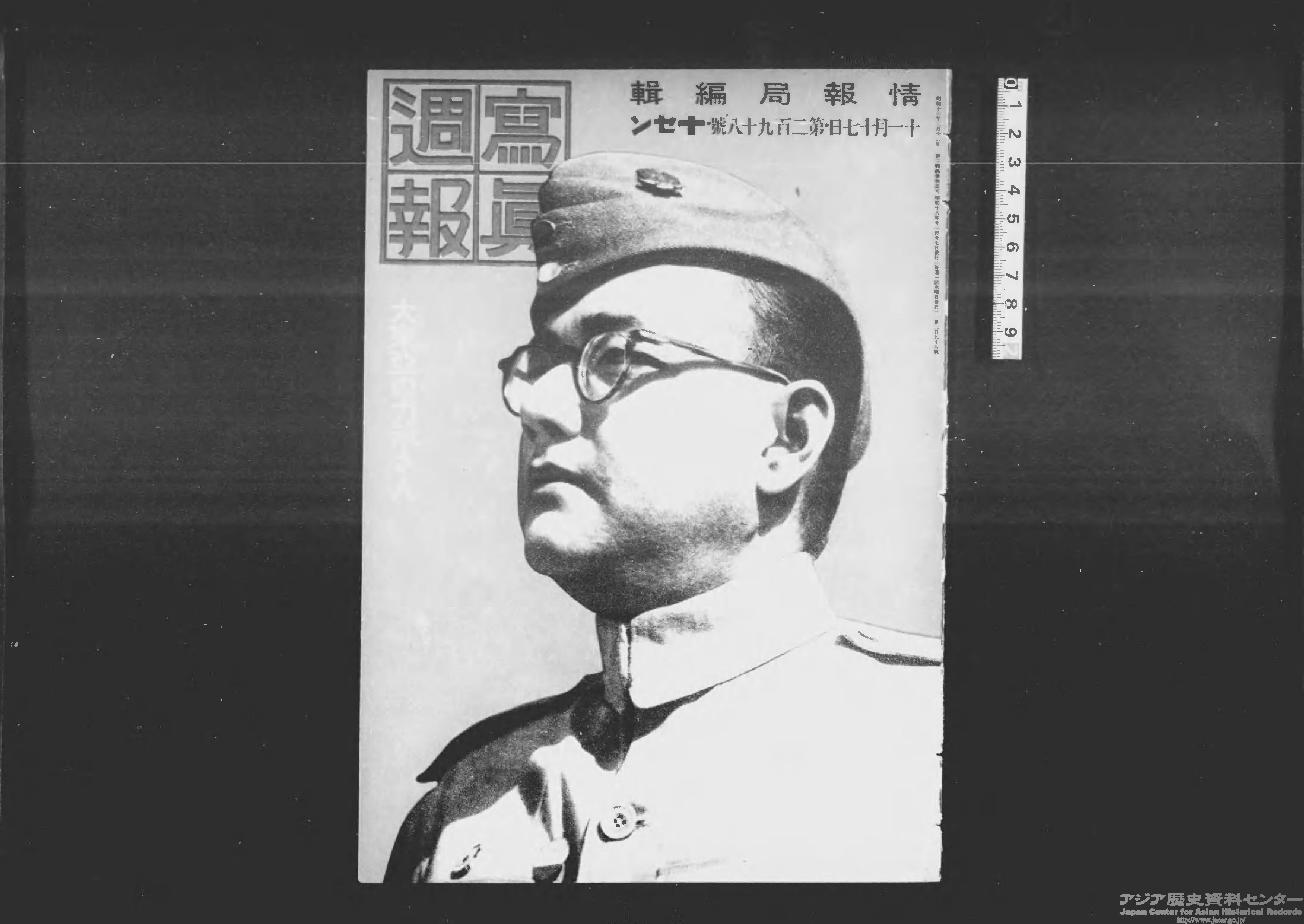
On October 21, 1943, in Japanese-occupied Singapore, the establishment of the Provisional Government of Free India was declared under the leadership of Indian independence activist Subhas Chandra Bose. Shashin Shūhō covered this event in its November 10, 1943, issue, and the November 17 issue featured a portrait of Bose on its cover.
[Document 38] The Greater East Asia Conference as Reported by Shashin Shūhō
“Shashin Shūhō No. 298” (Ref. A06031089300), Images 2–5
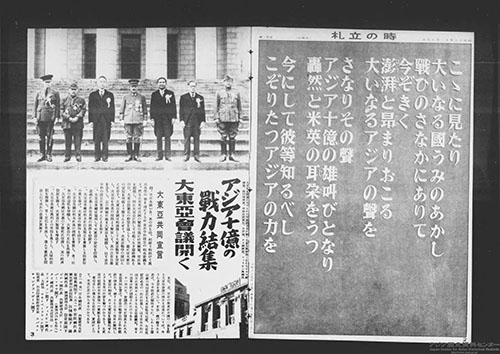
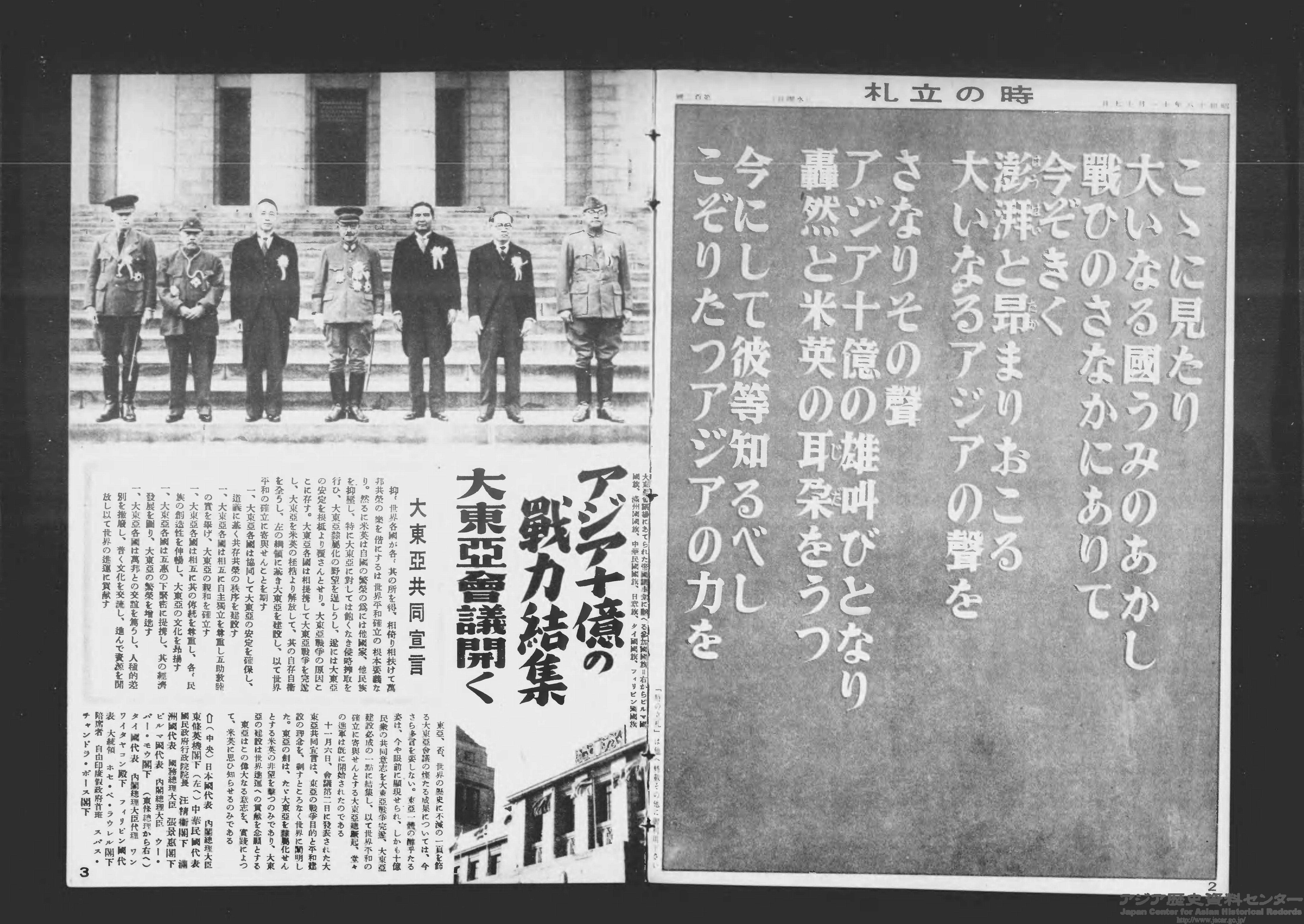
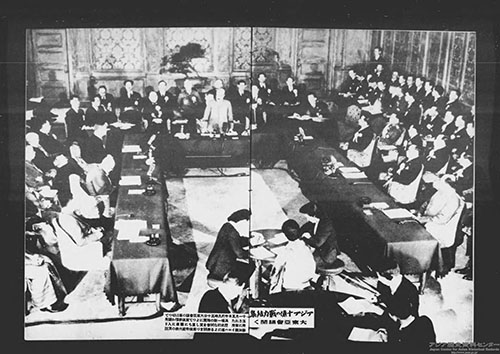
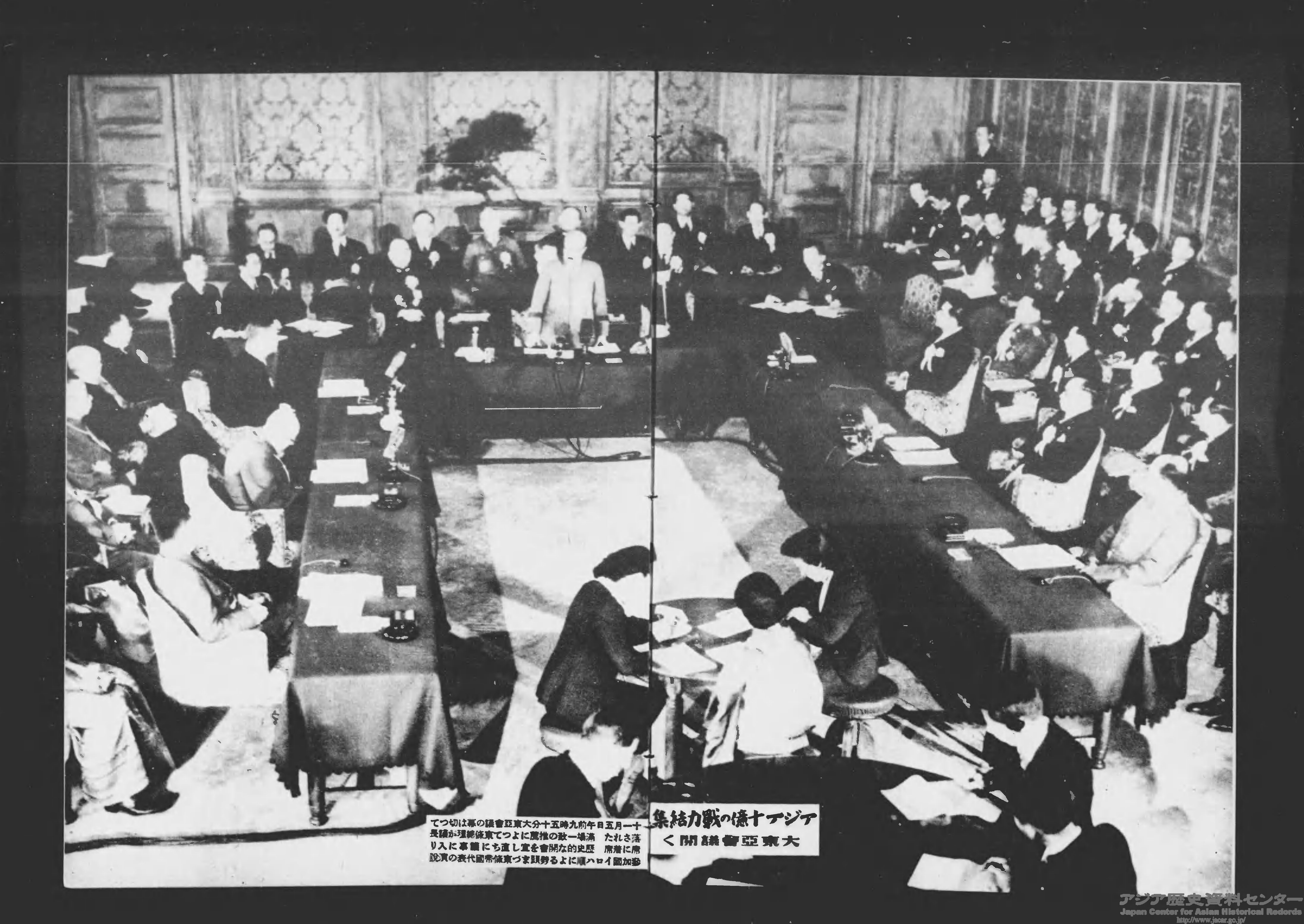
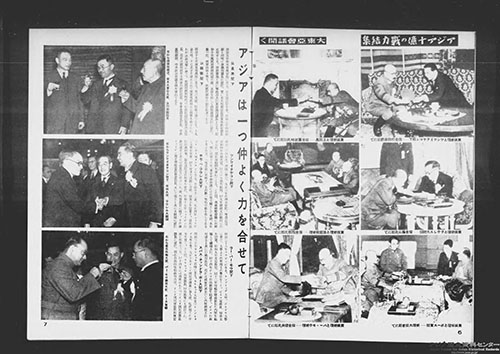
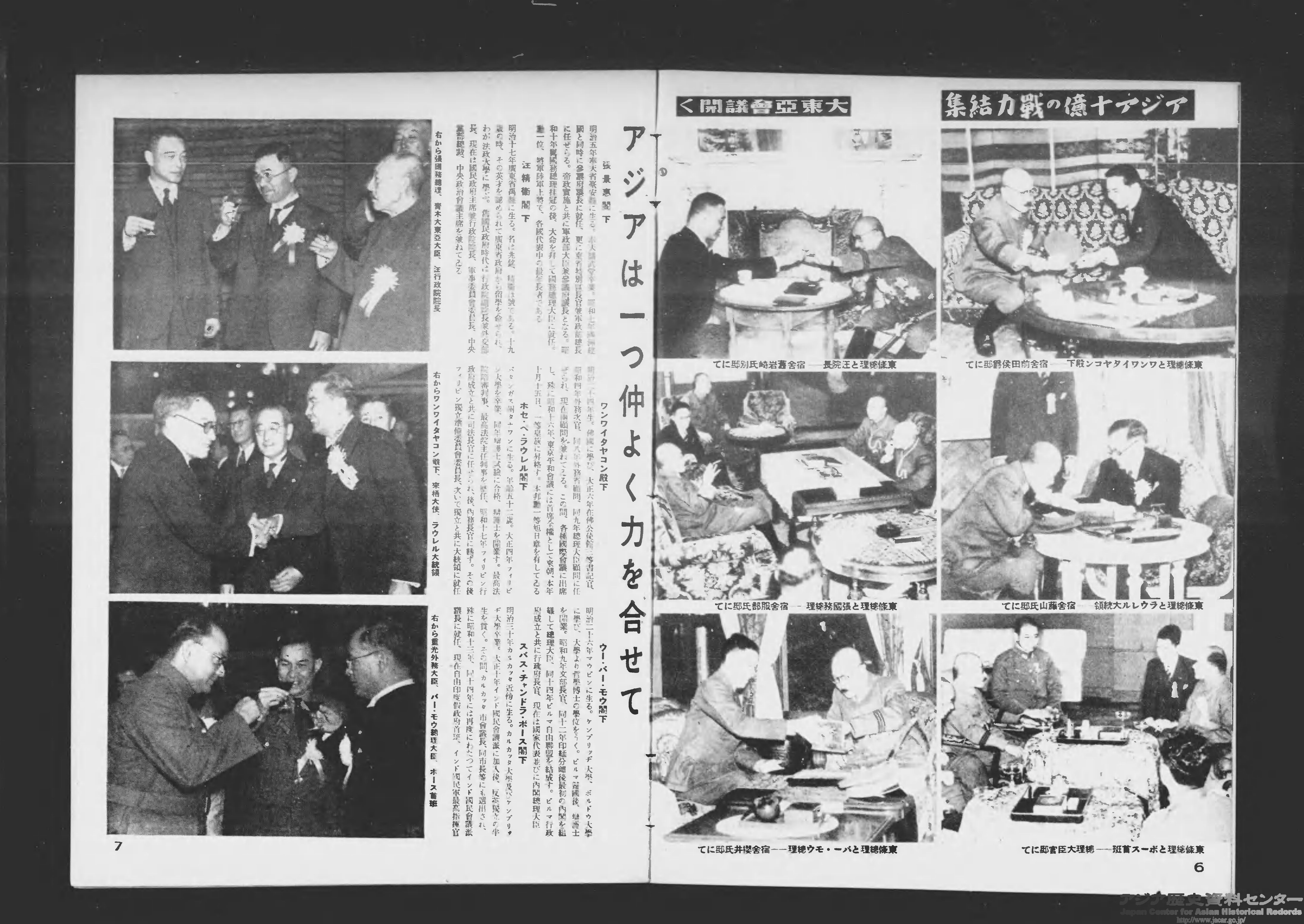
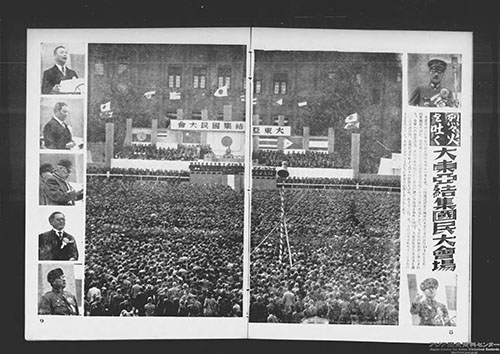
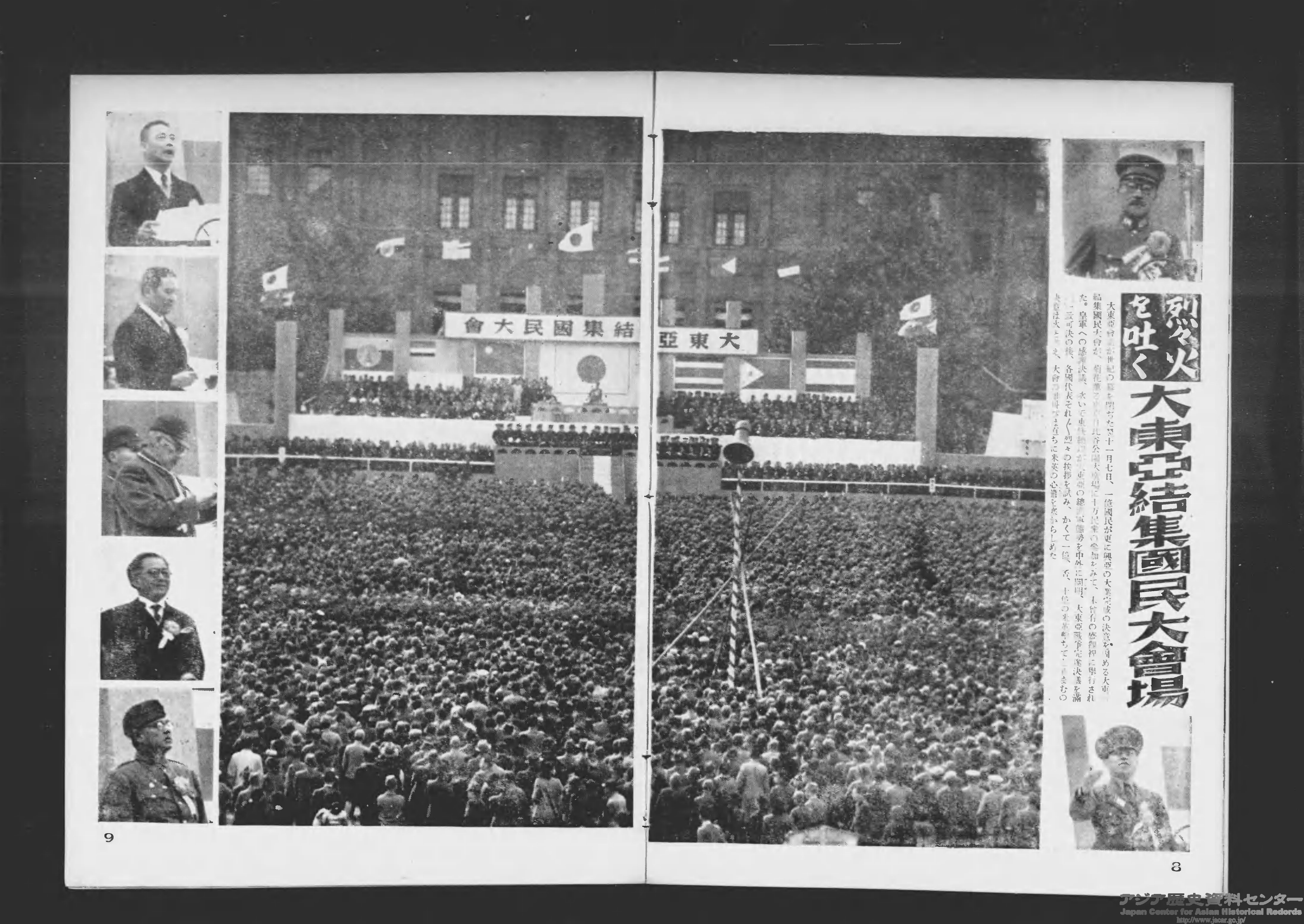
On November 5–6, 1943, the Greater East Asia Conference was held in Tokyo, bringing together leaders from various Asian nations, and on November 7, the Greater East Asia Citizens’ Grand Assembly was held in Hibiya Park. These events were also reported in Shashin Shūhō. The same issue also covered the signing of Japan treaty of alliance with the Wang Jingwei regime (Image 7).
[Document 39] Materials Related to the Greater East Asia Conference
“3. Minutes / 3” (Ref. B02032958100) Images 34–35
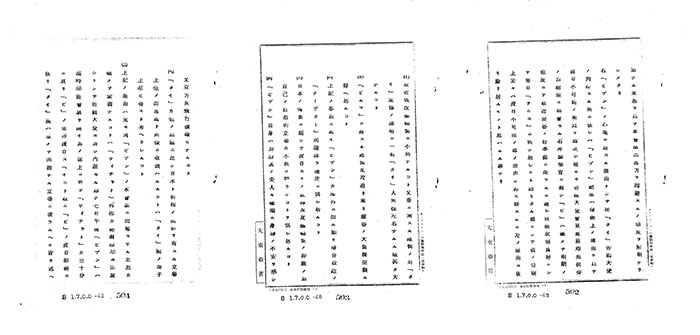
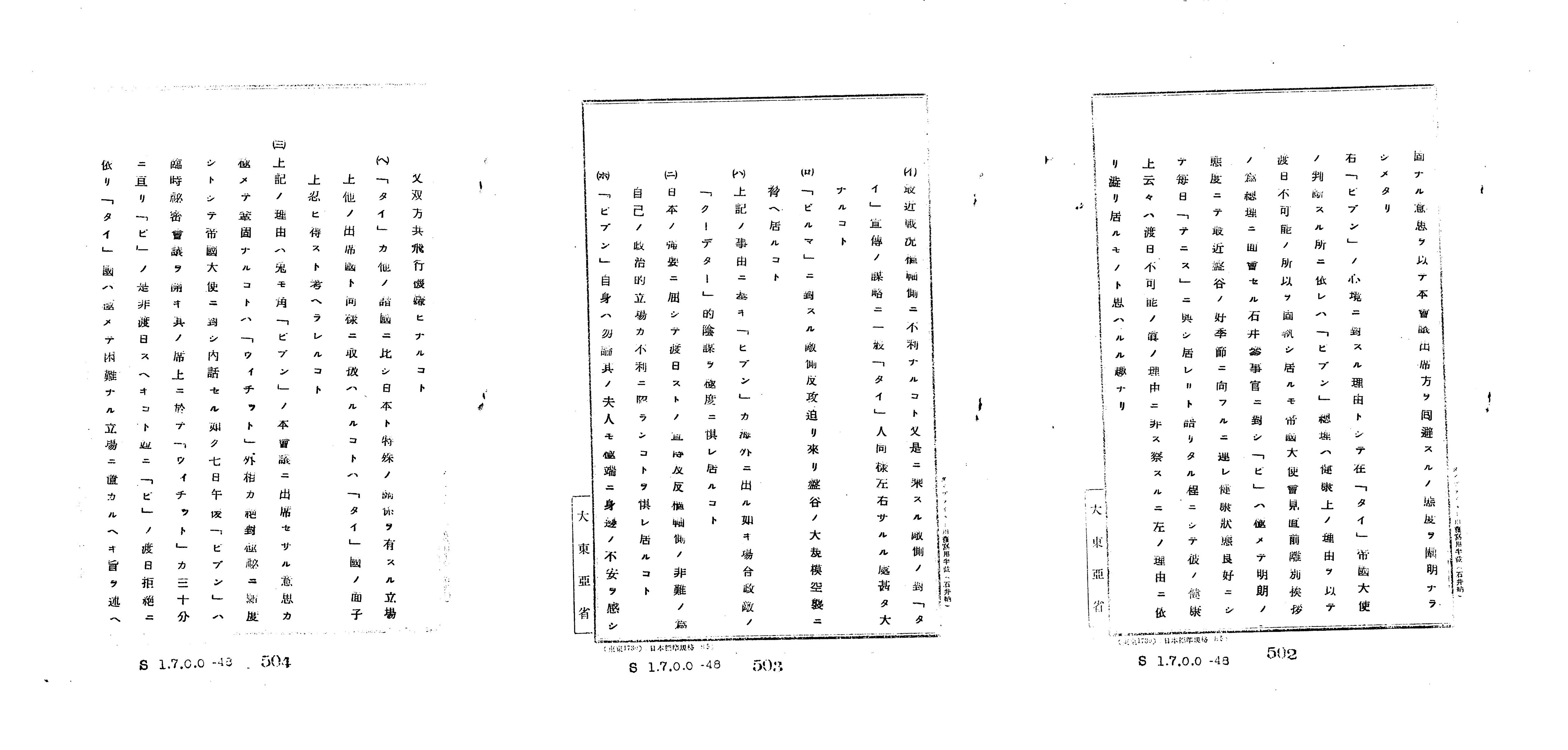
The file “Matter Concerning the Greater East Asia War / Greater East Asia Conference” (B02032955600), held in the collection of the Diplomatic Archives, contains various materials related to the conference, including the texts of speeches delivered by representatives of each country. From “3. Minutes/3” and “3. Minutes/4” (B02032958100, B02032958200), one can also gain insight into the preliminary negotiations with each participating country, as well as news articles and editorial opinions from various countries and regions regarding the conference.
In the image above, there is a passage in which the Japanese ambassador to Thailand speculates on the real reasons why Thai Prime Minister Phibun was absent due to health issues.
