2. The Outbreak of the Pacific War and Asia
In September 1939, Germany invaded Poland, marking the start of World War II. Japan strengthened its alliance with Germany and Italy and expanded its influence in Southeast Asia such as by occupying French Indochina. In response, the United States, together with Britain, China, and the Netherlands, imposed an economic blockade.
As tensions between Japan and the United States deepened, negotiations to avoid war continued (Related content: “Japan-U.S. Negotiations as Seen in Official Documents” [Japanese only]), but on December 8, 1941 (JST), Japan declared war on the United Kingdom and the United States.
[Document 9] News Reports on the Establishment of the Wang Jingwei Regime
“Shashin Shūhō, Issue No. 111” (Ref. A06031070600), Images 13–14
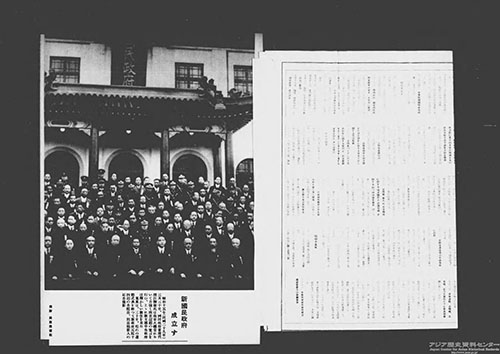
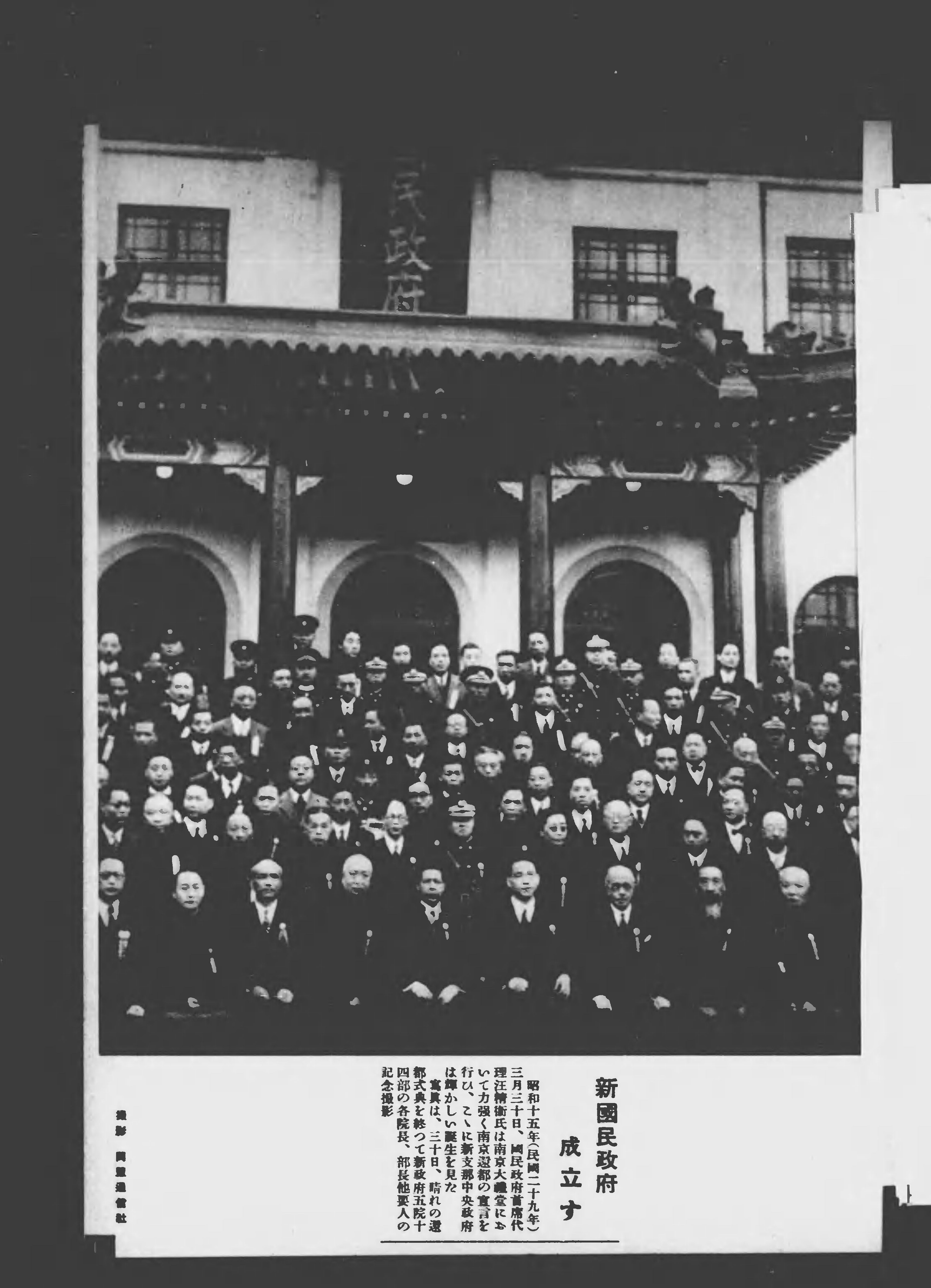
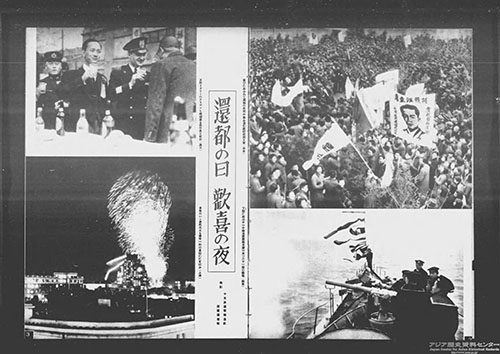
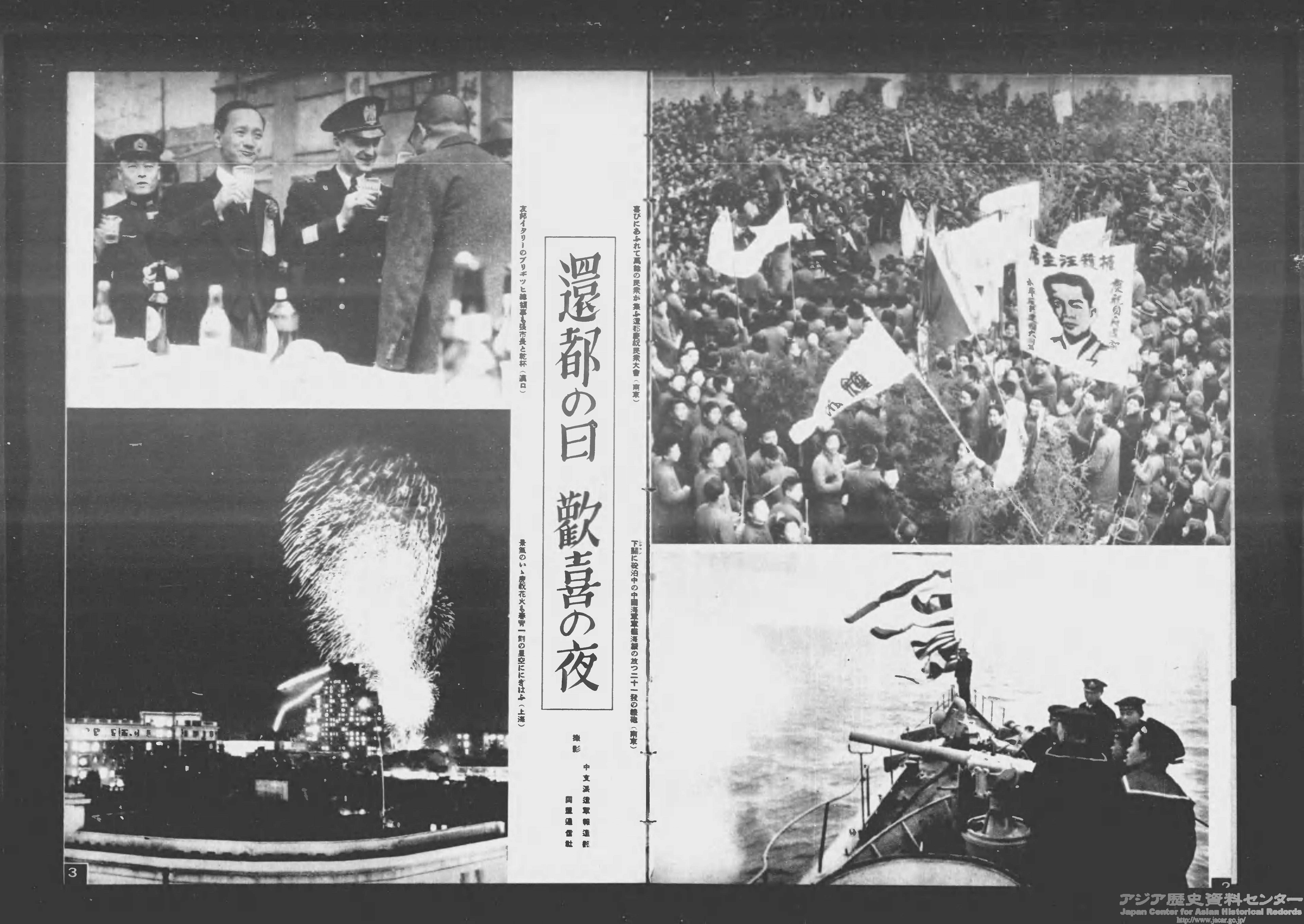
On March 30, 1940, Wang Jingwei established a reorganized Nationalist Government in Nanjng (Wang Jingwei regime). Shashin Shūhō covered this extensively in Issues No. 110 (April 3) and No. 111 (April 10).
[Document 10] Interest in Resources in Southern Regions
“Outline of the Main Principles for Coping with the Changing World Situation, July Shōwa 15 [1939]” (Ref. C12120200800) Images 1–2
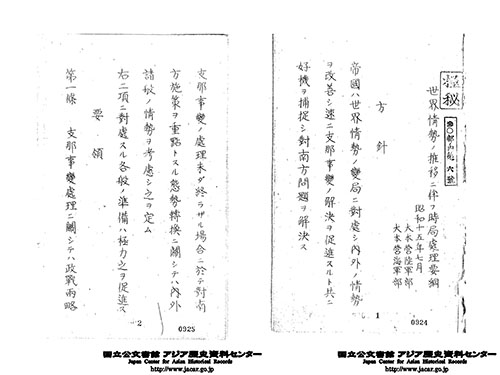
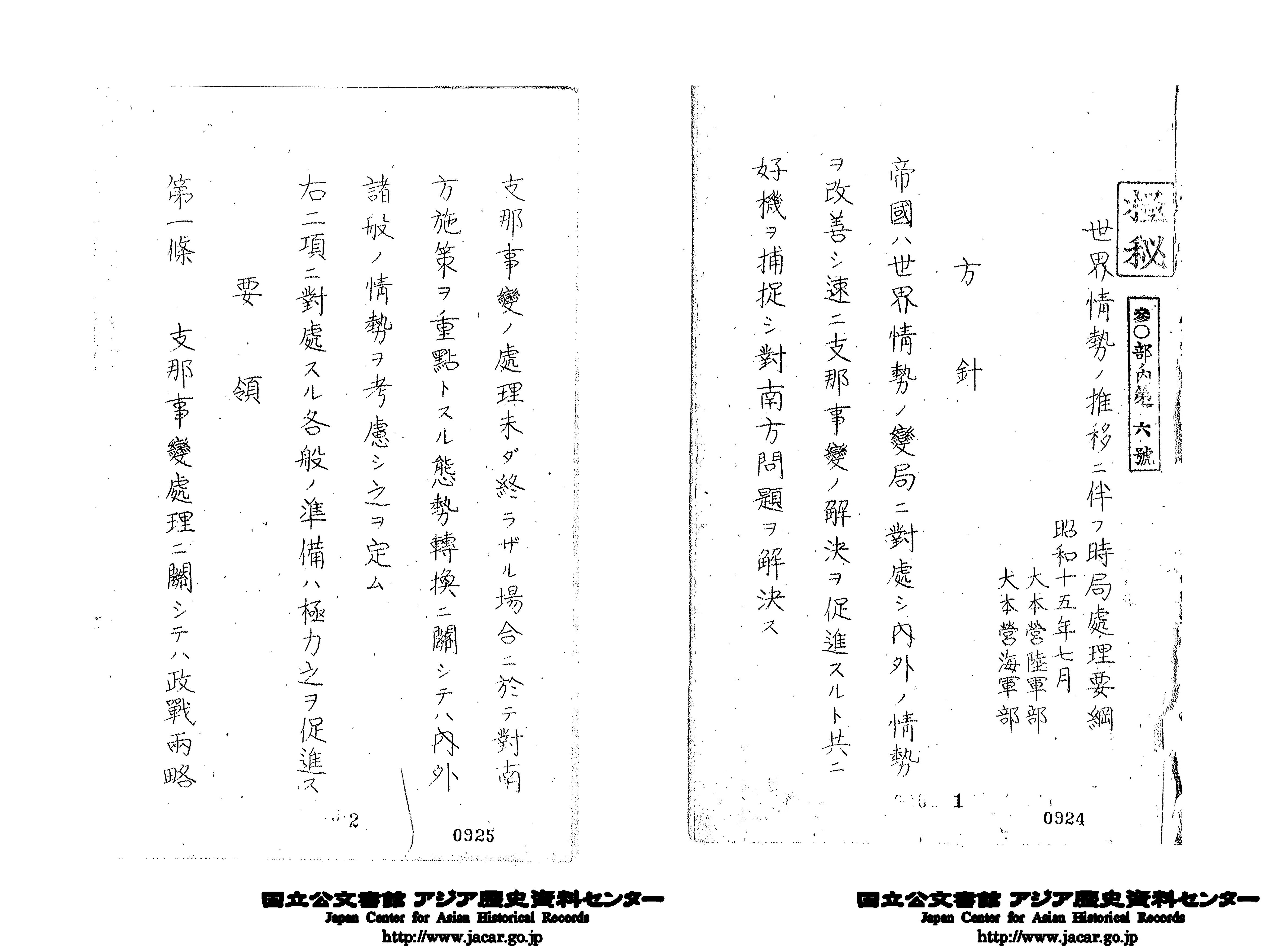
On July 27, 1940, the Government Liaison Conference at Imperial General Headquarters adopted the “Outline of the Main Principles for Coping with the Changing World Situation.” In light of Germany’s ascendancy in Europe, the document presented policies on such matters as strengthening cooperation with Germany and Italy; blocking “acts of aid to Chiang Kai-shek” (support for the Nationalist Government led by Chiang Kai-shek) in and securing resources from French Indochina; and obtaining resources from the Dutch East Indies through diplomatic means.
[Document 11] “The Co-Prosperity Sphere in the South”
“Shashin Shūhō, Issue No. 129” (Ref. A06031072400), Images 1–3 (partial)
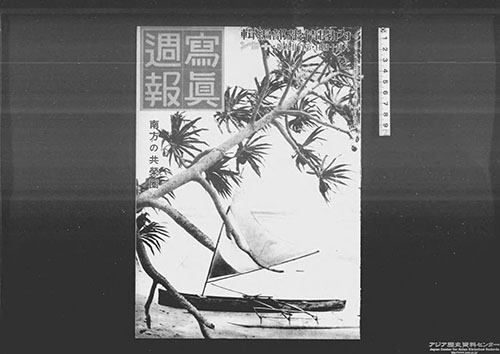
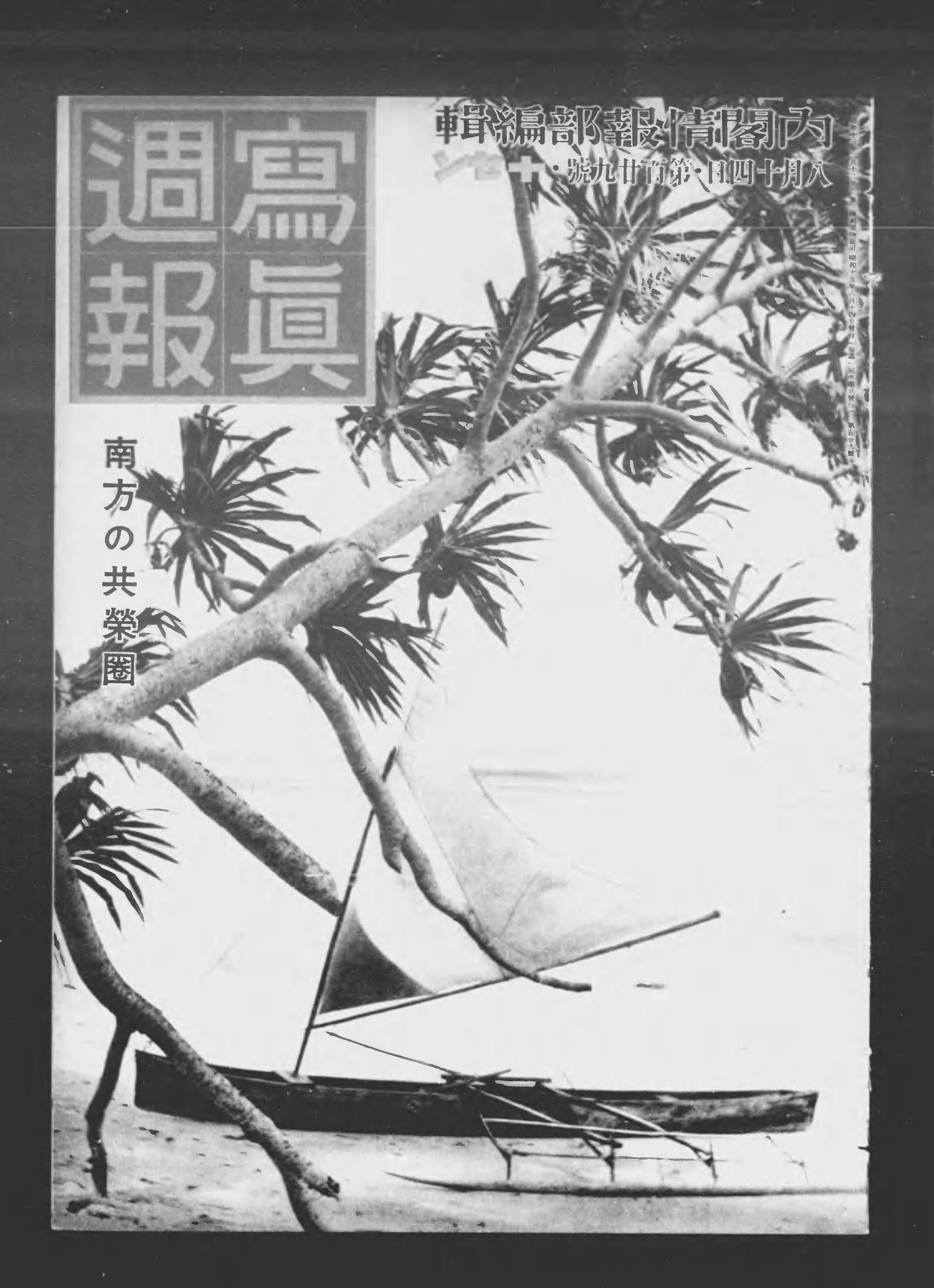
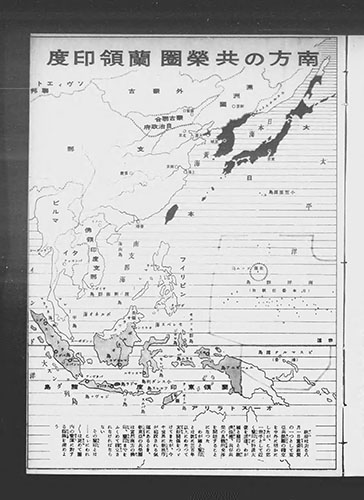
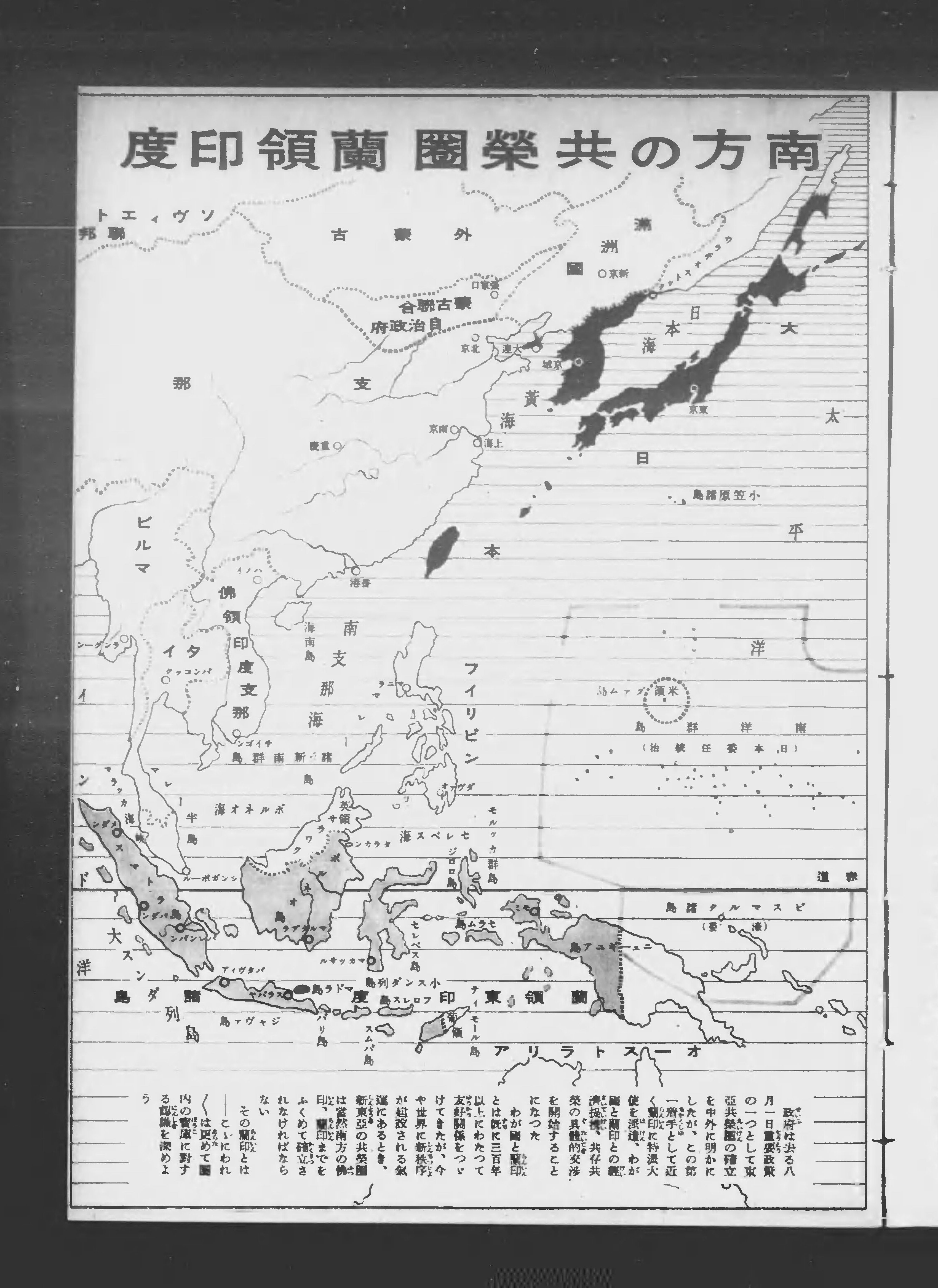
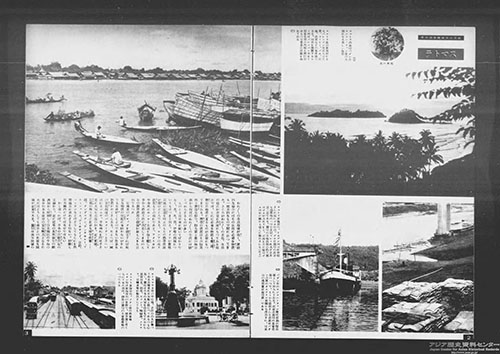
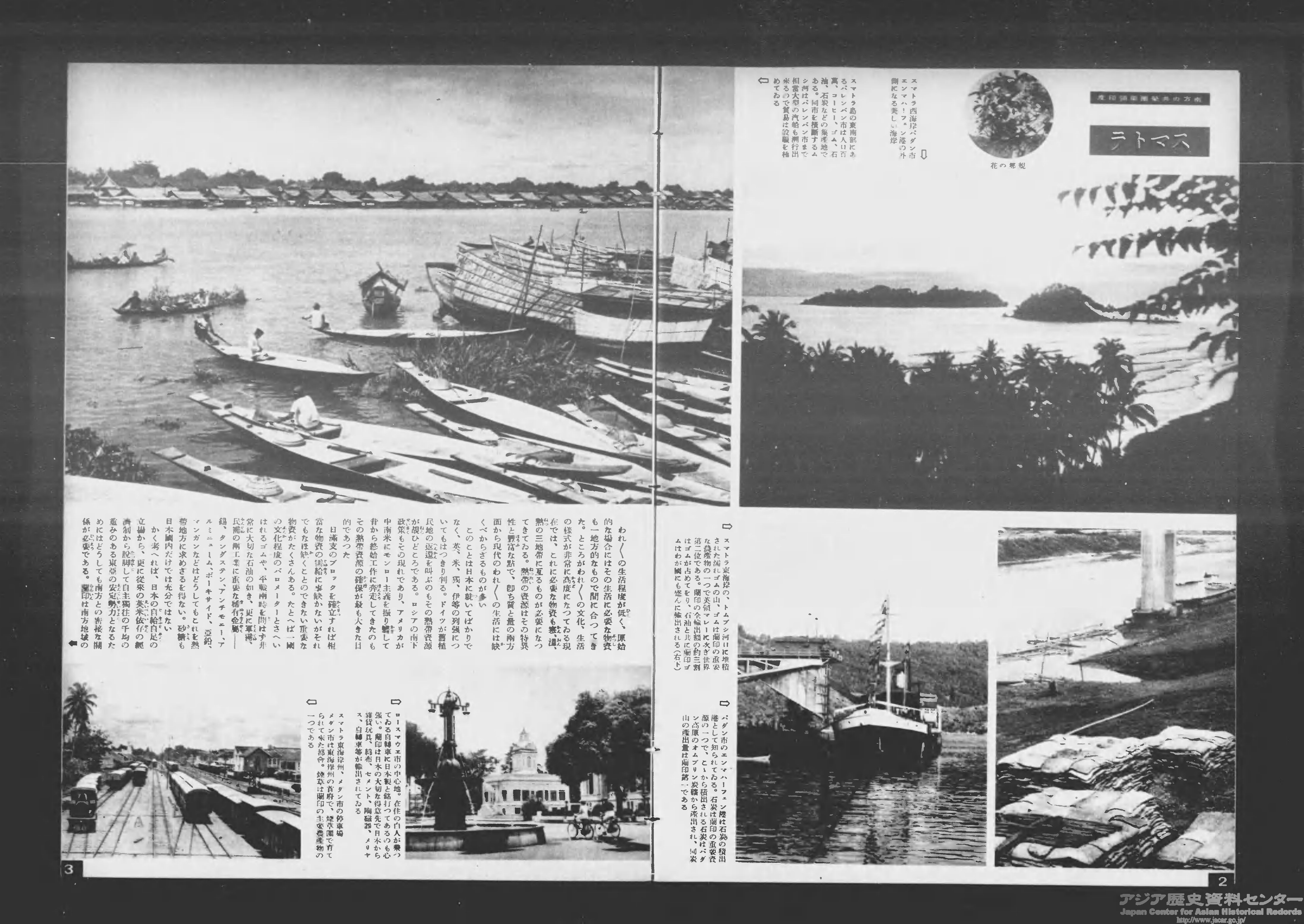
On August 1, 1940, Foreign Minister Matsuoka Yōsuke in a statement announced the concept of the “Greater East Asia Co-Prosperity Sphere,” which would include French Indochina and the Dutch East Indies. Two weeks later, the August 14 issue of Shashin Shūhō featured an article titled “The Co-Prosperity Sphere in the South: The Dutch East Indies” that introduced the Dutch East Indies and its resources.
Related Content: Topics from JACAR: “The Greater East Asia Co-Prosperity Sphere” (Japanese only)
[Document 12] Deployment to the Northern Parts of French Indochina
“Shashin Shūhō, Issue 139” (Ref. A06031073400), 4th image
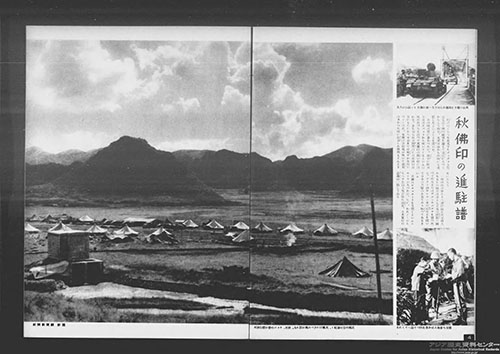
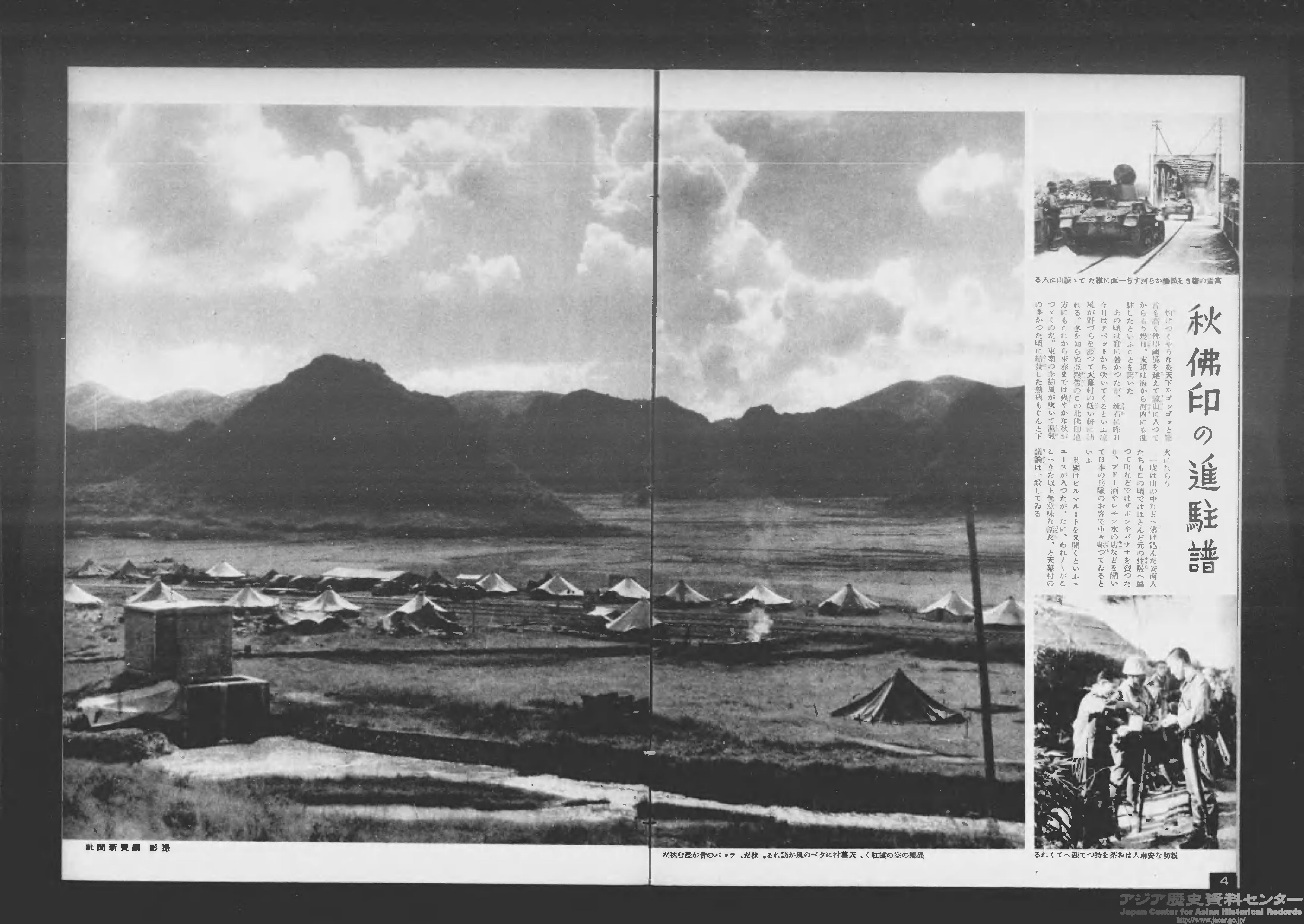
On the European front, France had been defeated by Germany, and the pro-German Vichy government was founded there in July 1940. Japan then negotiated with the new government, and in September 1940 it stationed troops in French Indochina. The United States responded to this by imposing an export ban on scrap metal and other goods to Japan.
The image above is an article reporting on the stationing of troops in French Indochina, published in the October 23 issue of that year.
[Document 13] Bombing of the Supply Routes to Chiang’s China
“Shashin Shūhō, Issue 142” (Ref. A06031073700), Images 3–4
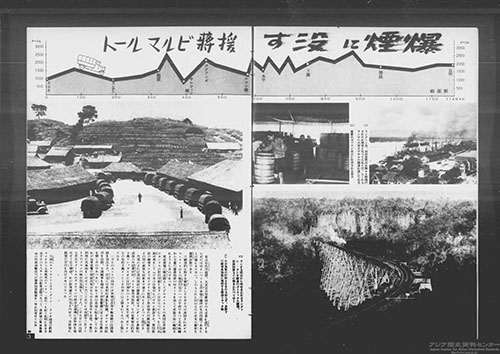
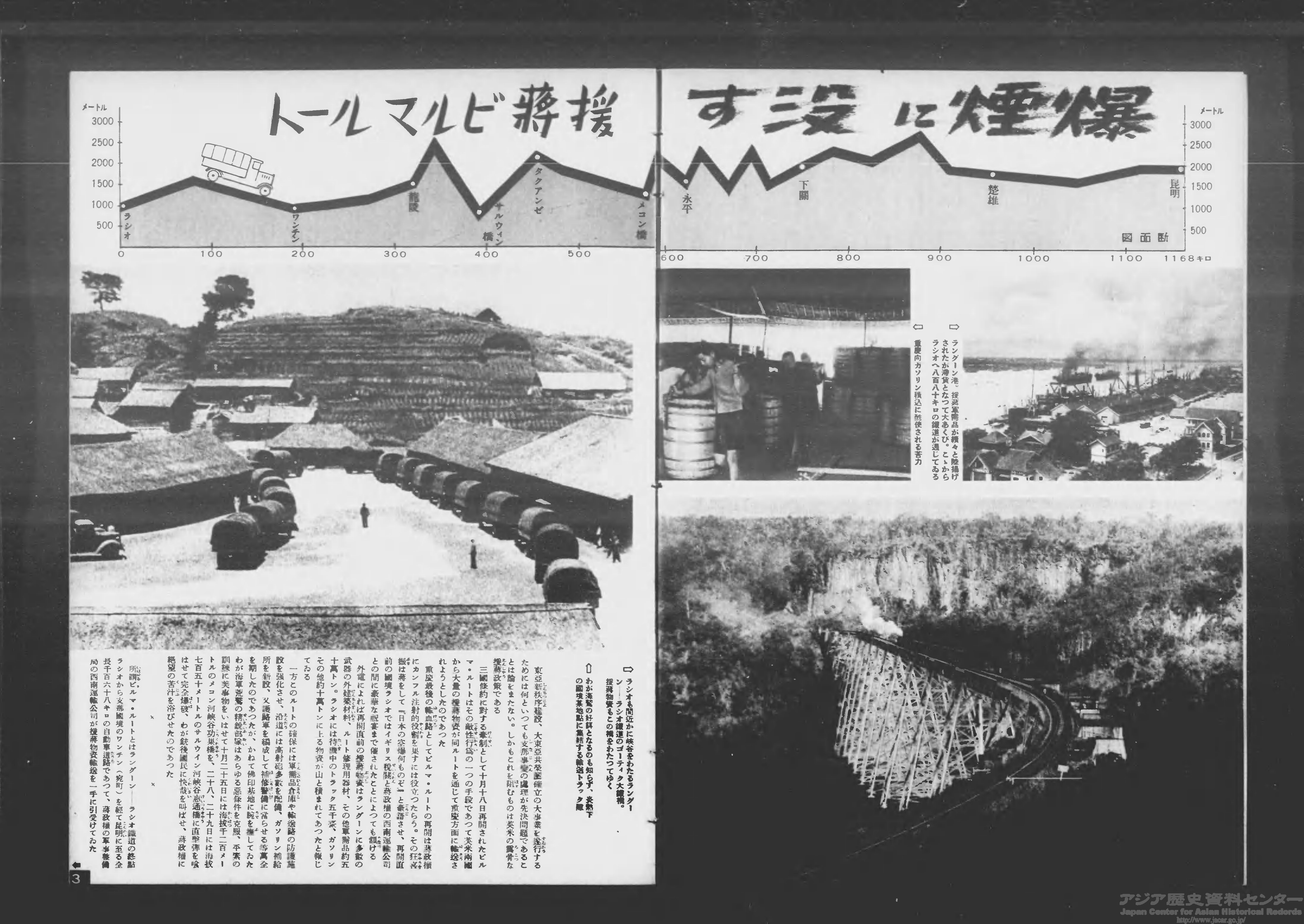
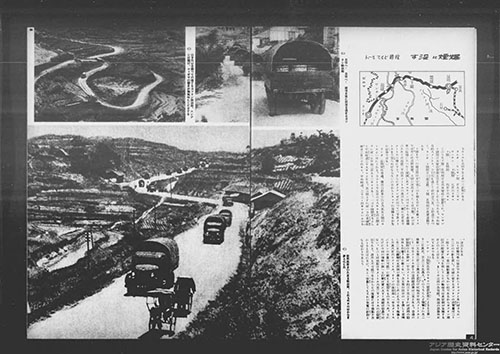
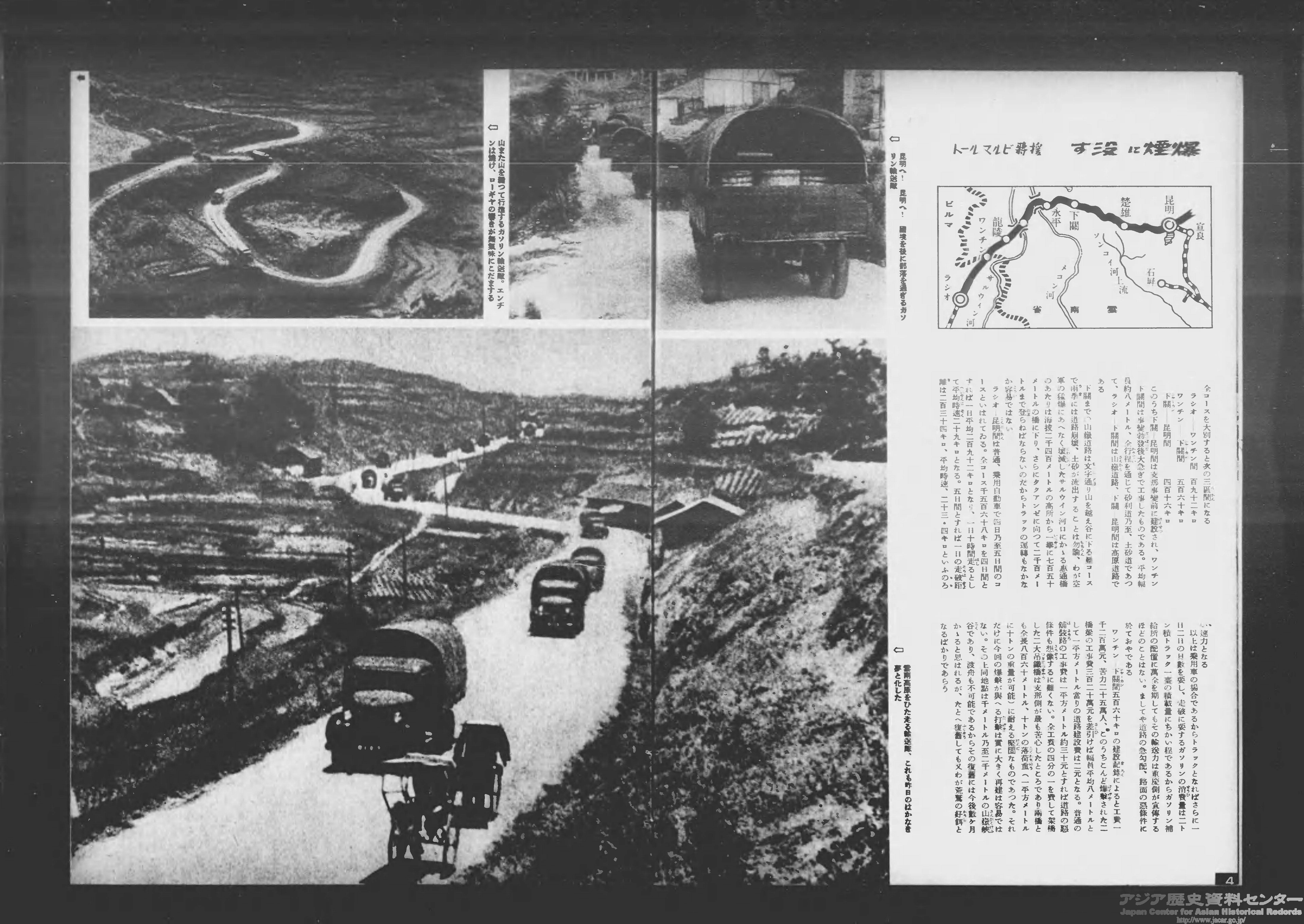
The occupation of northern French Indochina was carried out with the intention of cutting off the supply routes to the Nationalist Government (described in Japanese as “En-Shō rūto,” literally “Aid-Chiang Routes”) and securing resources. The article above (November 13, 1940) describes the Burma Road that carried supplies to Chiang and bombings carried out by Japanese forces.
[Document 14] “The Principle Points in Imperial Policy for Coping with the Changing Situation”
“The Principle Points in Imperial Policy for Coping with the Changing Circumstances, July 2, Shōwa 16 [1941] ” (Ref. C12120183800), Images 1–3
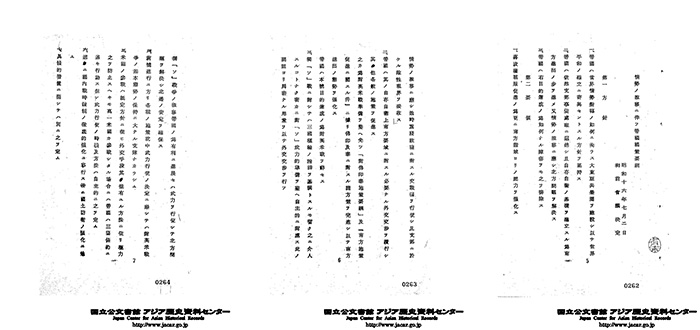
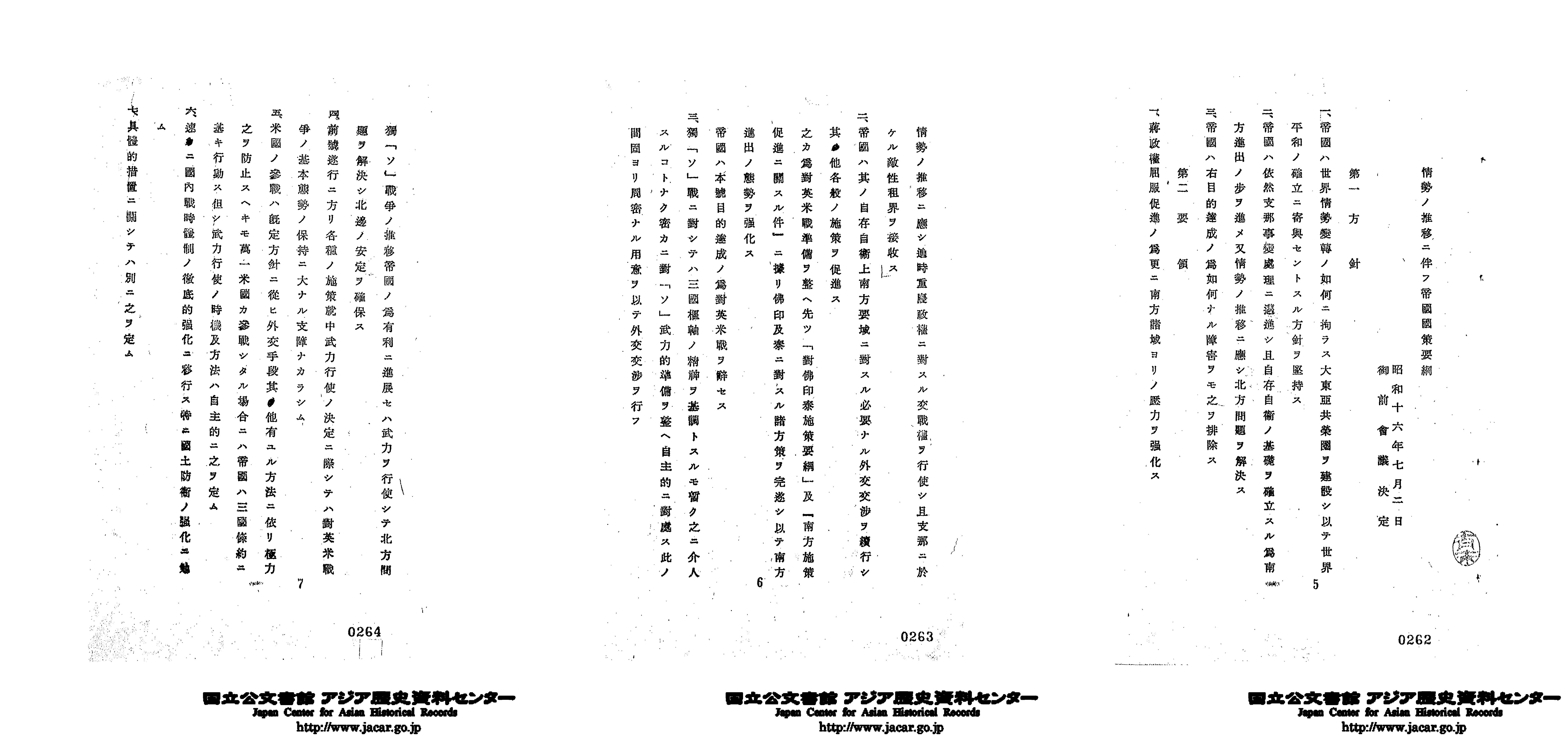
Negotiations had been underway since September 1940 with the Netherlands about securing vital resources such as oil from the Dutch East Indies (the second round of Japan-Netherlands talks), but these were terminated on June 17, 1941. Meanwhile, the German-Soviet War broke out on June 22.
Amid these circumstances, on July 2 the Imperial Conference adopted “The Principle Points in Imperial Policy for Coping with the Changing Circumstances.” Policies written therein included a “southward” strategy that did not rule out war against the United States and Britain, and the use of military force against the Soviet Union depending on the course of the German-Soviet War.
[Document 15] Stationing Troops in Southern French Indochina
“Shashin Shūhō Report No. 181” (Ref. A06031077600), Images 2–3
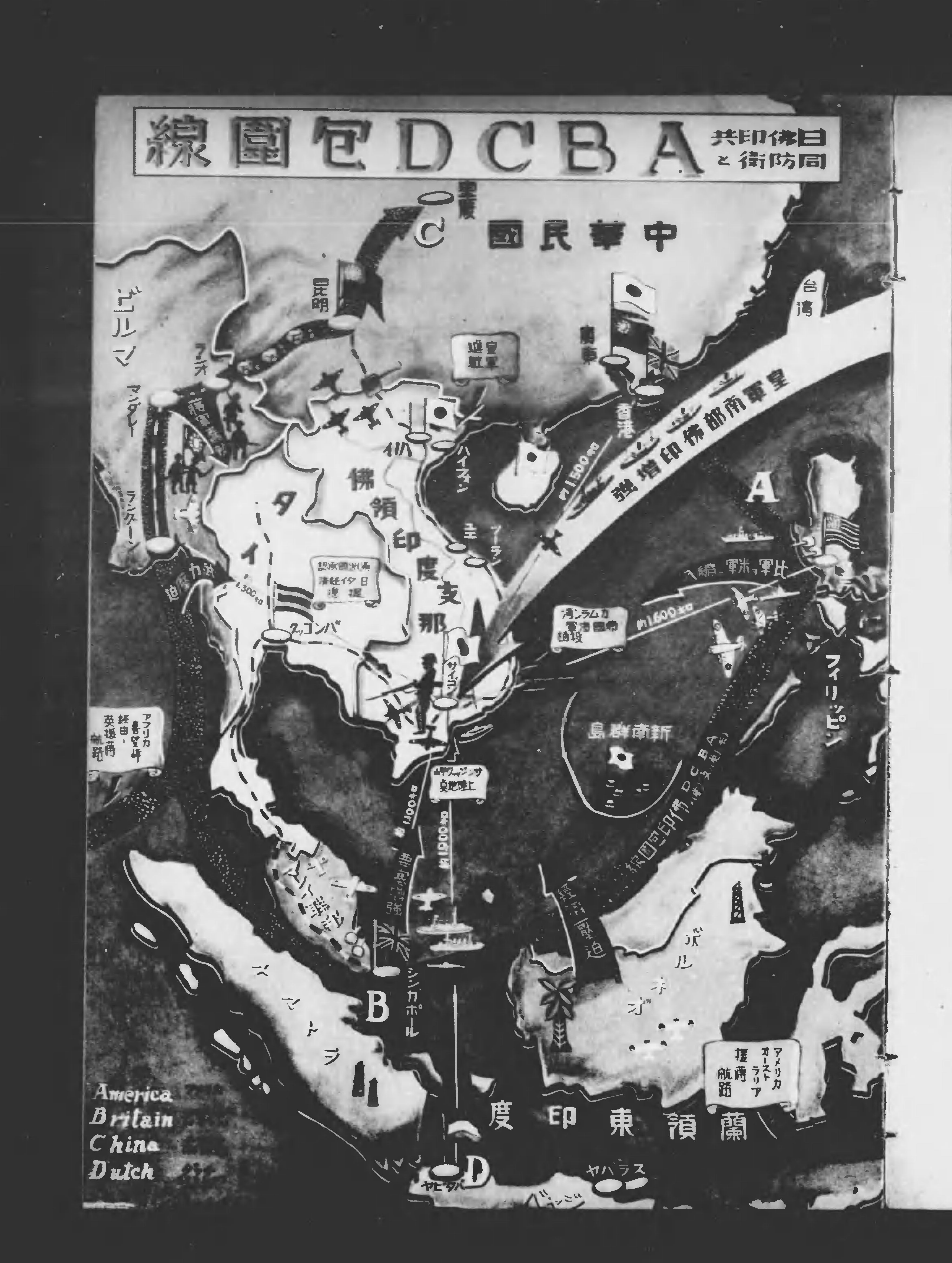
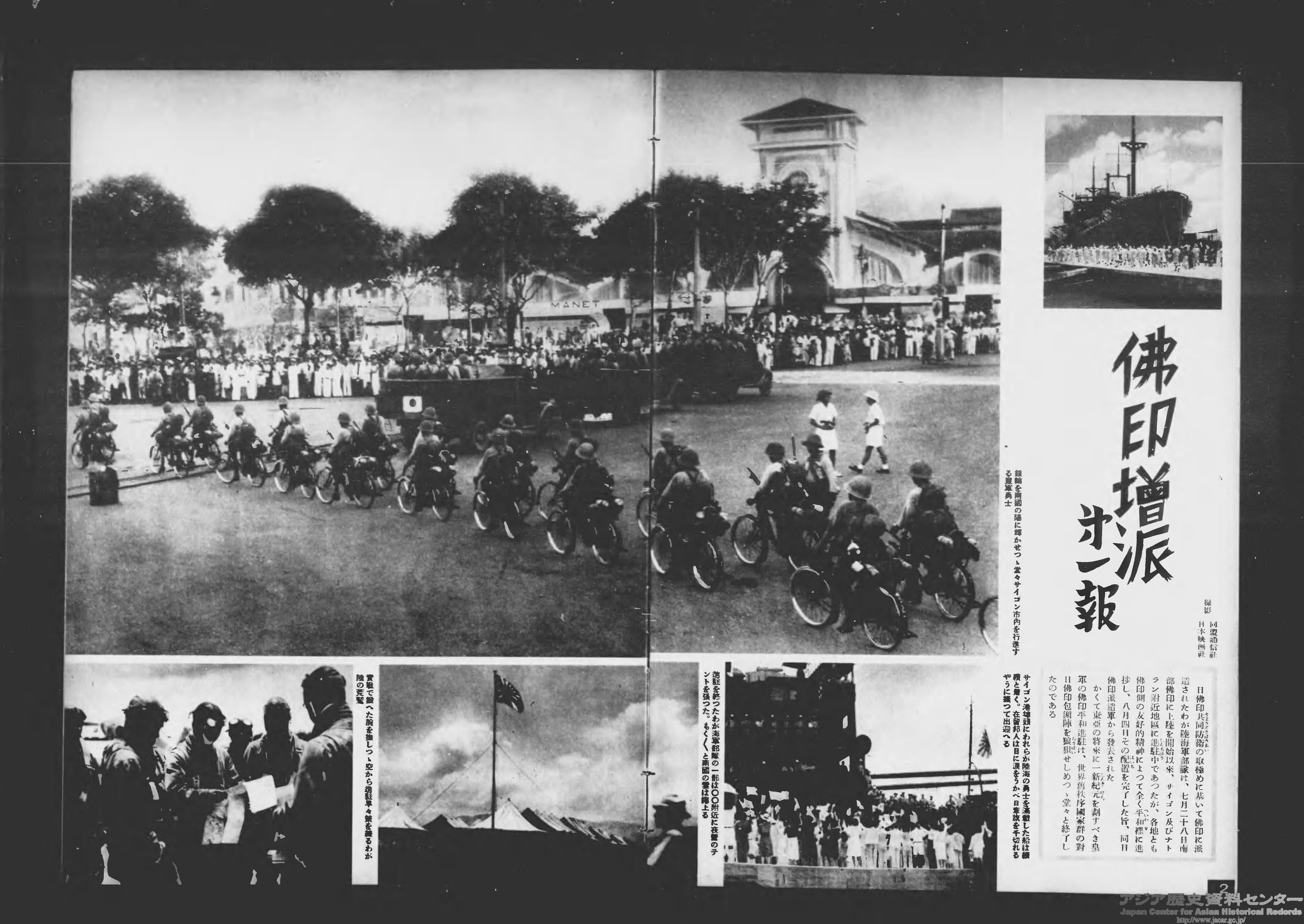
In July 1941, Japanese forces occupied the southern part of French Indochina. The United States and other nations reacted strongly, taking measures such as freezing Japanese assets in the U.S. and imposing an oil embargo against Japan.
The images are from the articles “Joint Defense by Japan and French Indochina and the Line of ABCD Encirclement” and “First Report on Troop Reinforcements to French Indochina,” published in Shashin Shūhō (August 13, 1941 issue).
[Document 16] “Assessment of the Future Situation in East Asia” by a Research Fellow at the Total War Research Institute
“Question 1: Long-Term Assessment of the Future Situation in East Asia (1)” (Ref. C14060860600), Images 31–32
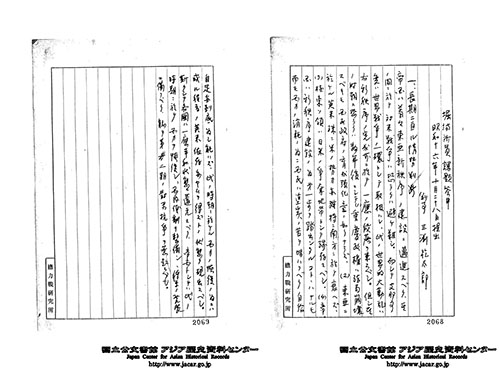
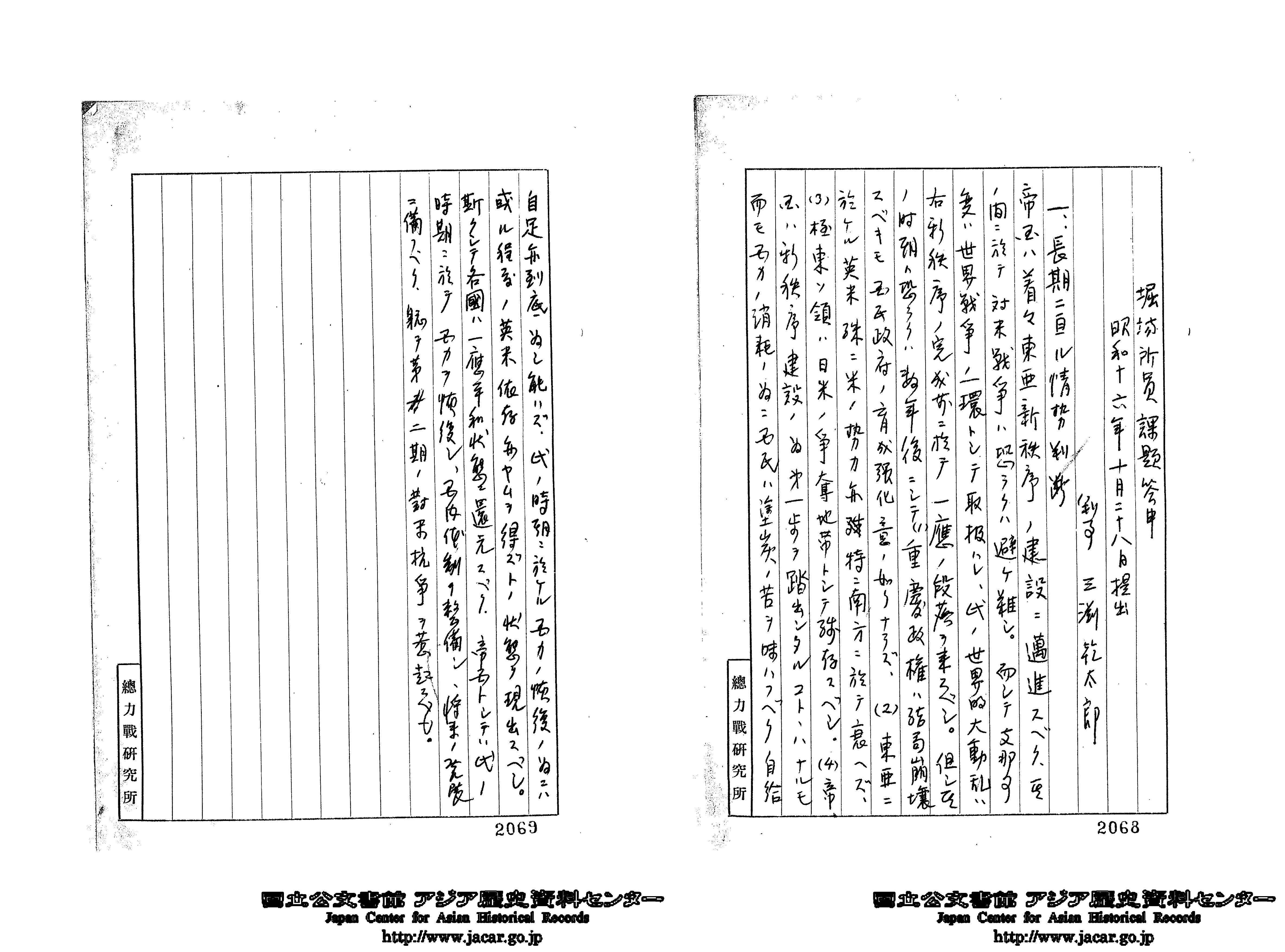
This document compiles the reports (answers) submitted by the first cohort of research students at the Total War Research Institute in October 1941 for their assigned project, “A Long-Term Assessment of the Future Situation in East Asia.” While some predictions foresaw Japan defeating the United Kingdom and the United States and bringing various parts of Asia under its control, others anticipated the difficulties involved. The images show the response submitted by Mibuchi Kentarō, a research student who was also a judge.
The Total War Research Institute was an agency directly under the Cabinet established in September 1940 for the purpose of research, study, and training in total war; it accepted young bureaucrats and private-sector employees as research students.
[Document 17] Decision to Declare War on the United States and the United Kingdom at the Imperial Conference
“Overview of Questions and Answers at the 7th Imperial Conference” (Ref. C12120186900), Images 15–16
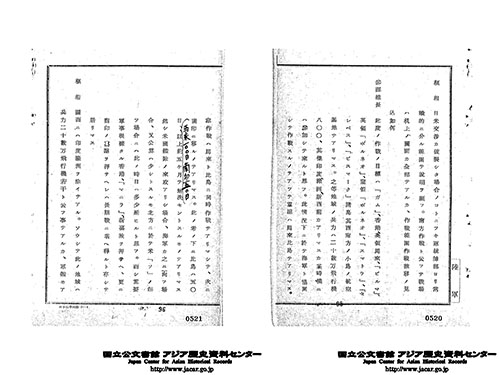
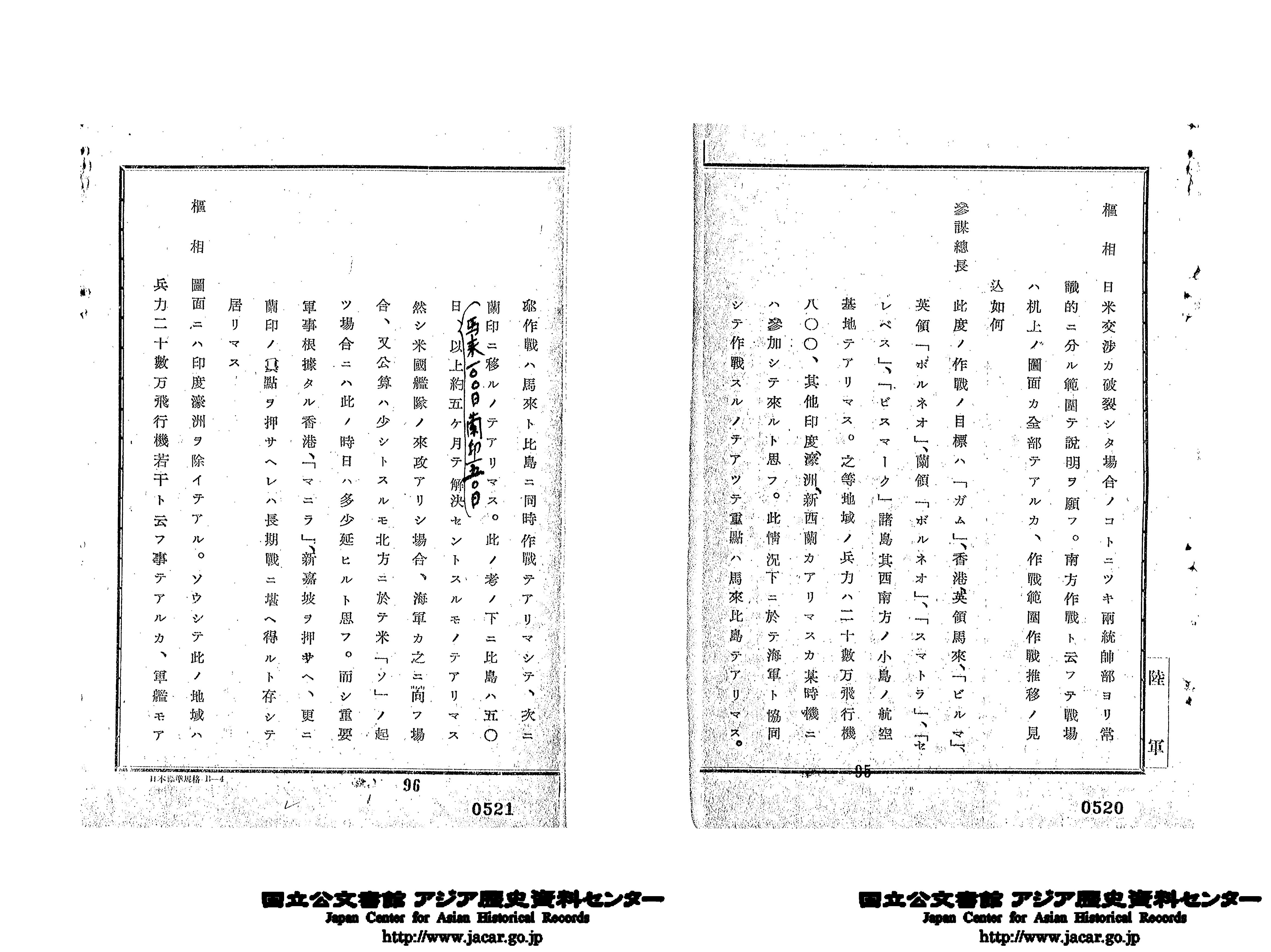
At the Imperial Conference on November 5, 1941, the “Guidelines for the Implementation of Imperial National Policy” were adopted in preparation for the declaration of war against the United States, the United Kingdom, and the Netherlands. This document is a record of the questions and answers from the Imperial Conference.
[Document 18] Basic Policy for Military Administration in the Southern Territories
“Guidelines for the Administration of Occupied Territories in the South—November 20” (Ref. C12120209400), Images 1–5
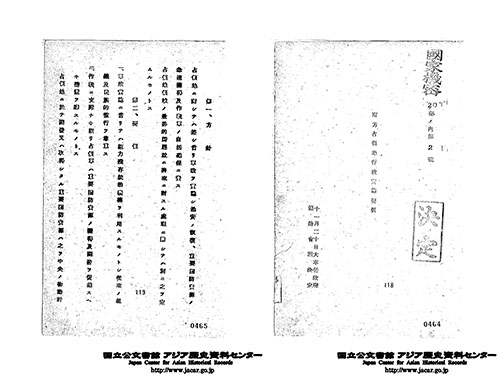
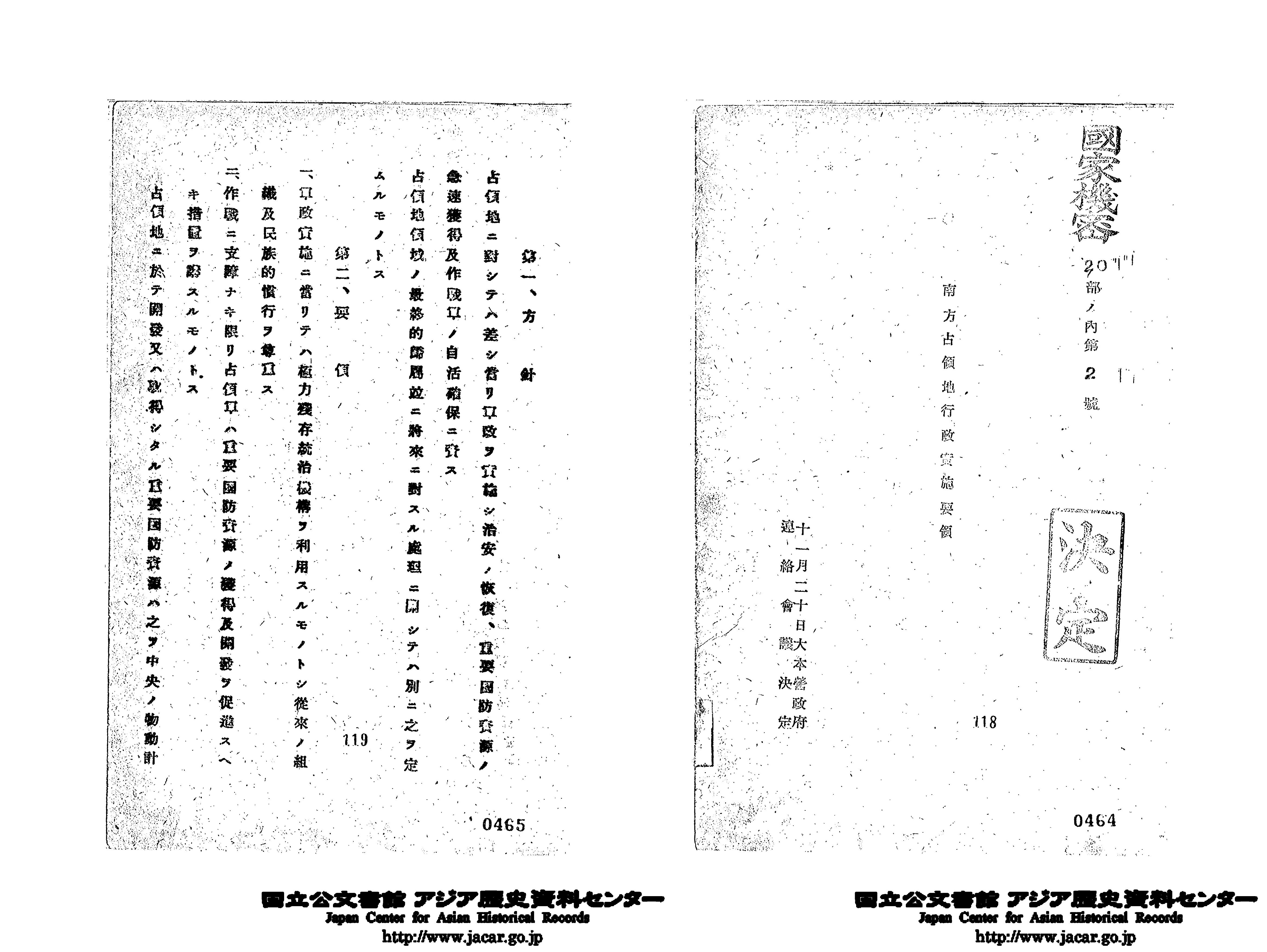
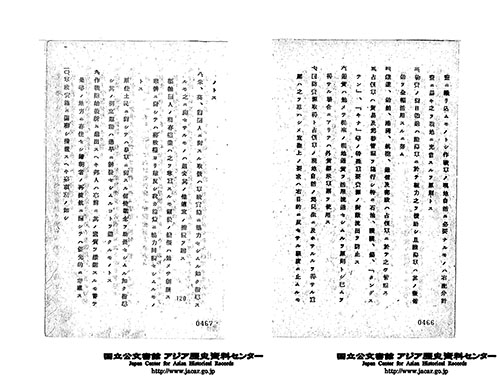
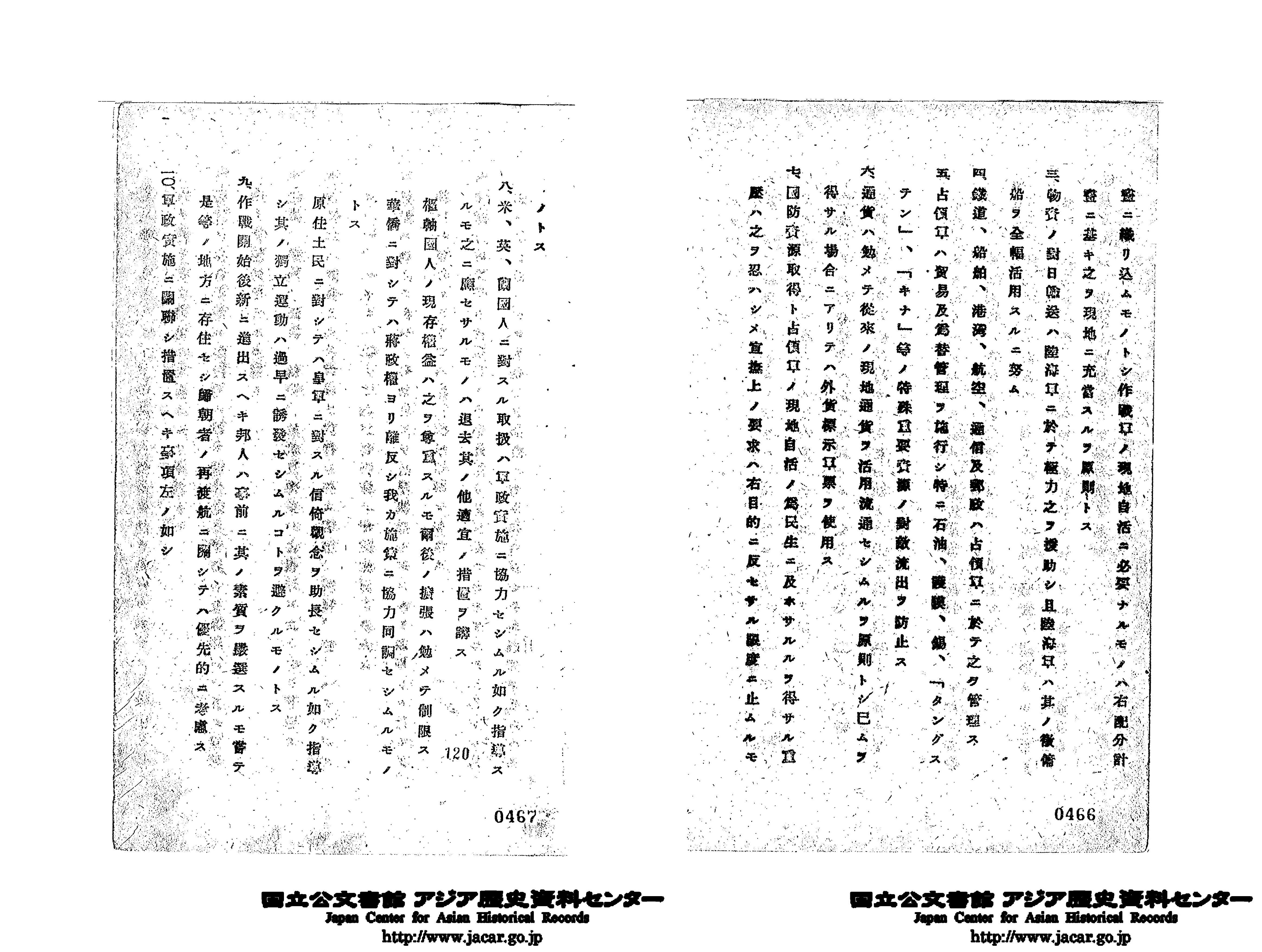
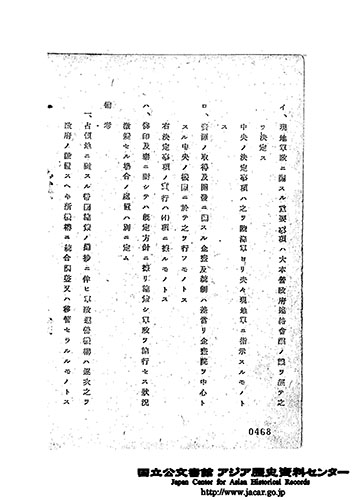
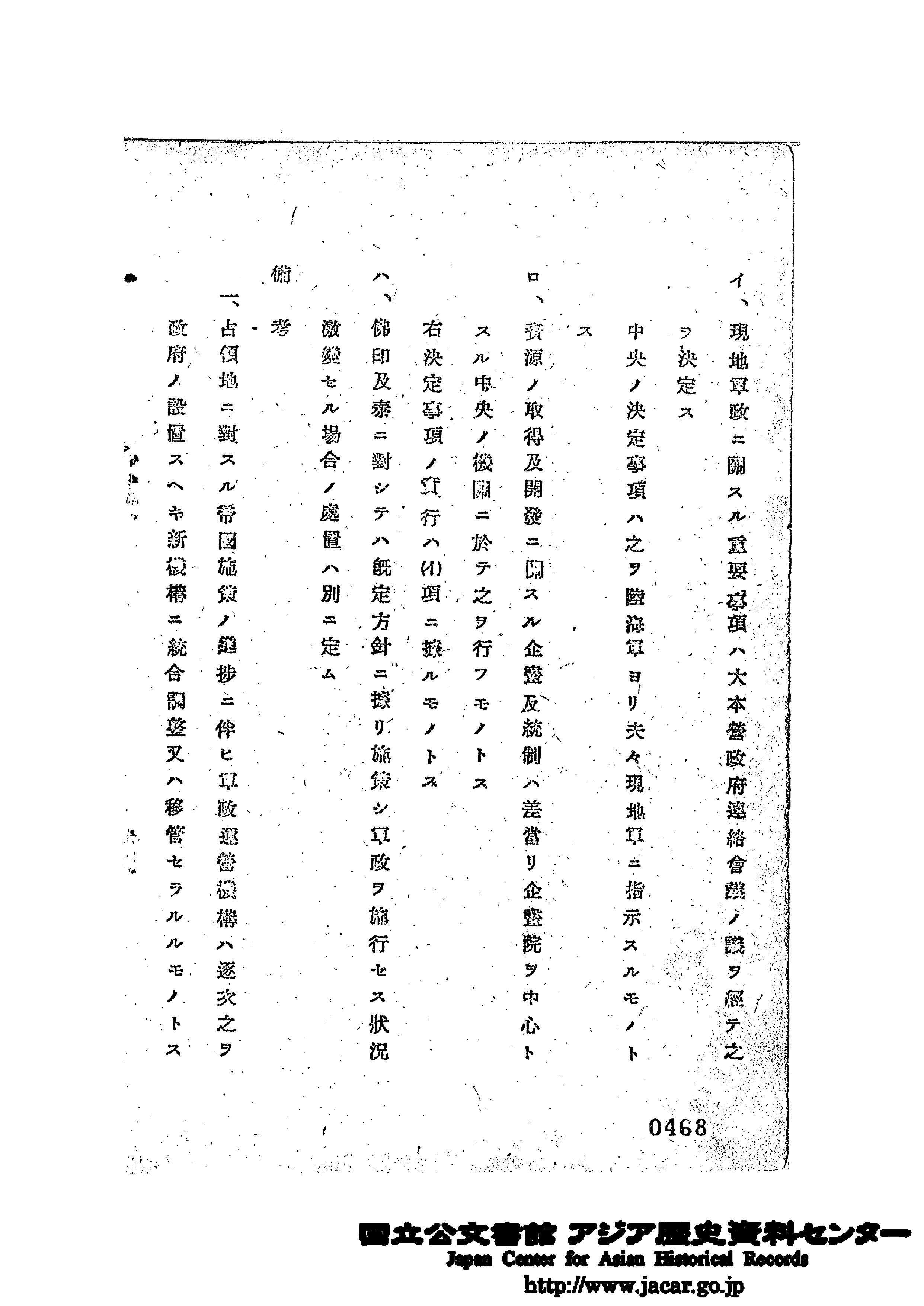
Japan planned to invade Southeast Asia with the aim of securing military resources, particularly oil.
On November 20, 1941, with the outbreak of war imminent, the policy for implementing military administration in the southern occupied territories was finalized. It established the following basic policies: (1) restoration of public order, (2) rapid acquisition of vital national defense resources, and (3) ensuring the self-sufficiency of the operational forces.
[Document 19] Imperial Rescript of the Declaration of War
“Original signed document, Shōwa 16, Imperial Rescript of December 8, On the Declaration of War Against the United States and the United Kingdom” (Ref. A03022539800) Images 1–4
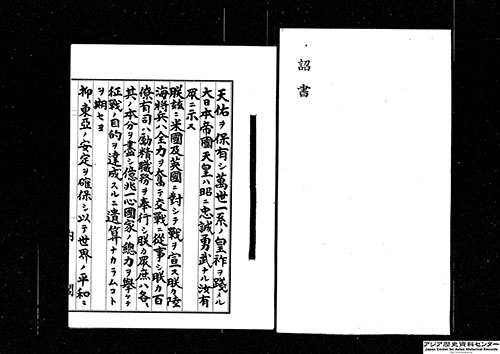
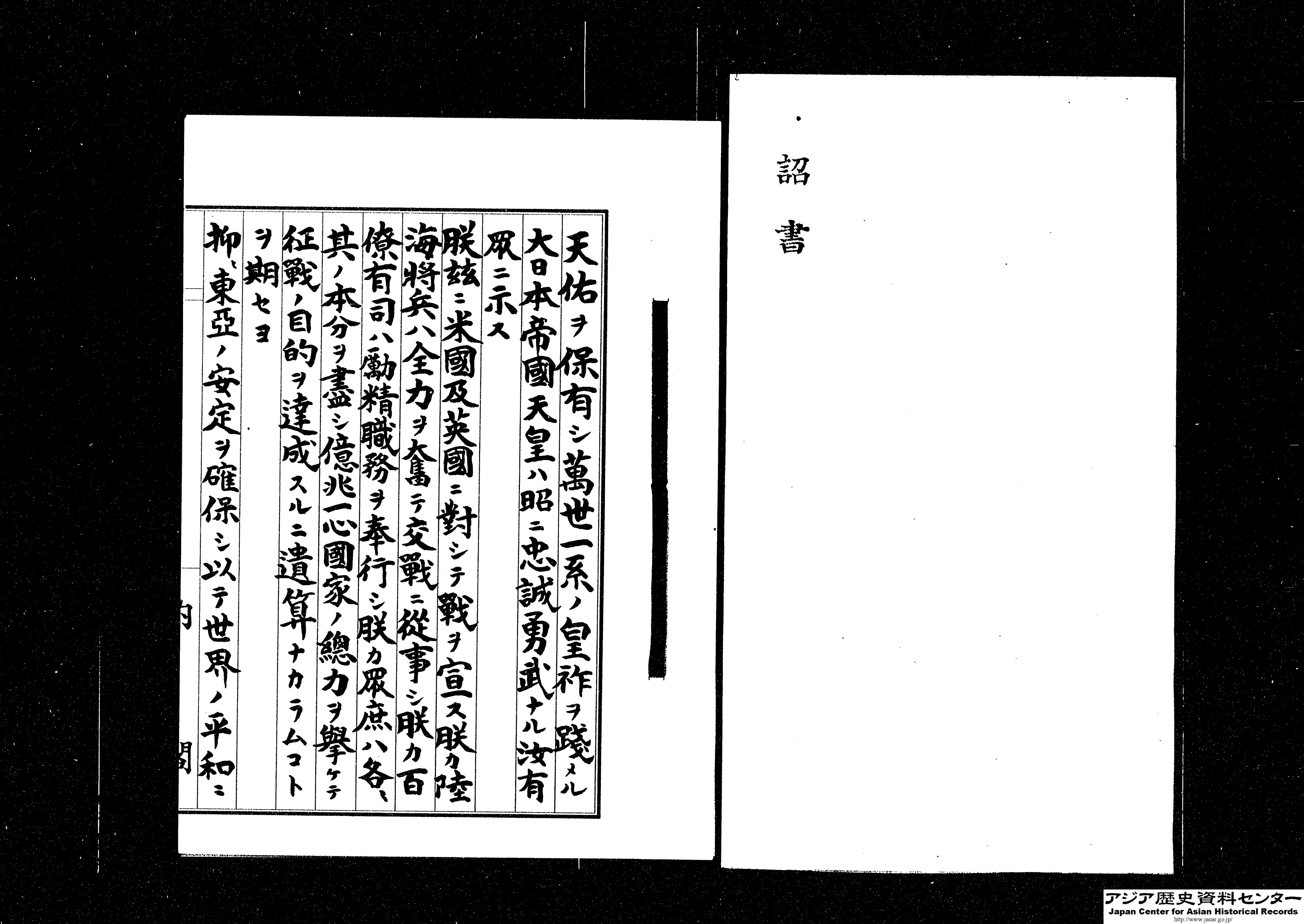
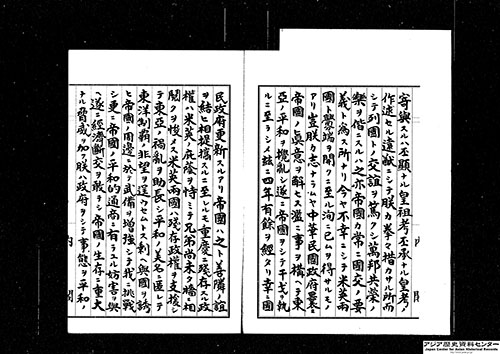
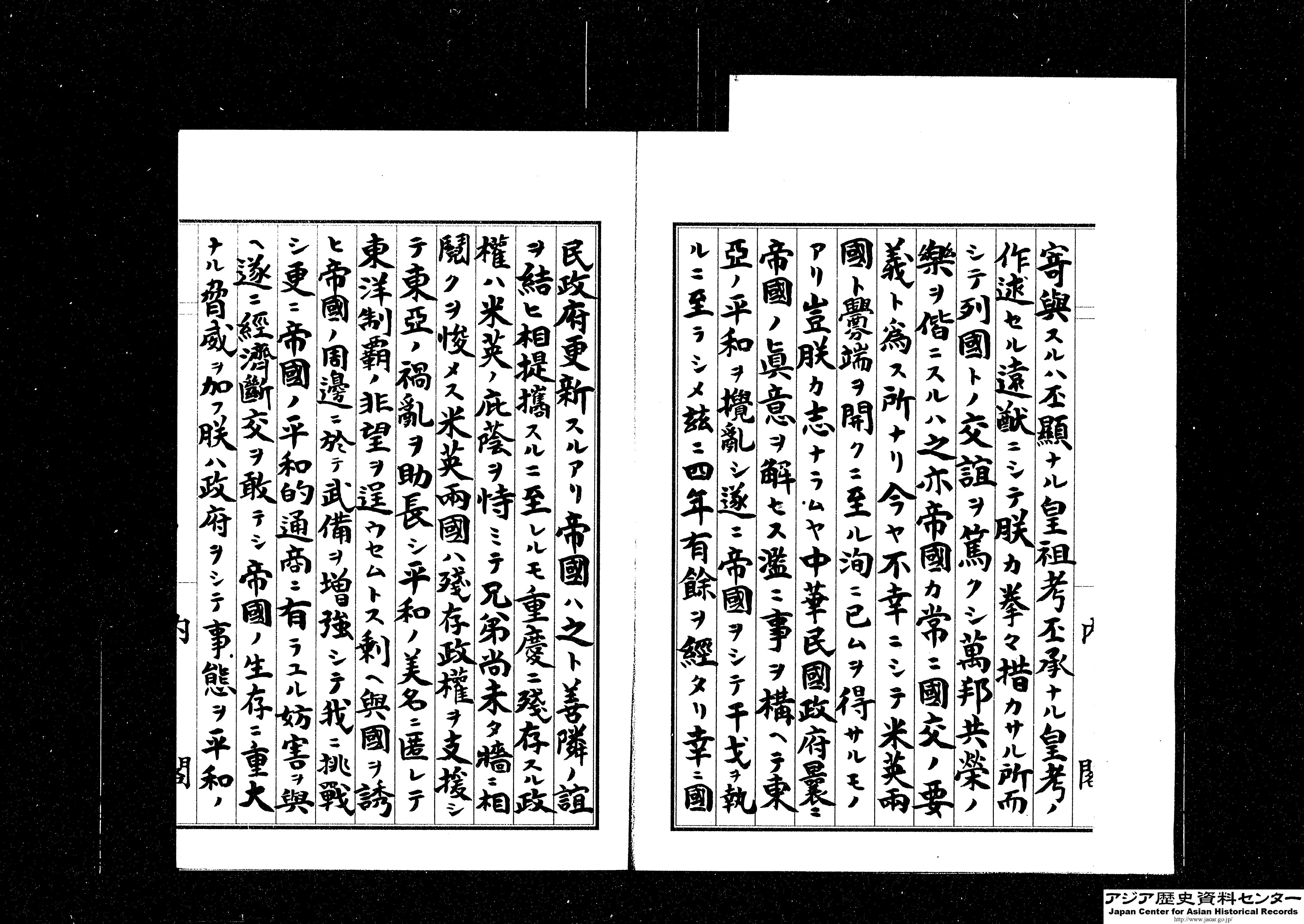
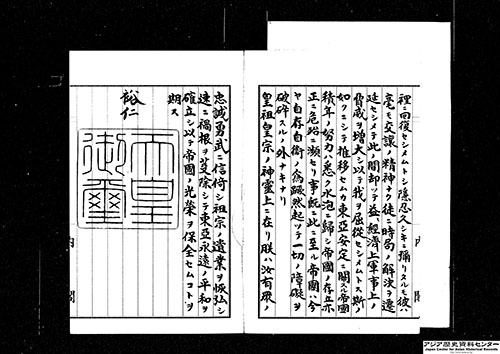
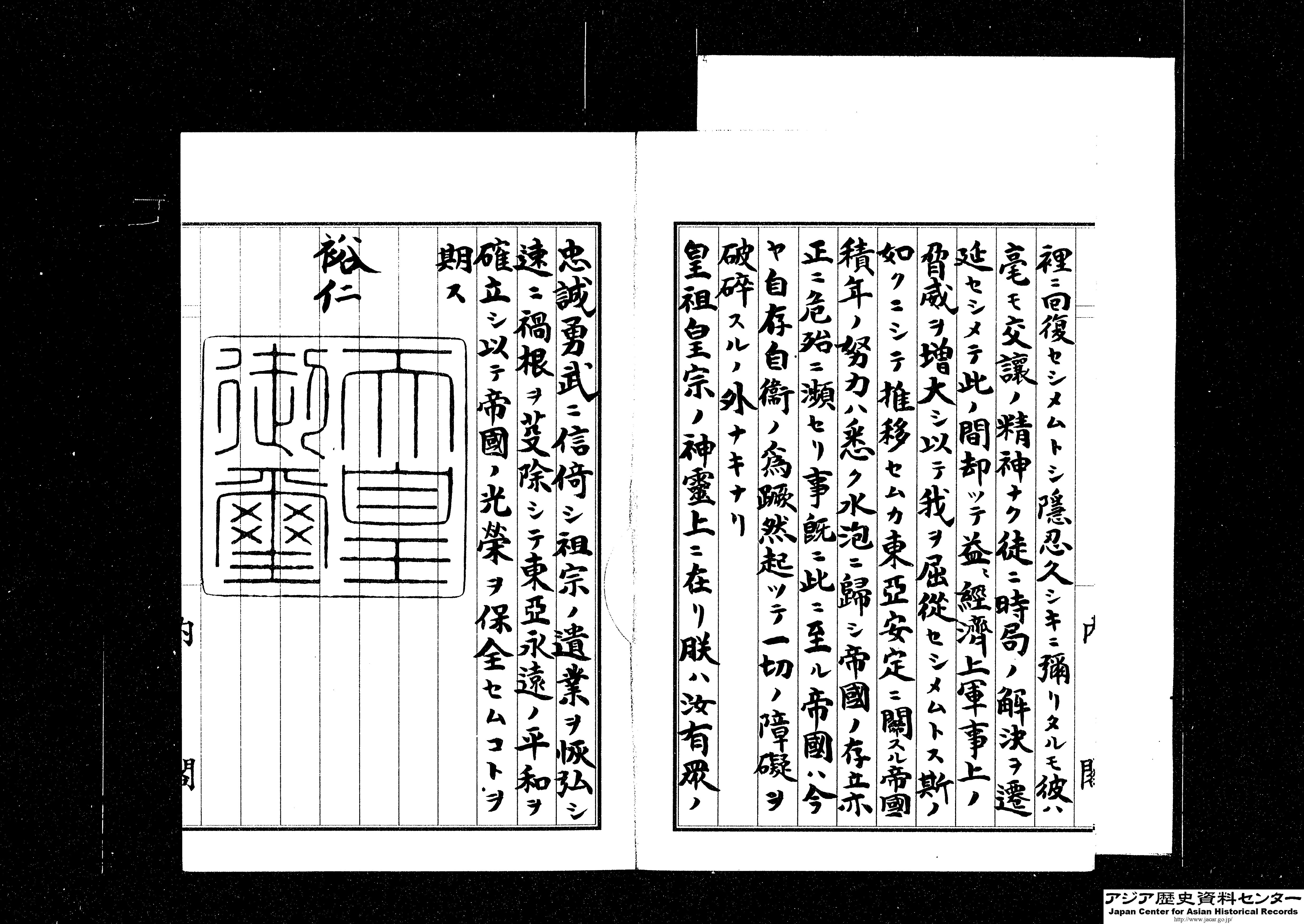
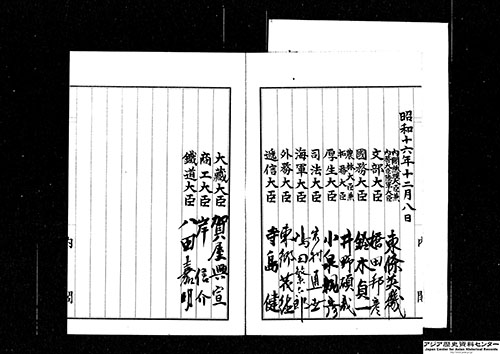
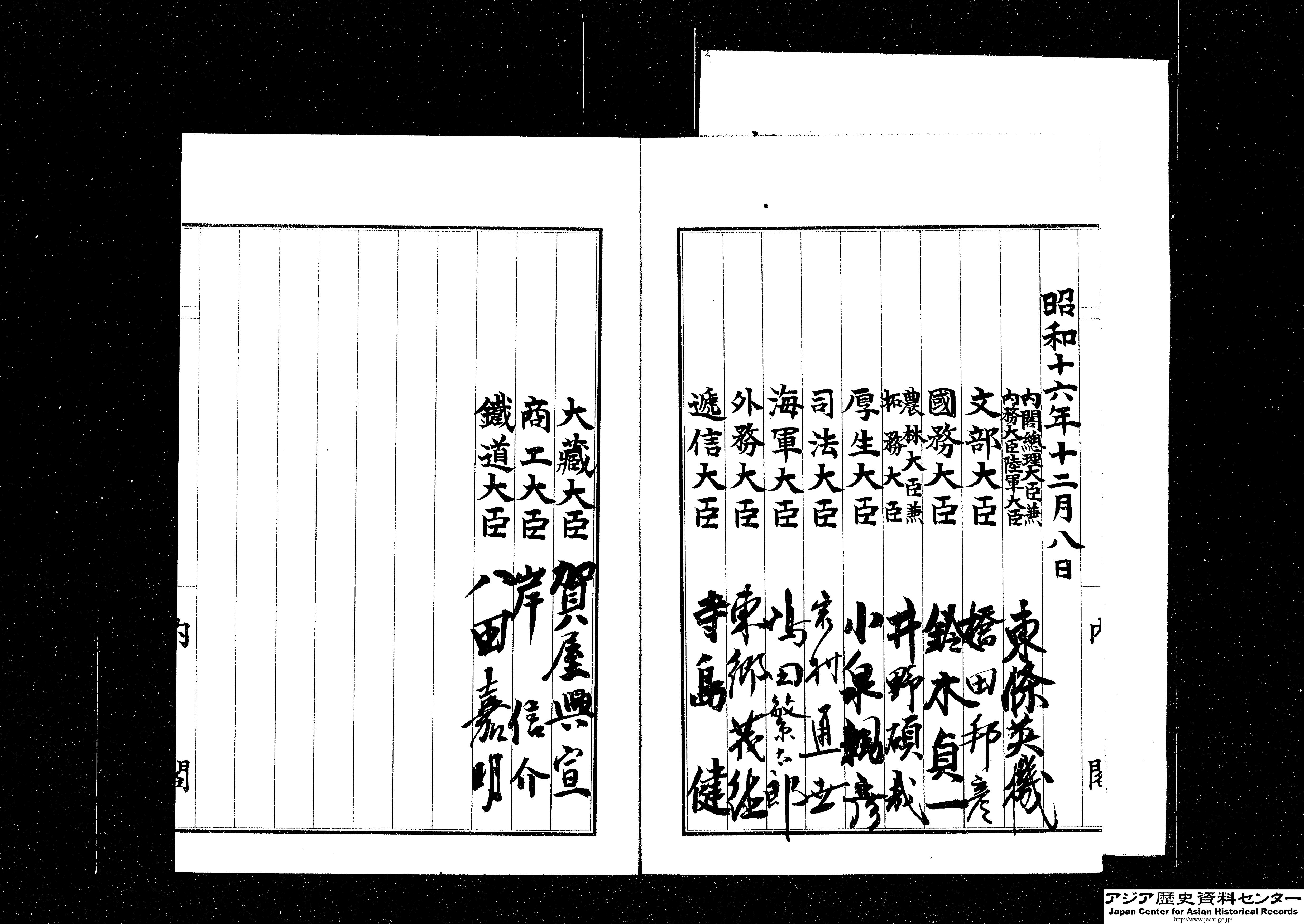
On December 8, 1941 (Japan time), Japan attacked Pearl Harbor in Hawai’i and began landing operations on the British-controlled Malay Peninsula, marking the start of the Pacific War.
The image above is the Imperial Rescript of the Declaration of War against the United States and the United Kingdom. Referred to as an “original signed copy,” which are the original documents that bear the Emperor’s signature and the imperial seal used when promulgating the Constitution, imperial rescripts, laws, treaties, and imperial decrees. It is housed at the National Archives of Japan.
[Documents 20 and 21] Battlefield Reports from Shashin Shūhō
“Shashin Shūhō No. 210” (Ref. A06031080500), 3rd image; “Shashin Shūhō No. 214” (Ref. A06031080900), 1st and 3rd images
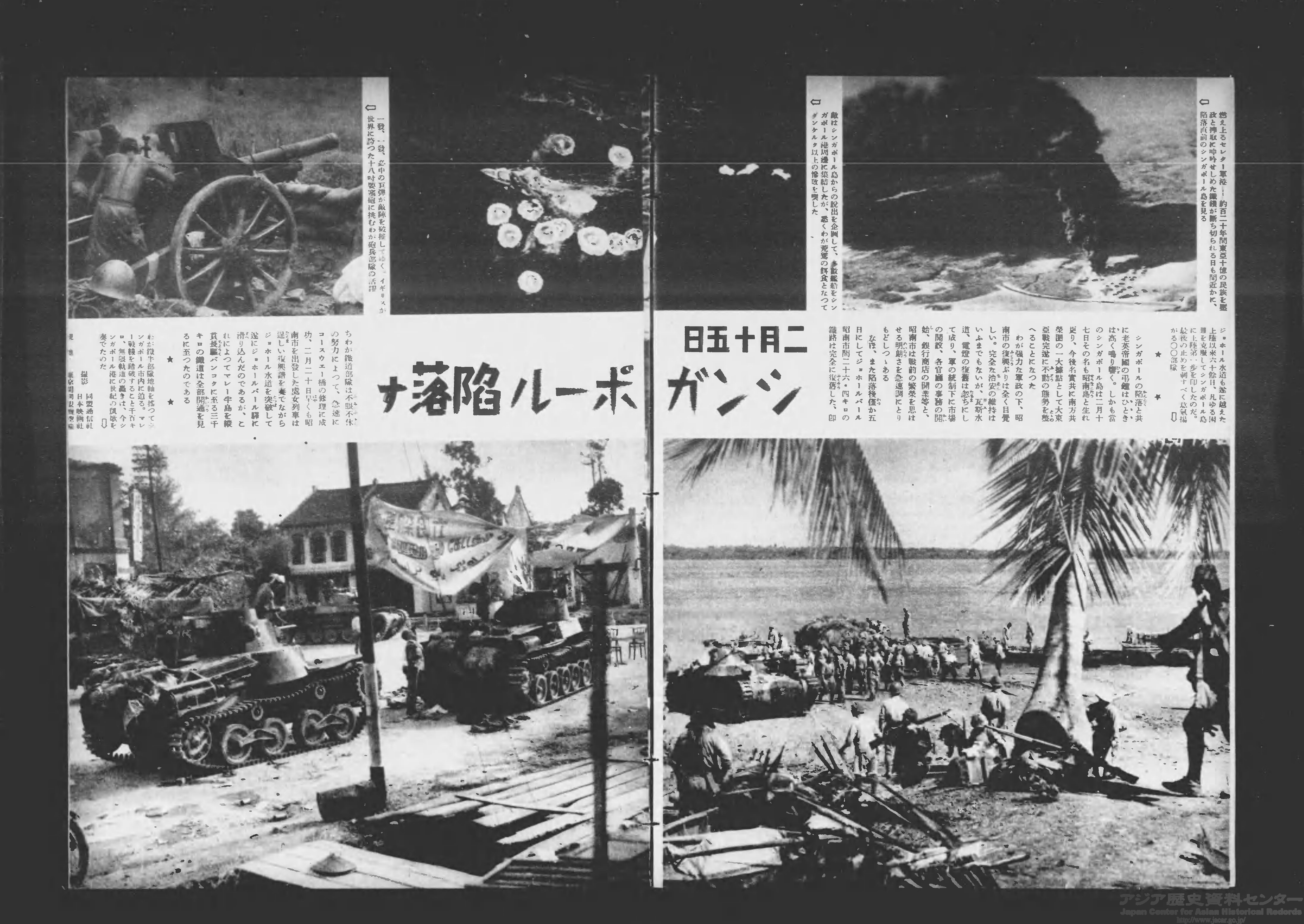
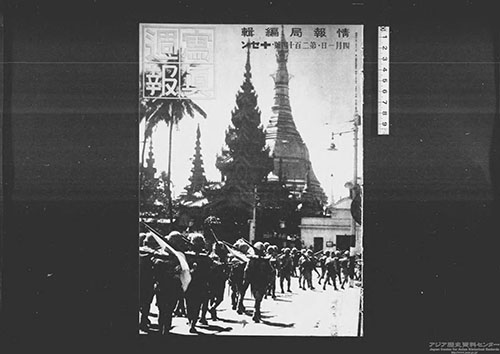
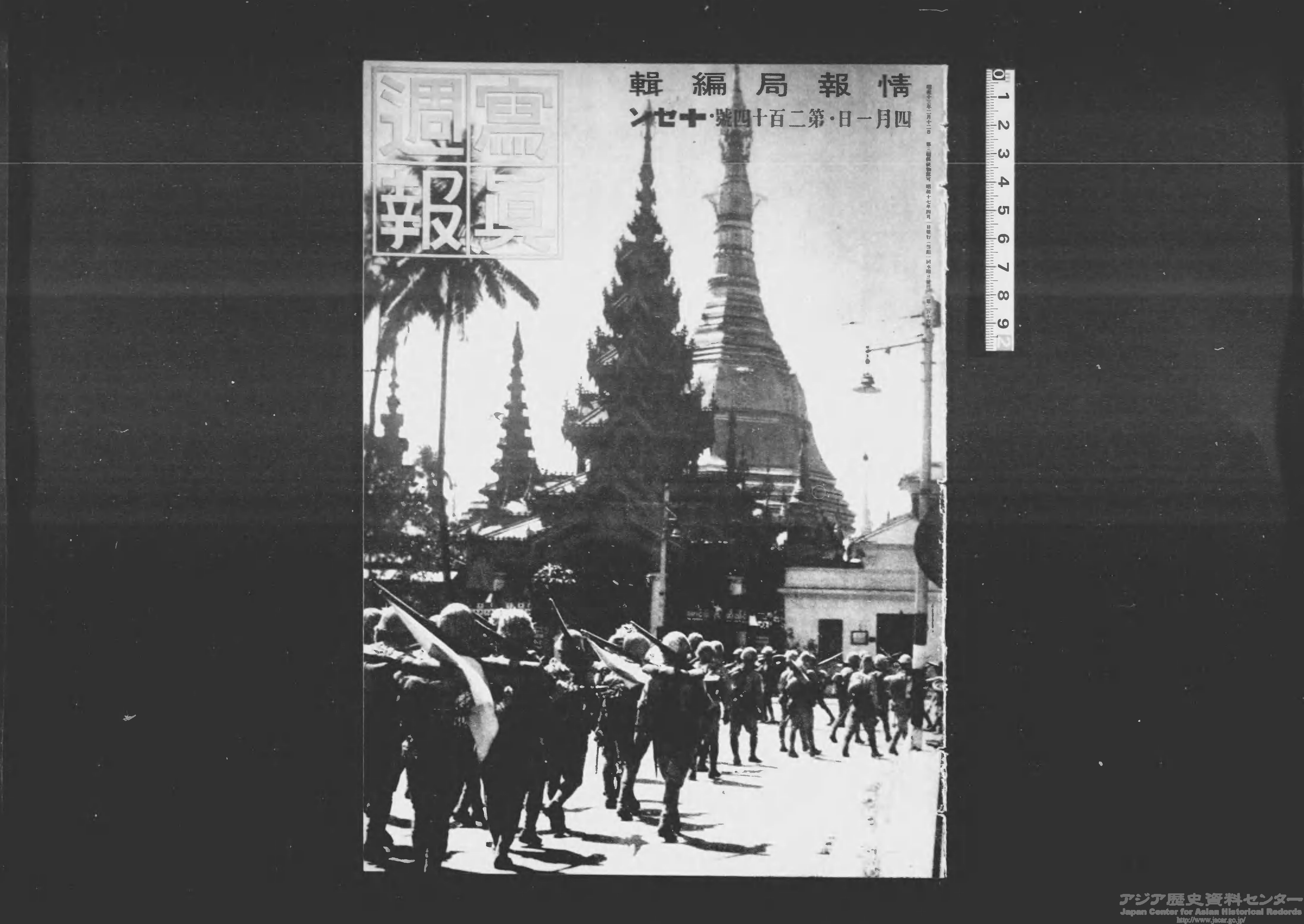
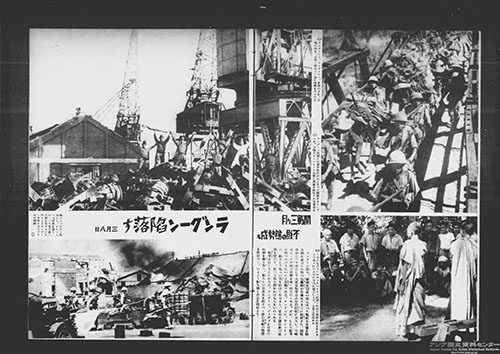
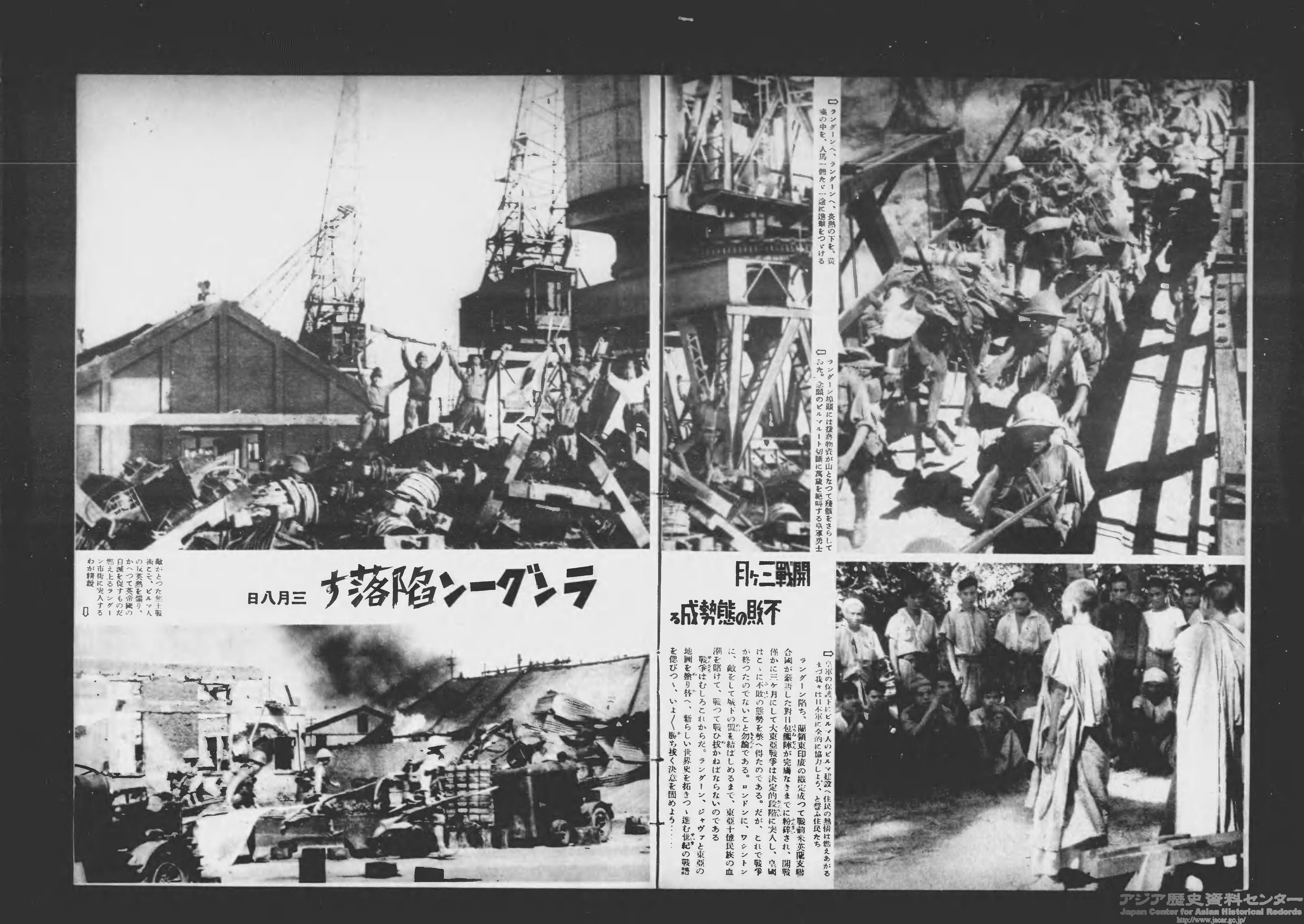
The Japanese military invaded various regions across Southeast Asia and the Pacific and expanded its front lines. The areas invaded included the U.S.-held Philippines, the Dutch East Indies, British Borneo, and British Burma (now Myanmar). .Shashin Shūhō published a steady stream of photographs from the battlefields. The images above are from articles reporting on the fall of Singapore on February 15, 1942, and the fall of Rangoon on March 8, 1942 (the issues of March 4 and April 1, respectively).
[Documents 22 and 23] “New Battlefield Encyclopedia” and “Map of the Greater East Asia War”
Shashin Shūhō No. 200 (Ref. A06031079500), 8th image; Shashin Shūhō No. 202 (Ref. A06031079700), 9th image
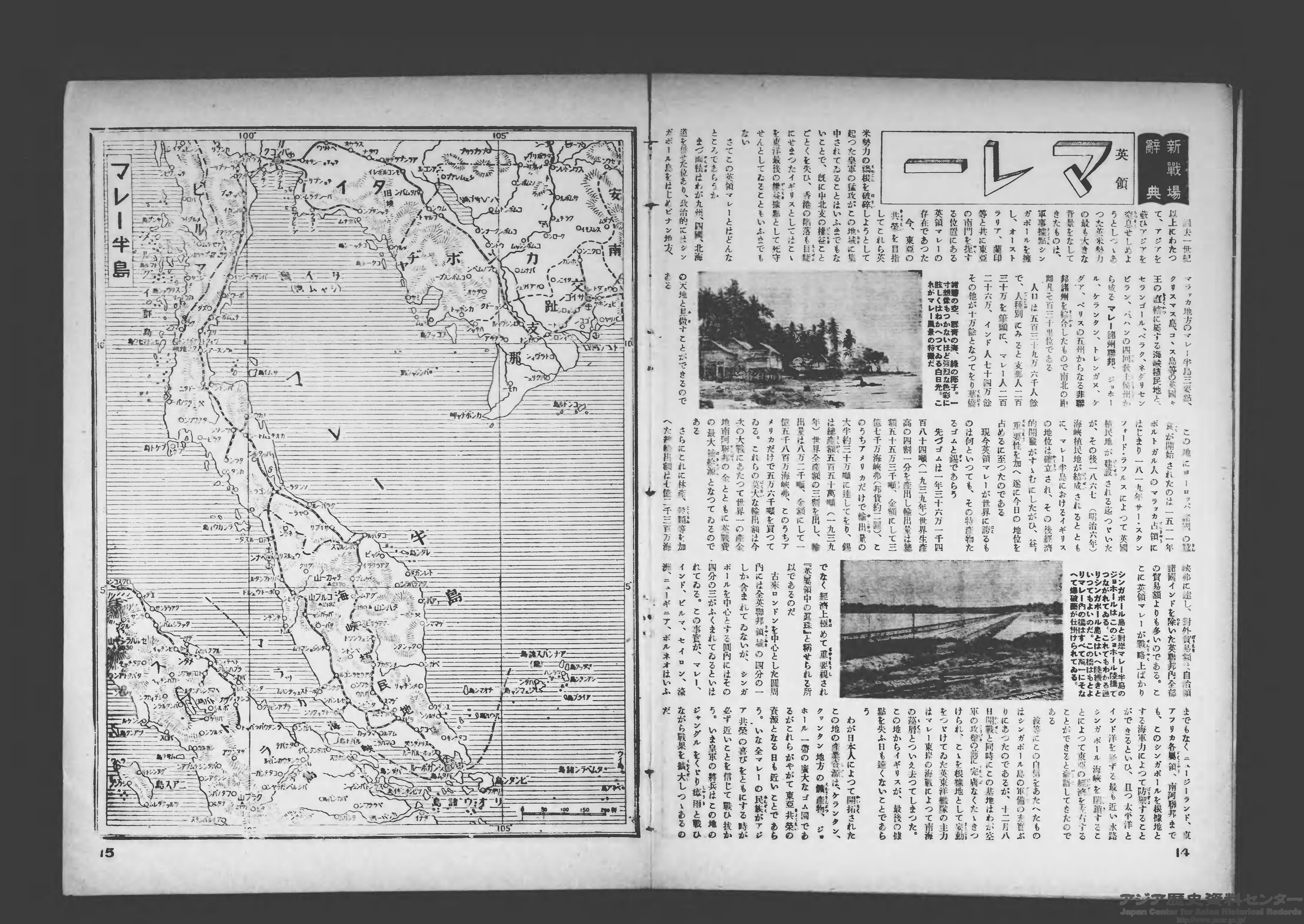
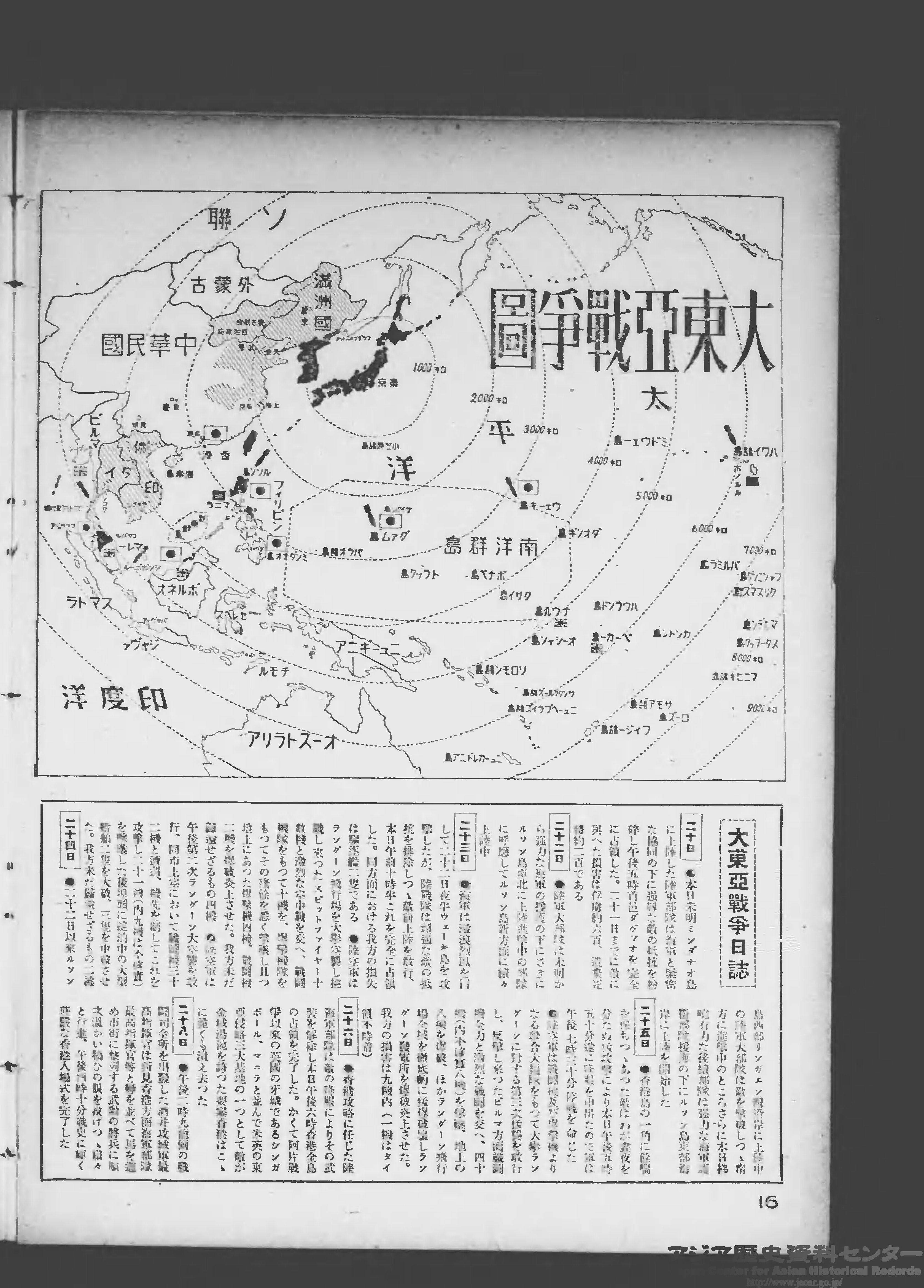
Issue No. 200 of Shashin Shūhō (December 24, 1941) featured an article titled “New Battlefield Encyclopedia” introducing Hawaii, the Philippines, and Malaya; thereafter, articles were added as the front lines expanded. The “Map of the Greater East Asia War,” first published in Issue No. 202 (January 7, 1942), appeared frequently in the magazine until the summer of that year (the August 5 issue), illustrating the expansion of Japan’s occupied territories and battlefronts.
[Document 24] Materials Concerning Military Administration in Southern Territories
“1. Questions and Answers at the Meeting of Regional Governors—November 28, Shōwa 17 [1942]” (Ref. C14060658100) Images 33 and 37
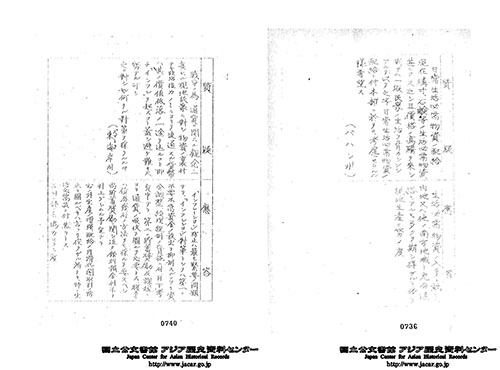
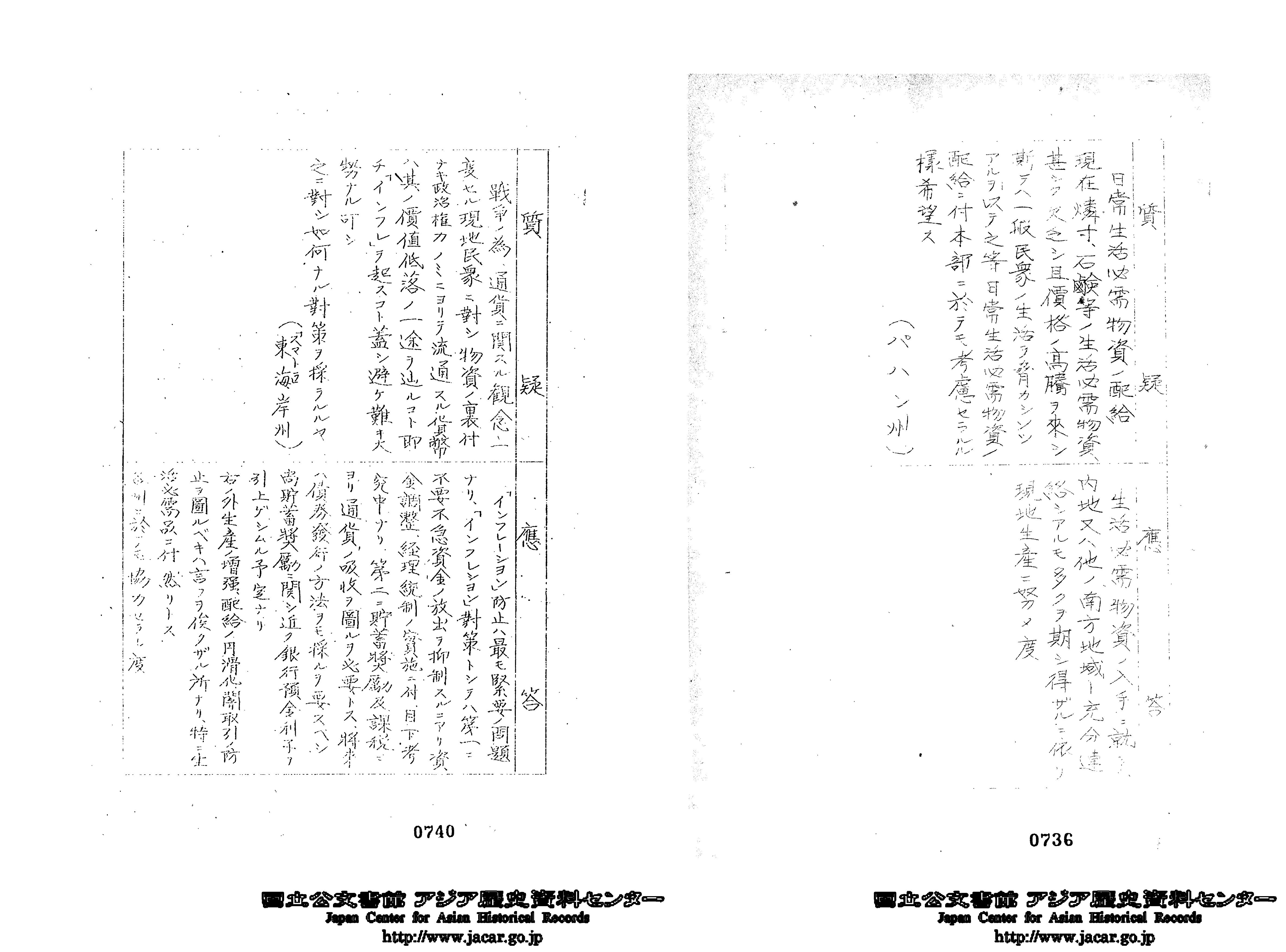
In the occupied territories of Southeast Asia, military administration was implemented based on the “Guidelines for the Administration of Occupied Territories in Southern Territories.” The administrative structure varied by region; in Malaya (Malaysia), Japanese governors and officials were dispatched to each state. The image shows a partial record of the question and answer session from a meeting attended by the governors of each state. Various responses were given on such matters as requests for measures to address inflation and shortages of daily necessities.
[Documents 25 and 26] Occupied Territories in the Southern Territories
“Shashin Shūhō, Issue 203” (Ref. A06031079800), 3rd image; “Shashin Shūhō, Issue 247” (Ref. A06031084200), 2nd–3rd images
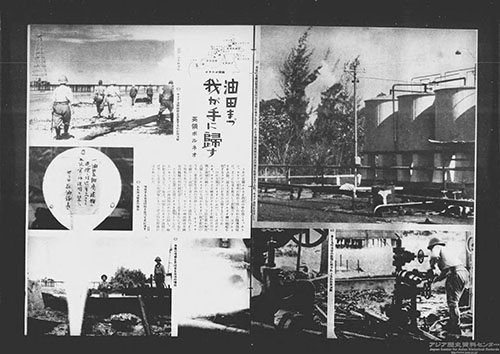
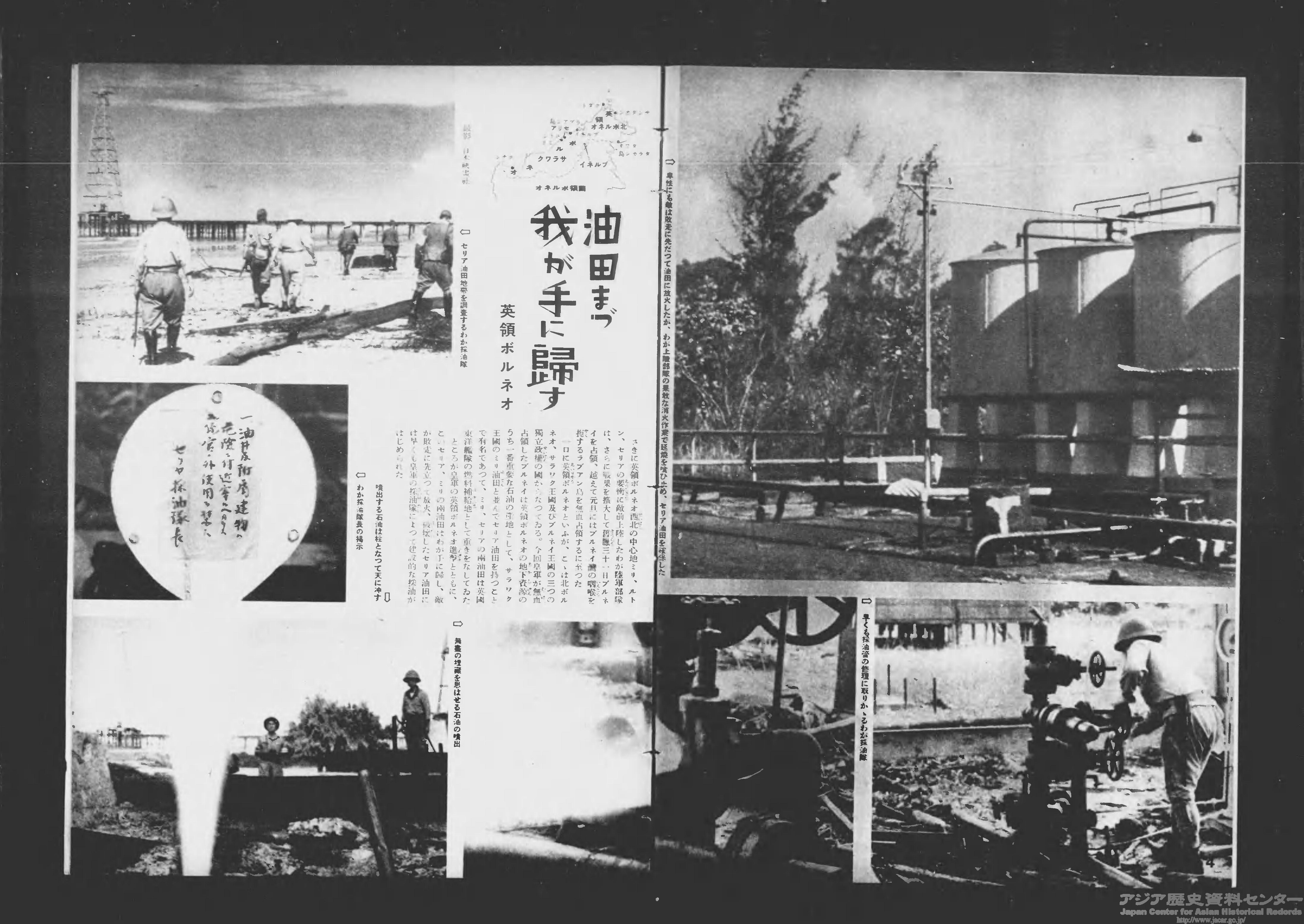
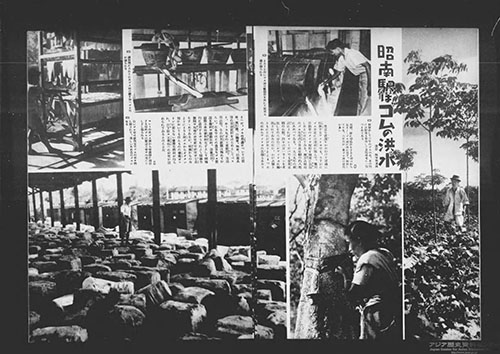
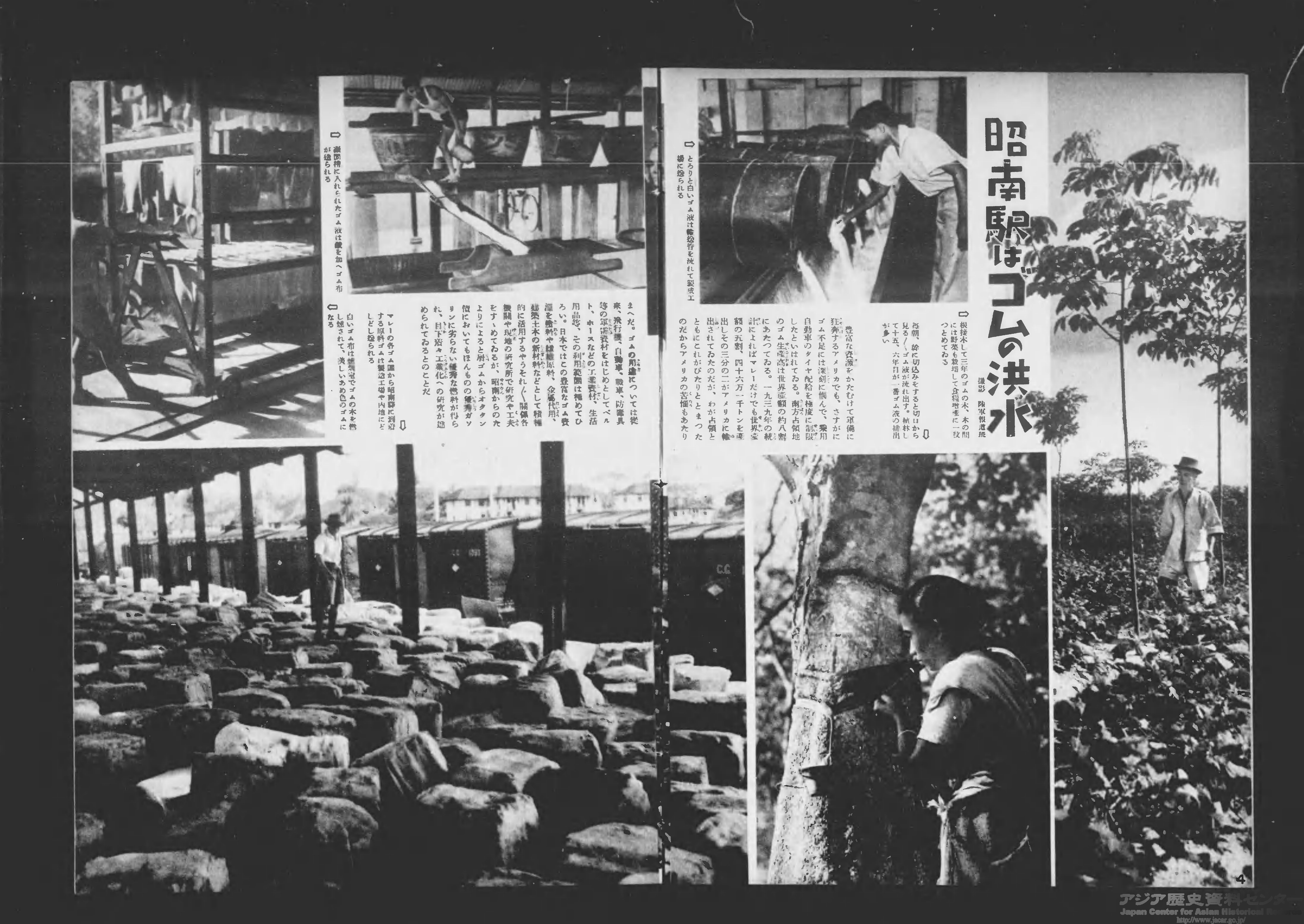
Shashin Shūhō frequently published articles reporting on conditions in various occupied areas of Southeast Asia.
The image on the left is from an article titled “The Oil Fields Are Now in Our Hands” (Issue No. 203, January 14, 1942) about the oil fields in British Borneo. Issue No. 247 (November 18, 1942) features the article shown in the image on the right, “Shōnan [Singapore] Station Flooded with Rubber,” as well as photographs and reports on conditions in the occupied territories, including street scenes in Rangoon, a national school in Manila, and Japanese language classes in Saigon.
[Document 27] Relations with Thailand
“16: Bankoku [Bangkok]” (Ref. B02033018400), Images 20–21
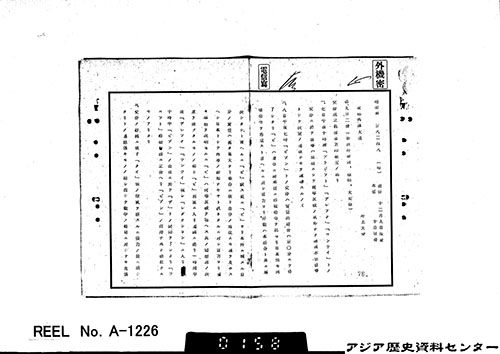
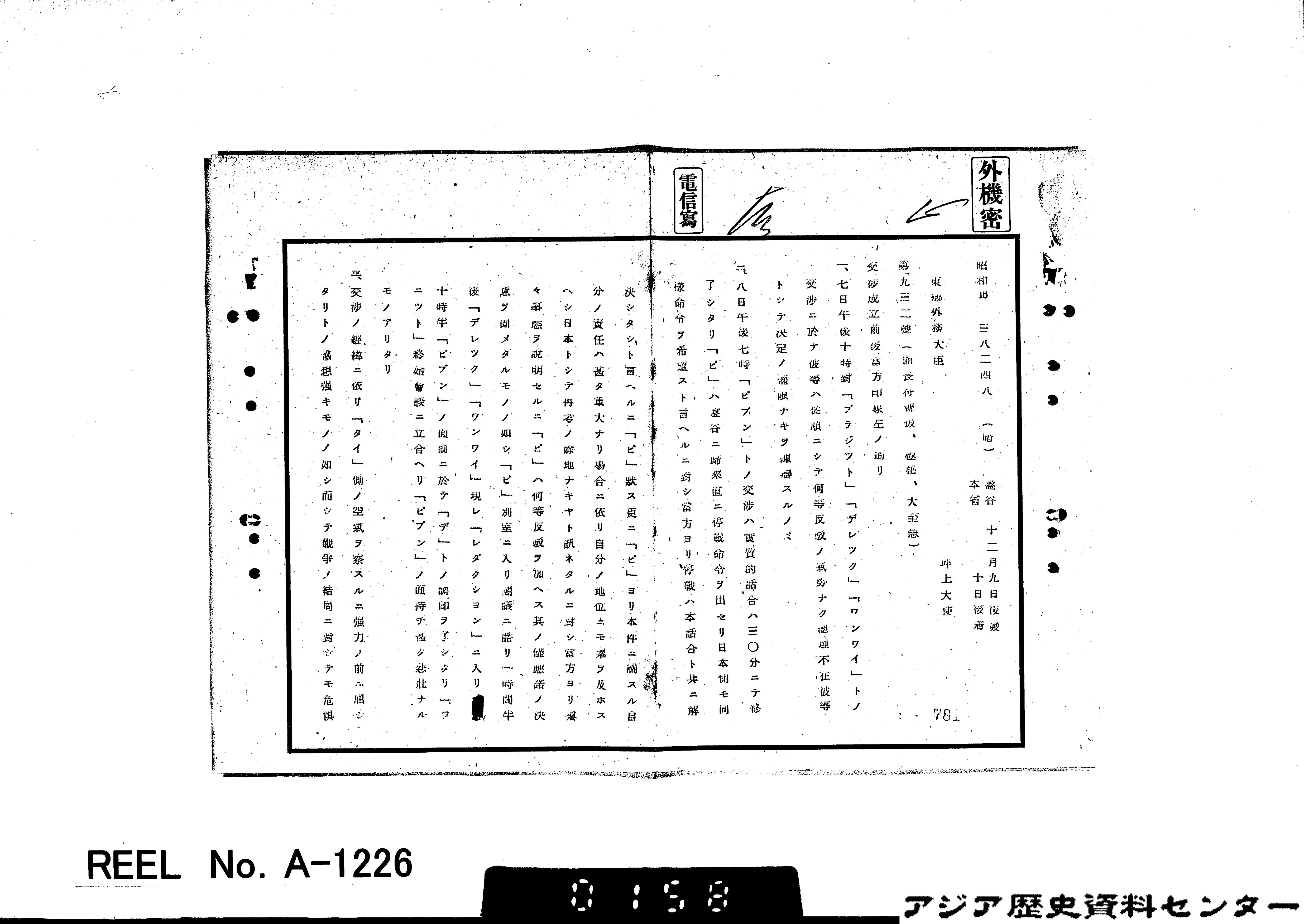
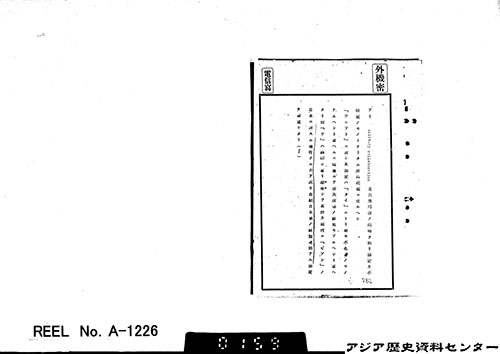
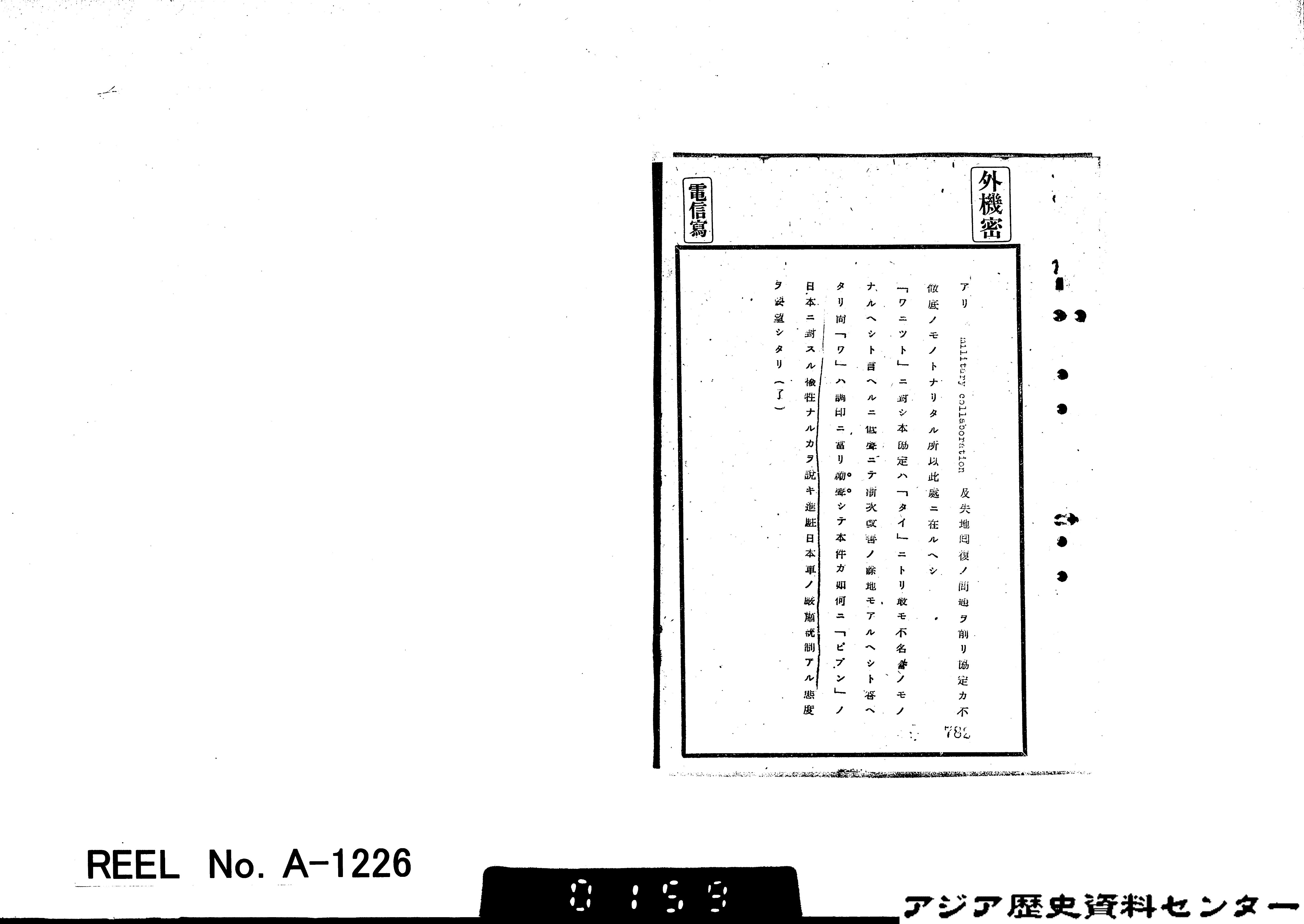
On December 8, 1941 (the day Japan declared war on the United States and the United Kingdom), the Japanese military attempted to pass through Thai territory to invade British Malaya. However, since the request for permission to pass through Thailand was not received in time, fighting broke out between Japanese and Thai forces. Nevertheless, Thai Prime Minister Plaek Phibunsongkhram (Phibun) signed an agreement on the same day granting the Japanese military permission to pass through Thai territory.
The document above is a telegram sent by Tsubogami Teiji, the Japanese ambassador to Thailand, to the Ministry of Foreign Affairs, describing Phibun’s demeanor at that time.
On December 21, Japan and Thailand concluded military alliance pact.
