1. The Unfolding of the Second Sino-Japanese War and the Launch of Shashin Shūhō
The Second Sino-Japanese War began in July 1937 following a military clash between Japan and China near the Marco Polo Bridge on the outskirts of Beijing (the Marco Polo Bridge Incident). The clash was a localized one at first; both sides sought to avoid its escalation. However, more and more forces were gradually deployed, the front lines expanded, and as a result the war grew longer.
As this was unfolding, the Cabinet Intelligence Bureau began publishing Shashin Shūhō. This magazine reported on developments on the battlefield and in occupied territories, and also on the conditions for soldiers on the front lines, while also featuring various articles on national policy.
[Document 1] The Outbreak of the Marco Polo Bridge Incident
“C. Confidential Records of the China Incident (From July Shōwa 12 [1936] to August Shōwa 12 [1936]) (1)” (Ref. C14120633300) Images 1–2
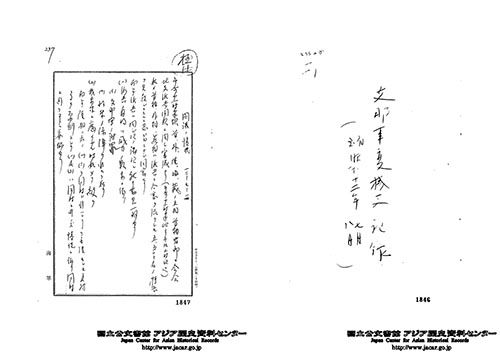
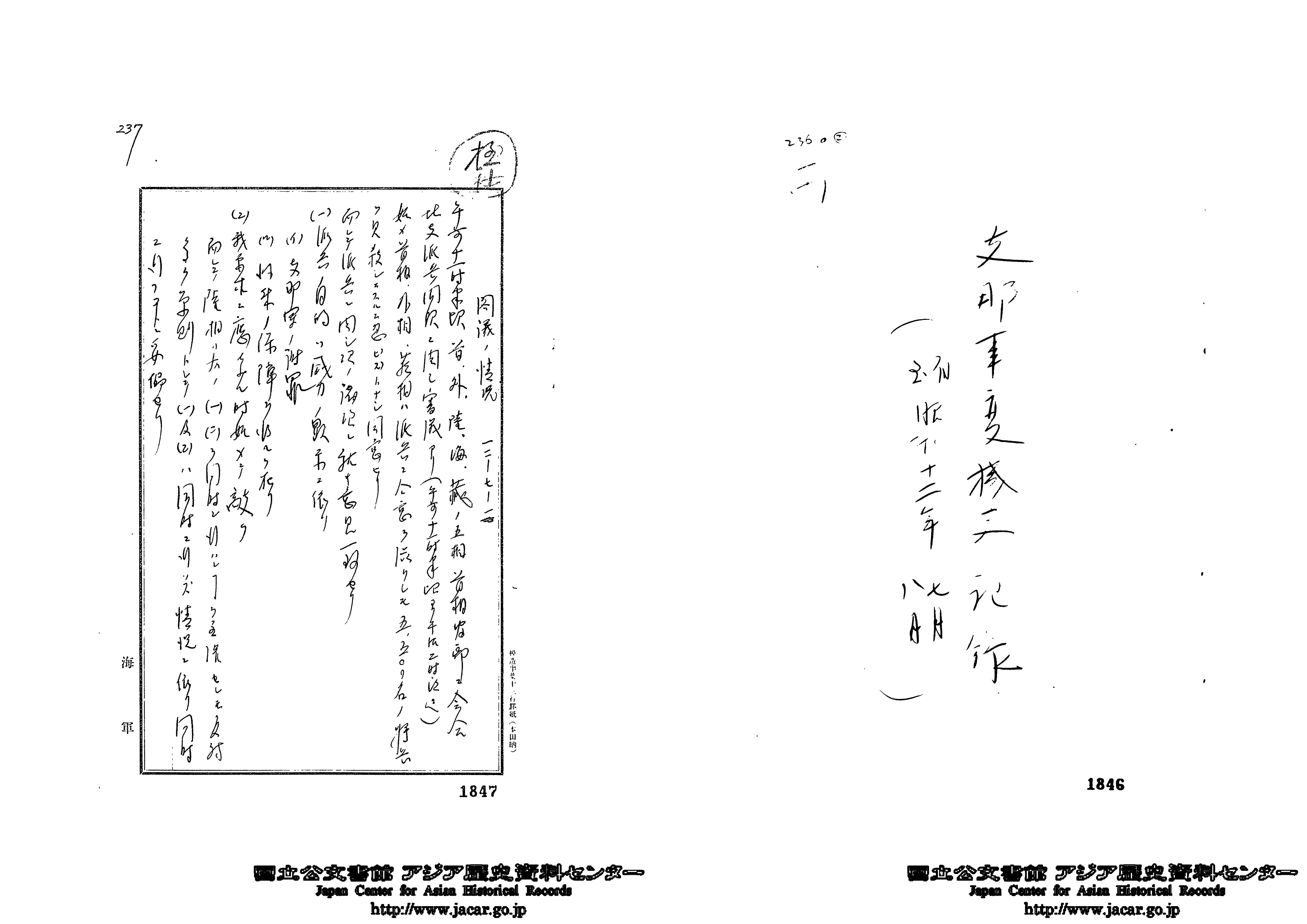
Although a ceasefire agreement was reached on the ground following the incident (which had occurred on the night of July 7), a Cabinet meeting on July 11 decided to dispatch the “Kwantung Army” and the “Korean Army” (Japanese garrison units in Manchuria and Korea), followed by domestic divisions (Japanese military units from the Japanese mainland). This led to the war becoming more protracted.
The document linked to below is a record compiled at the time by a mid-level Navy officer. It begins with a description of the Cabinet meeting of July 11, when the decision to dispatch troops to northern China was made, and records the Navy’s analysis of the situation as well as the content of operational communications with mid-level Army officers.
[Document 2] The First Konoe Statement and the Ministry of Foreign Affairs
“4. Matters Concerning Important National Policies (Relevant to the China Incident) / 10) Imperial Government Statement” (Ref. B02030523700) 2nd image
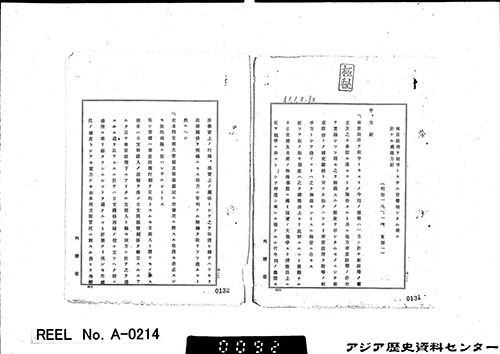
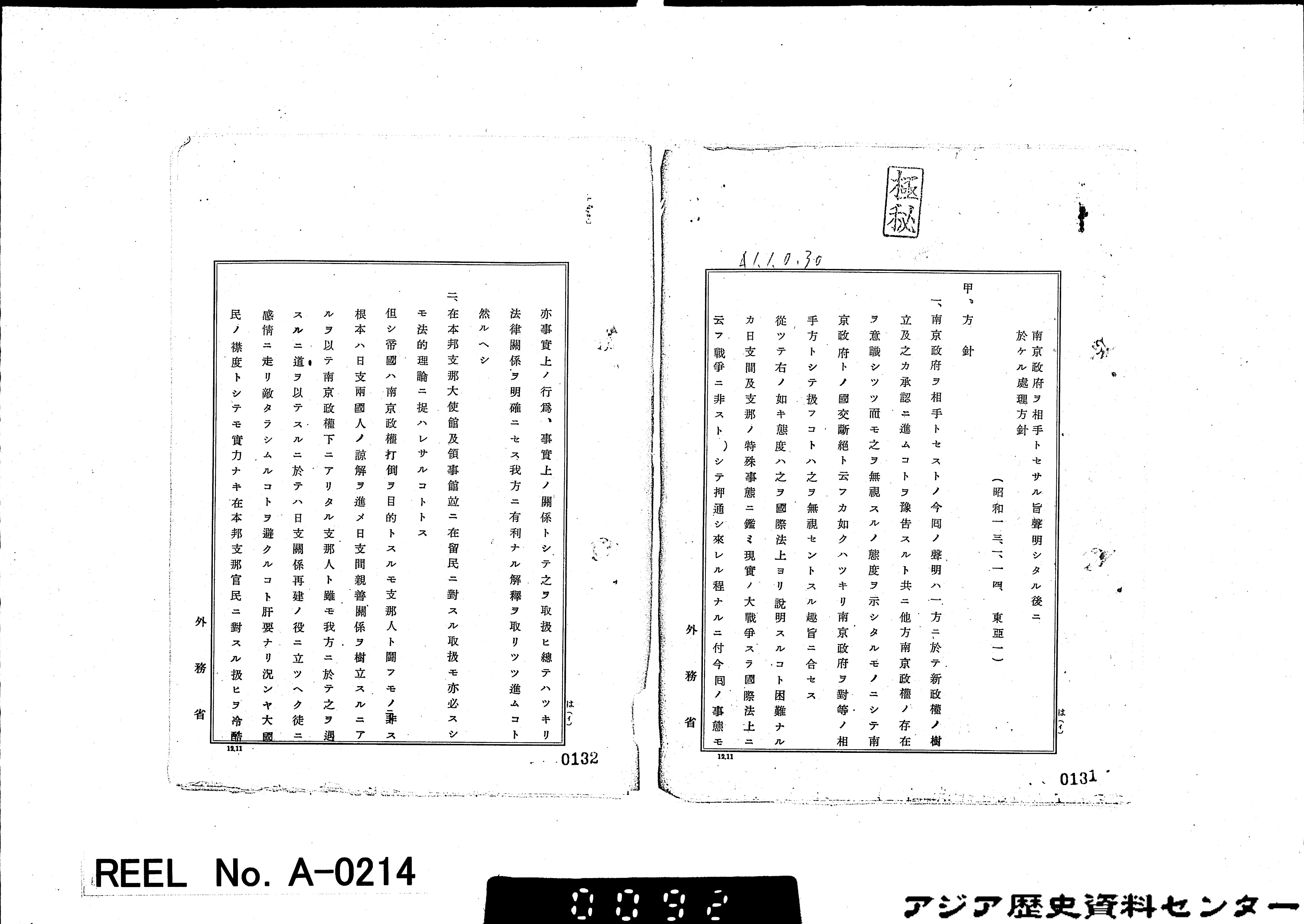
After the fall of the Nationalist capital Nanjing, Chiang Kai-shek’s government relocated to Chongqing and continued its resistance. In January 1938, Prime Minister Fumimaro Konoe issued his first in a series of statements, declaring, “We will no longer deal with the Nationalist Government,” thereby severing peace negotiations with Chiang’s regime.
The preceding document set forth the Ministry of Foreign Affairs’ policy in the context of Konoe’s statement. Reviewing the contents, the policy they indicated showed the government would proceed based on interpretations favorable to Japan—without clarifying the legal relationship—just as the war had been treated as “not a war” even though explaining this position under international law would be difficult.
[Document 3] The Launch of Shashin Shūhō
“Shashin Shūhō, Inaugural Issue” (Ref. A06031059600), Images 7–8
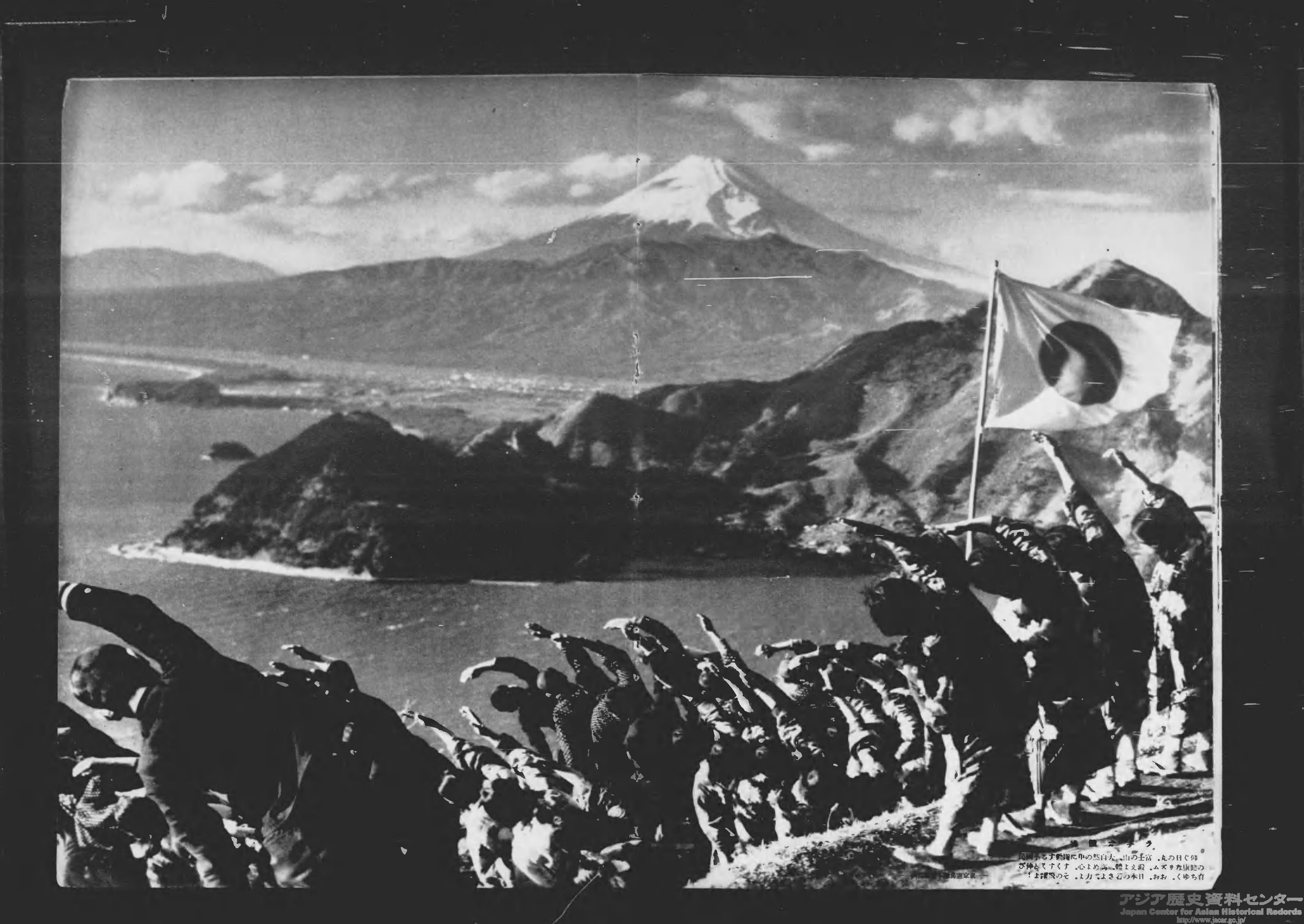
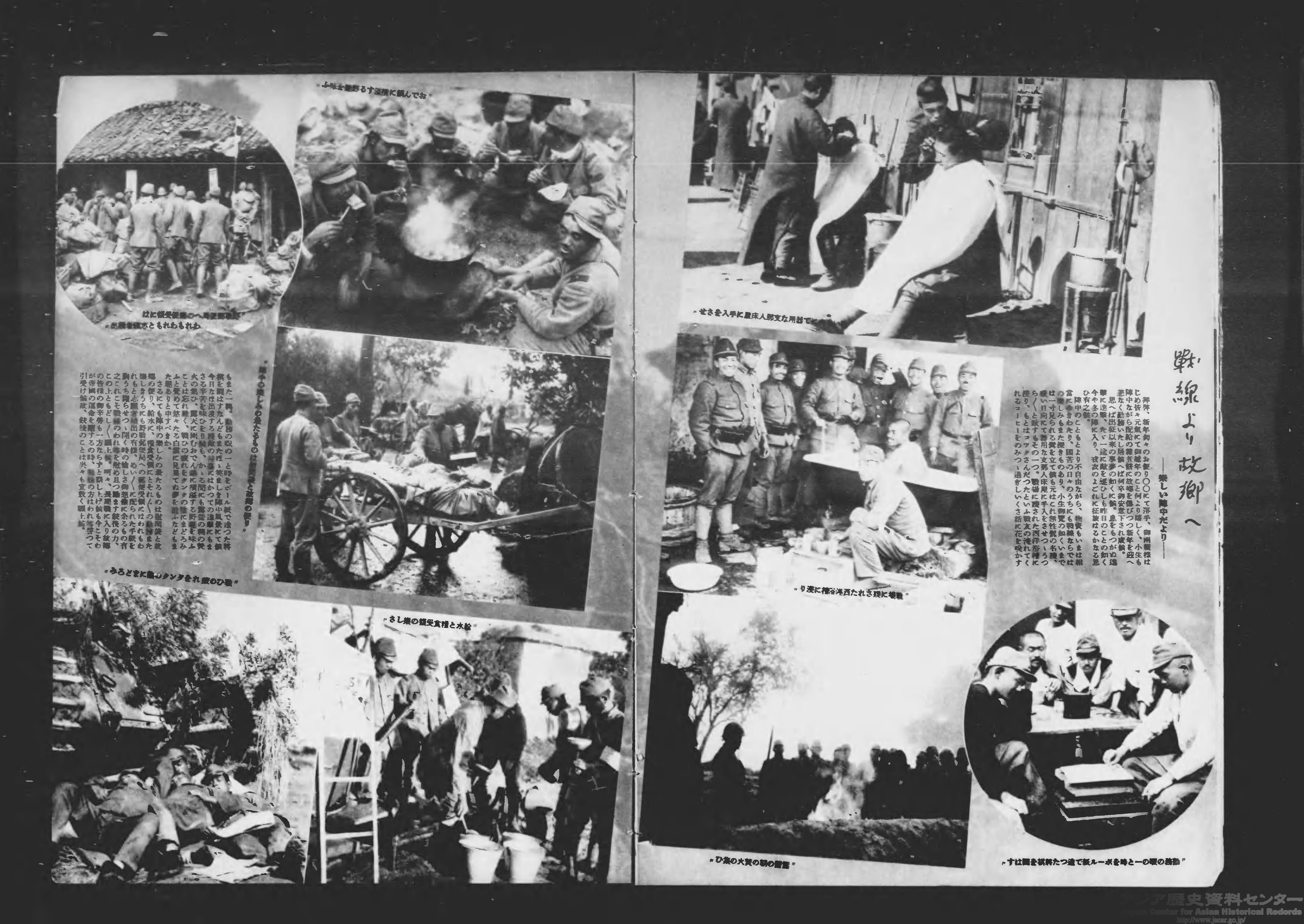
On February 16, 1938, the inaugural issue of Shashin Shūhō was published as part of the government’s public relations policy. The upper left of the image shown here is captioned, “Radio Calisthenics;” it was presented as a full-spread photograph. The upper right, captioned “From the Front Lines to Home,” presents photographs of soldiers on the battlefield. In addition, the inaugural issue also contains articles introducing the newly established Ministry of Health, as well as articles on Manchūkuo.
In the “Some Words on the Start of Publication” (Image 12), the writer contrasts the magazine with the previously published Shūhō [Weekly report]. They write, “If Shūhō was a pamphlet about national policy, Shashin Shūhō is a sister publication that could be called one that represents national policy ‘graphically.’” The text concludes, “We are believe that educational and promotional efforts through photography can have immense power. We cannot help but hope that all entities involved with photography—whether public, or private, or artist groups, or private studios—will be totally mobilized to contribute, through the camera or the lens, to edification efforts both at home and abroad that will bear fruit in serving the nation through photography.”
Related Content: “What Was Shashin Shūhō?: The Evolution of Government Agencies Engaged in Public Relations and Propaganda Activities and Shashin Shūhō” (Japanese only)
[Document 4] Reports from the Battlefields
“Shashin Shūhō, Issue 16” (A06031061100), Images 1 and 4
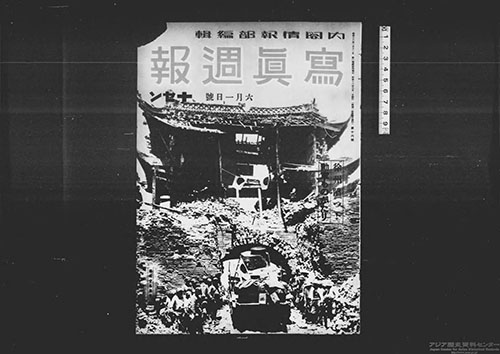
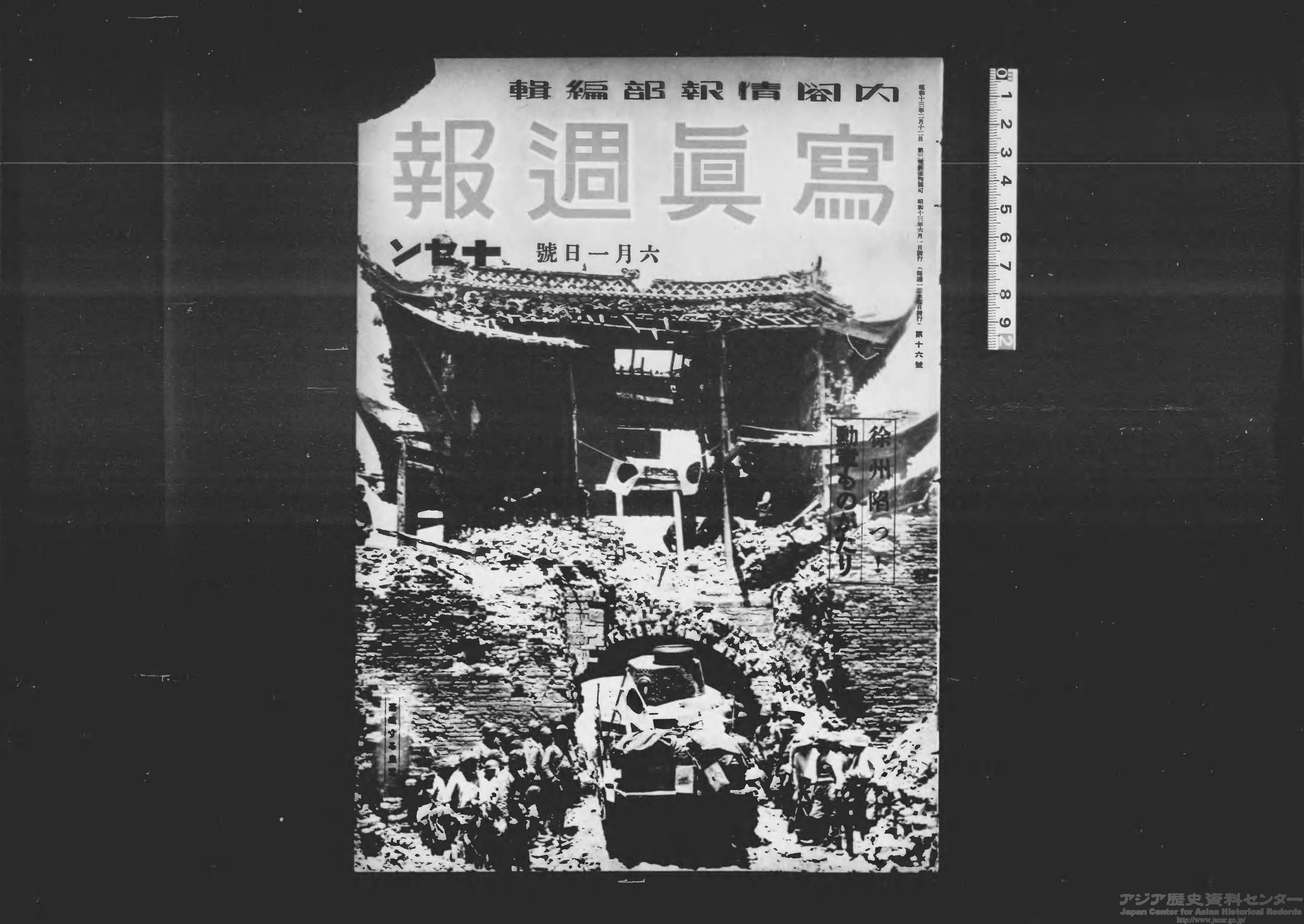
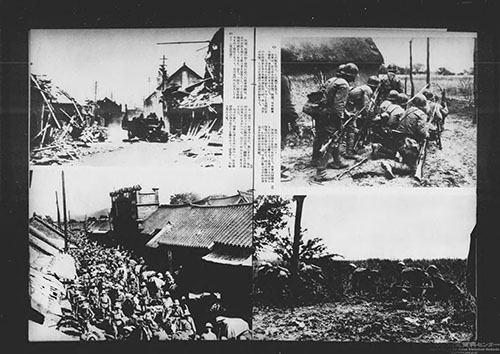
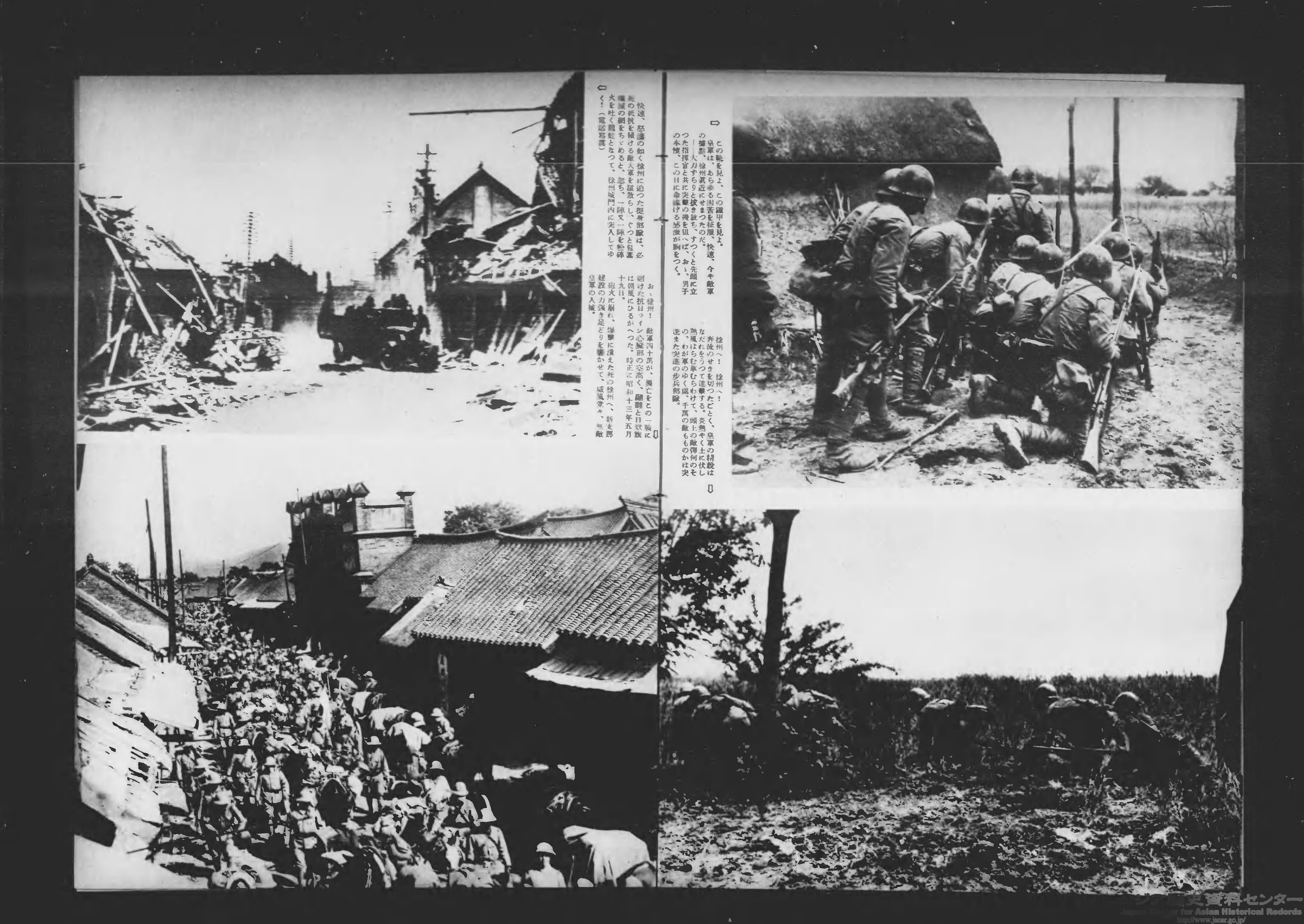
The magazine also ran reports accompanied by photographs from the battlefields in China. The image shown here is from Issue No. 16 (June 1, 1938), which reports on a Japanese military operation (the Xuzhou Campaign).
[Document 5] Wang Jingwei’s Escape from Chongqing
“1. January 13, Shōwa 15 [1939] to March 28, Shōwa 15 [1939]” (Ref. B02031745200), 2nd image
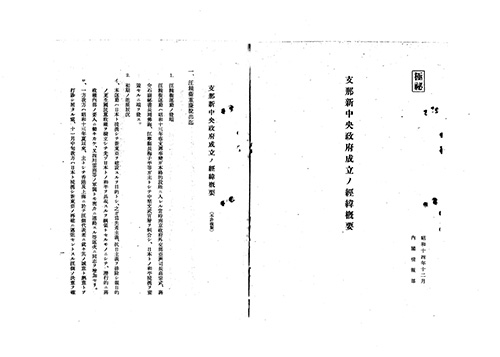
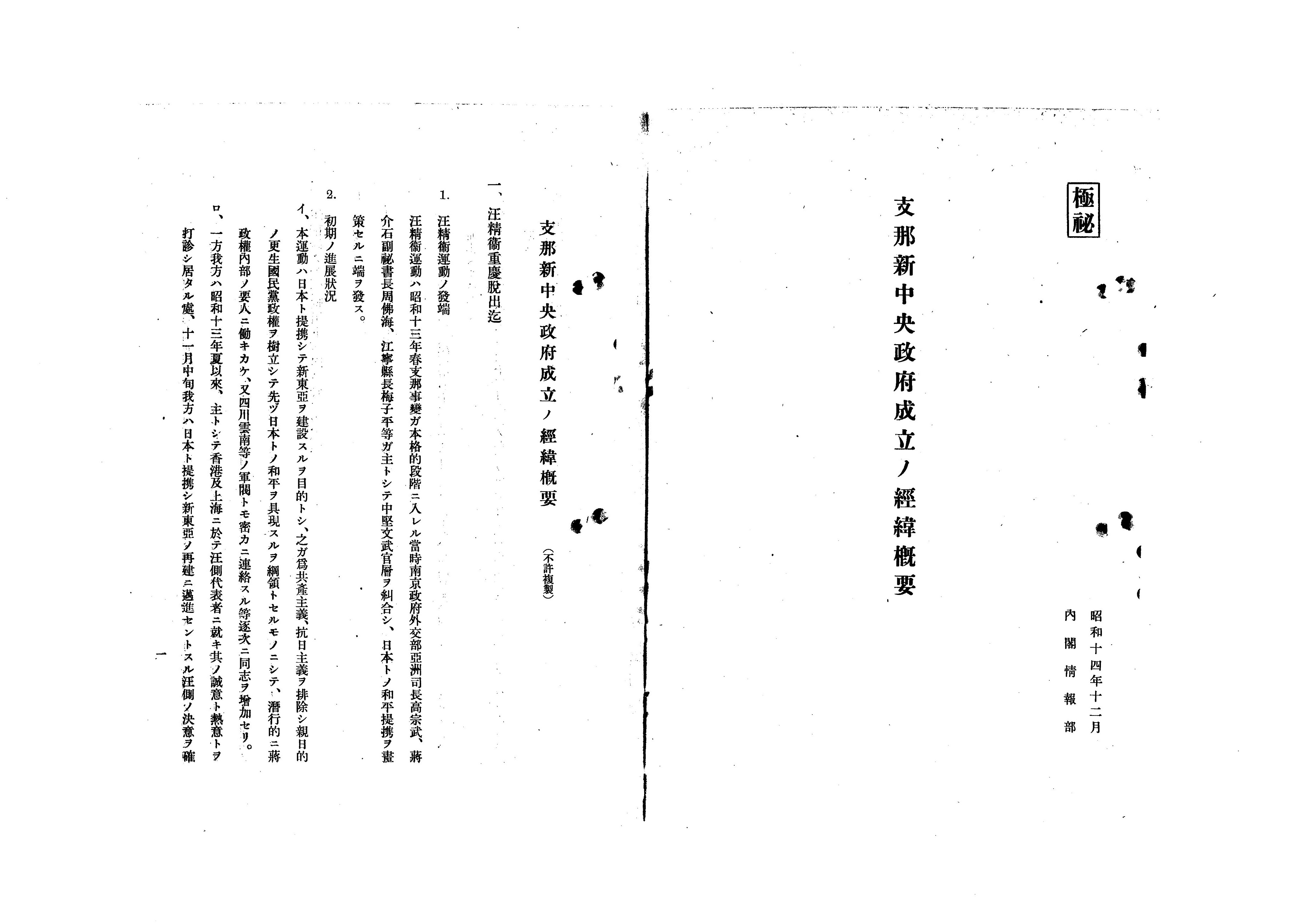
Prominent Nationalist Government politician Wang Jingwei sought compromise and peace with Japan. In December 1938, he fled Chongqing and moved forward on preparations to establish a new government. This document was later created by the Cabinet Intelligence Department and summarizes the course of events (image shows the reports cover and opening paragraphs).
[Document 6] Second and Third Konoe Statements
“Collected Speeches of Prime Minister Konoe” (Part 2) / 1 Chapter 1: “Statements, Proclamations, Directives, and Addresses” (Ref. B02030031600) Images 8–10
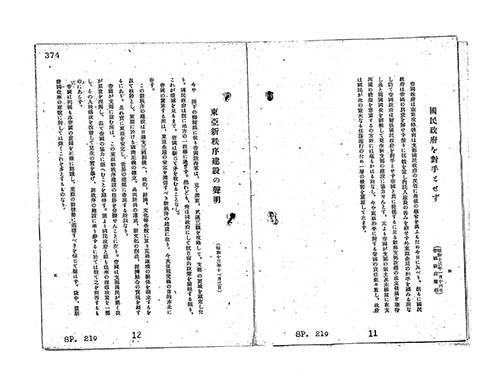
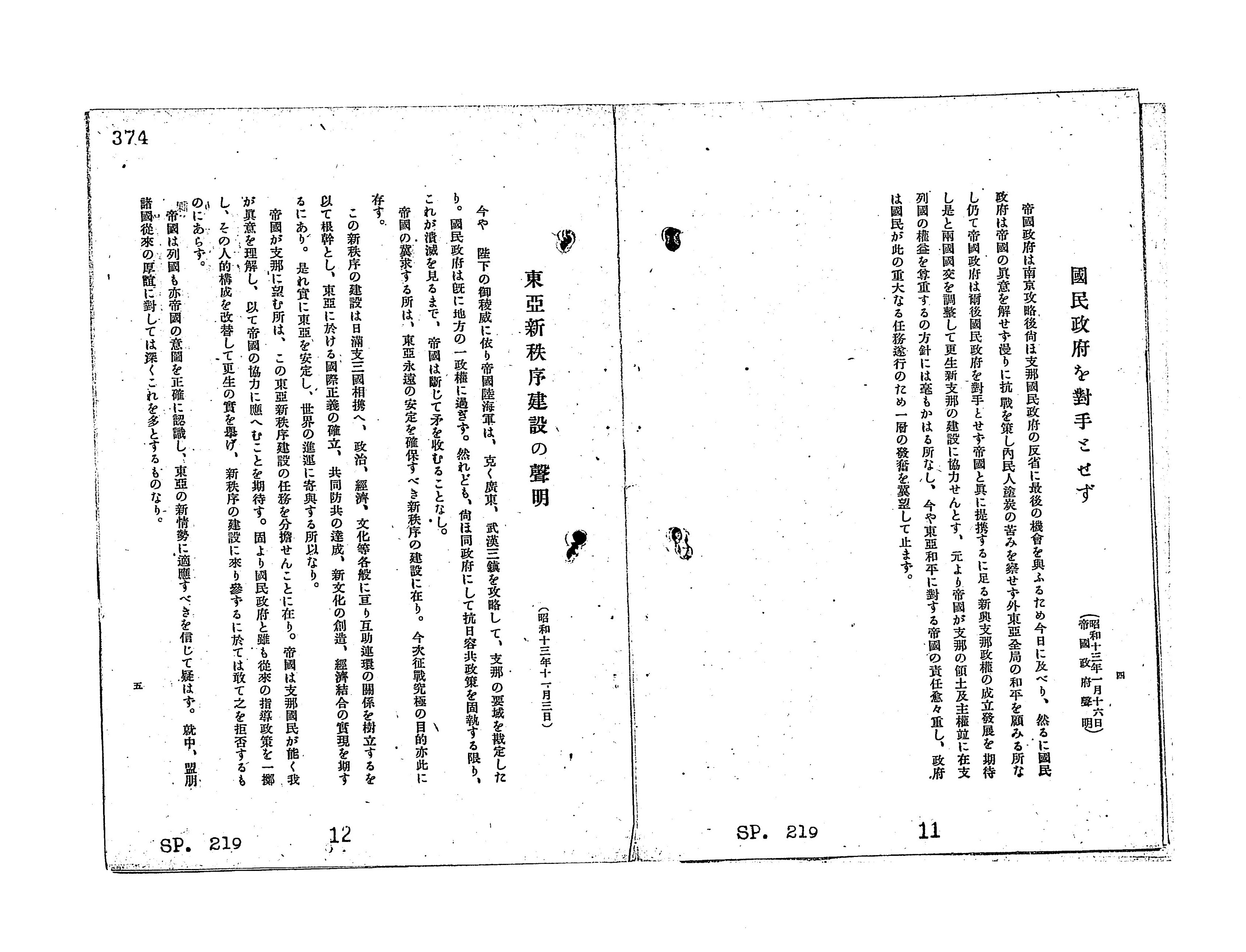
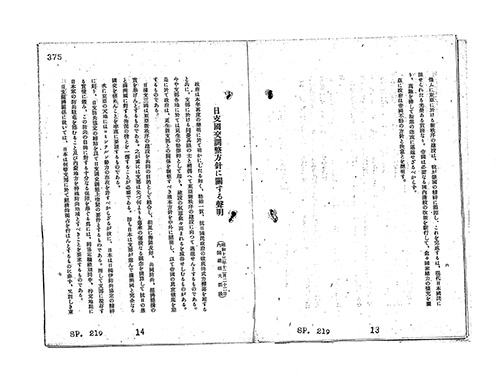
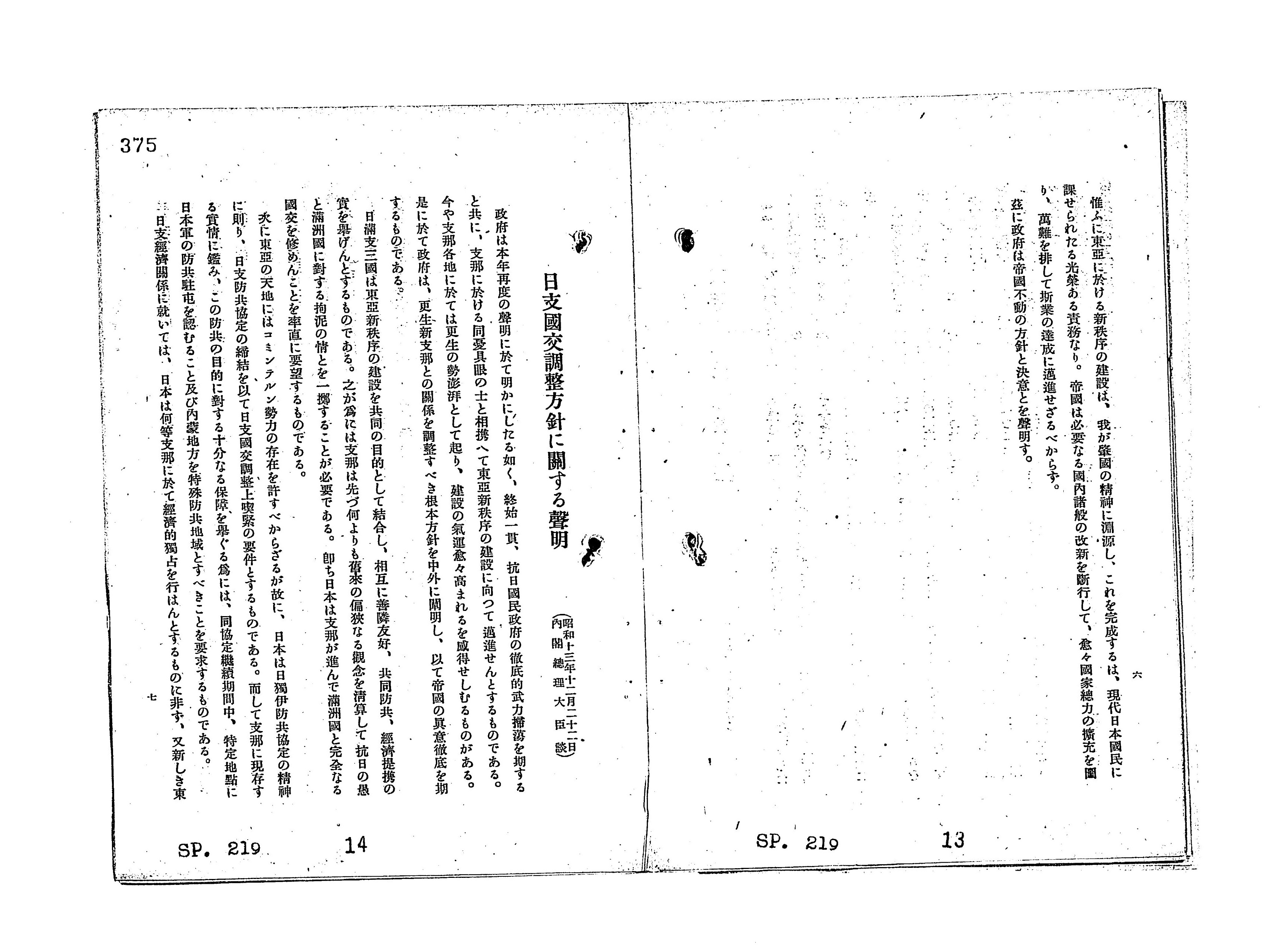
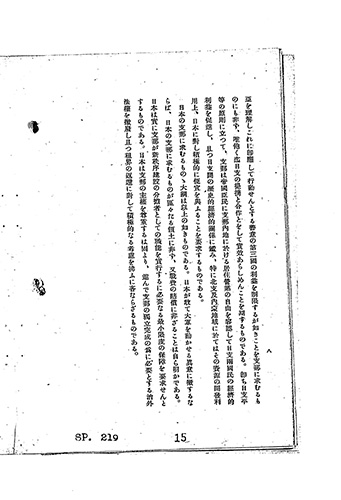
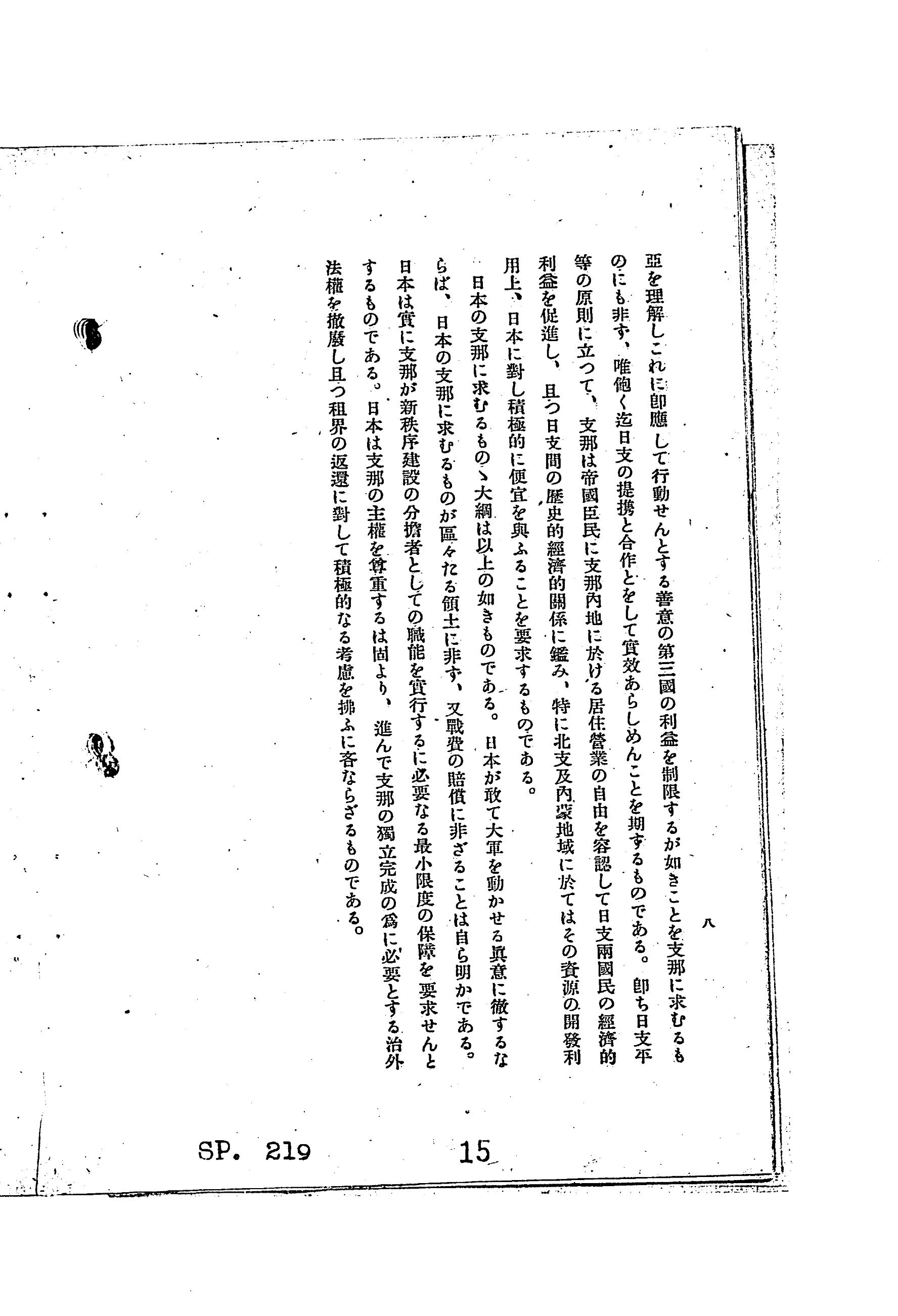
On November 3, 1938, Prime Minister Konoe Fumimaro issued a declaration (the second Konoe statement) on “building a new order in East Asia,” saying the Chiang Kai-shek government would not be refused participation in it. Subsequently, on December 22, he issued his third statement in which he set forth the three principles of “Good-neighborliness, Joint Anti-Communism, and Economic Cooperation” as a policy for adjusting diplomatic relations with China.
The document shown above contains the first, second, and third Konoe statements.
[Document 7] The Bombing of Chongqing
“Shashin Shūhō, Issue No. 67” (Ref. A06031066200), 6th image
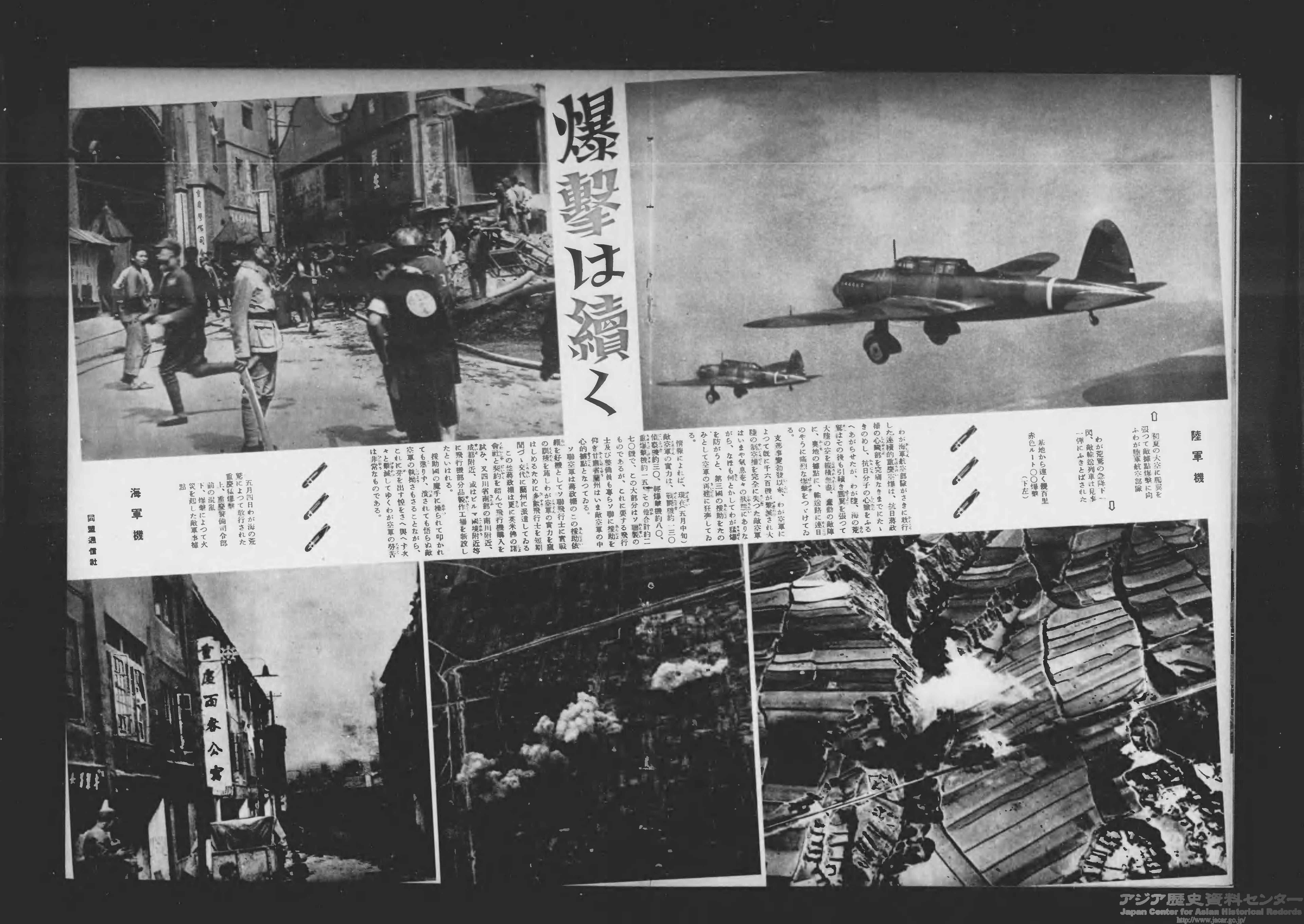
The Japanese military carried out bombing raids on Chongqing, where the Nationalist Government had relocated its headquarters, and Shashin Shūhō frequently reported on these attacks. The image above is from the May 31, 1939, issue.
[Document 8] Reports on Manchūkuo
“Shashin Shūhō, Issue No. 31” (Ref. A06031062600), 3rd image
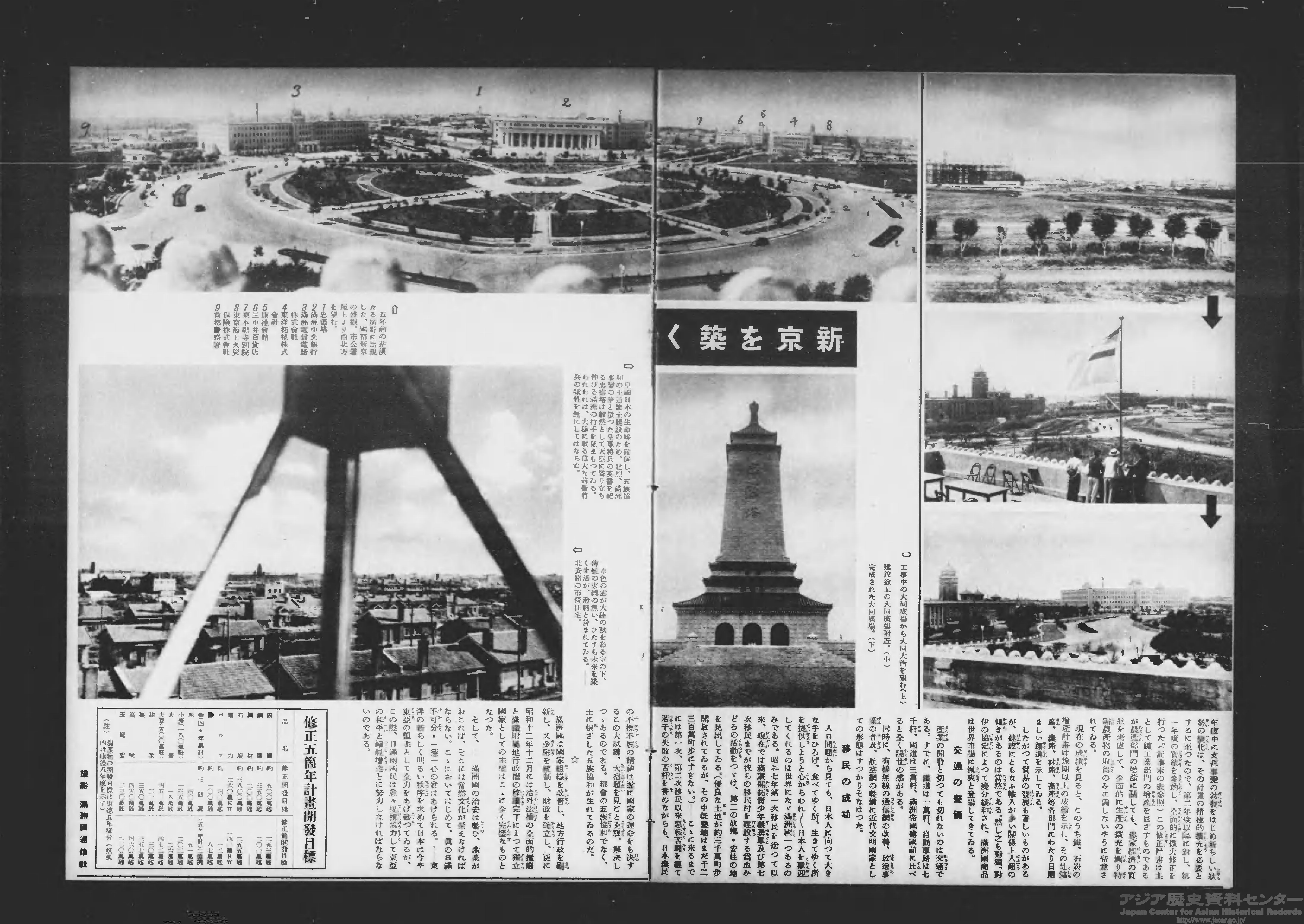
Since its inaugural issue, Shashin Shūhō featured numerous articles related to Manchūkuo. These covered such topics as Japanese “pioneer” settlers, Manchuria’s resources and industries, the Kwantung Army and the Manchūkuo Imperial Army, and Emperor Puyi’s visit to Japan.
The image shows Issue No. 31 (September 14, 1938) bearing a cover that reads “Giant Strides in Manchuria Construction” and featuring an article on urban development in Xinjing (present-day Changchun).
