4. The Fall Back of the Front Lines and Asia
In July 1944, Saipan—which had been designated as being within the Absolute National Defensive Sphere—fell, and bombing raids on the Japanese home islands intensified. Japan’s attempt to invade British India from Burma in the Battle of Imphal (March–July 1944) failed, and U.S. forces landed in the Philippines in October 1944. Fierce urban combat took place in the capital Manila from February to March 1945.
[Document 40] News Coverage of the Battle of Imphal
“Shashin Shūhō No. 317” (Ref. A06031091200), 3rd image
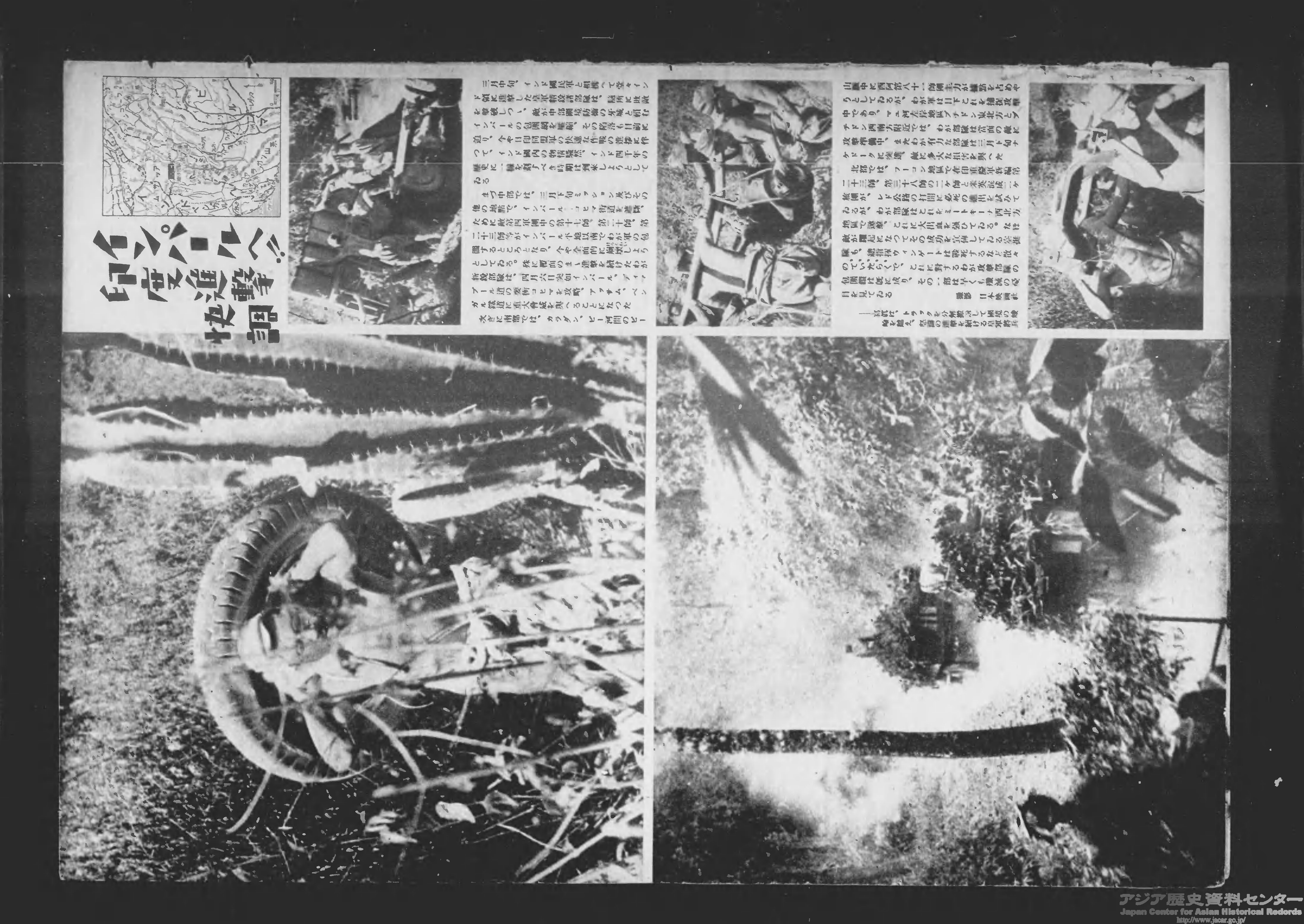
In April 1944, an operation to invade the city of Imphal in British India from Burma (the Battle of Imphal) began, with the Indian National Army under the command of Subhas Chandra Bose also participating. As shown in the image, several articles were published in Shashin Shūhō, but the Japanese forces suffered a crushing defeat.
[Document 41] Coverage of the Battle of the Philippines
“Shashin Shūhō, Issue No. 351” (Ref. A06031094500), 3rd image
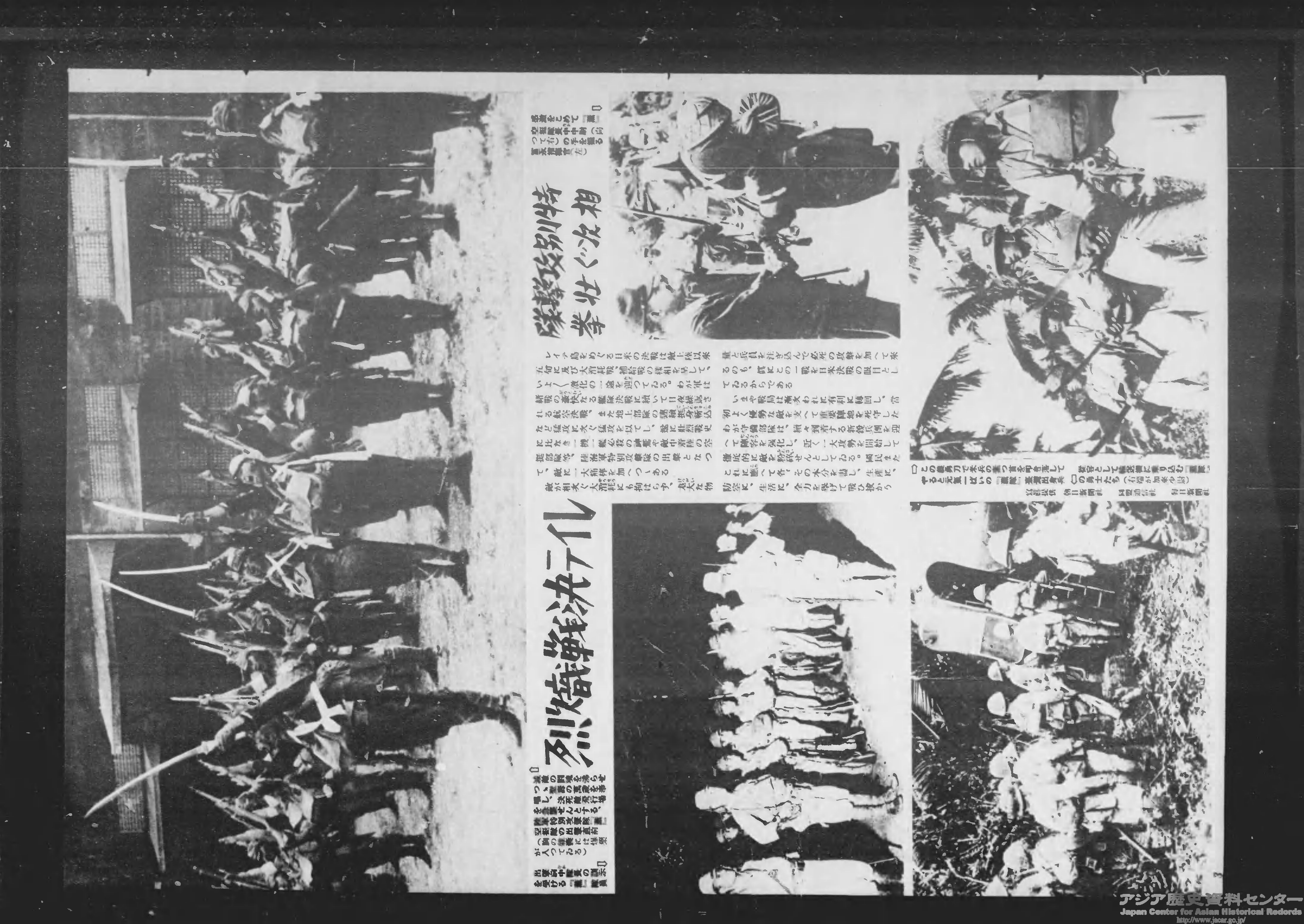
In October 1944, U.S. forces landed on Leyte Island with the aim of recapturing the Philippines, leading to fierce fighting between Japanese and American forces. From that point onward, until the final issue of Shashin Shūhō (No. 352, December 20, 1944) available for public viewing through JACAR, information regarding the fighting on Leyte Island was frequently published.
[Document 42] Military Action in French Indochina
“March, Shōwa 20 [1945]: Confidential War Diary (1)” (Ref. C12120326800), Images 20–21
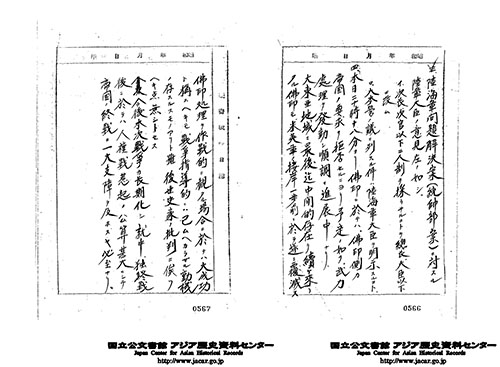
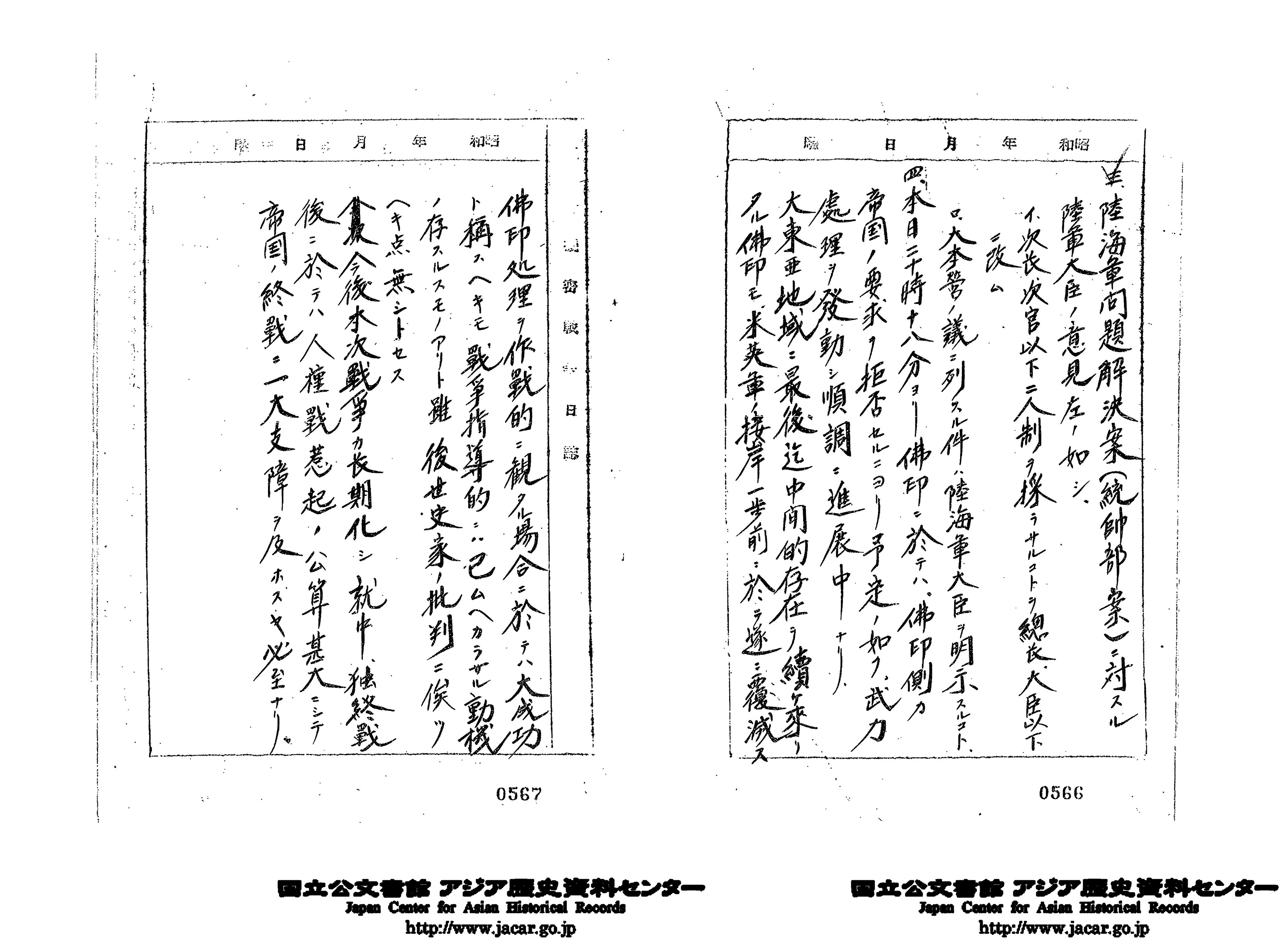
During the Pacific War, Japan’s policy toward French Indochina was “maintenance of tranquility” by refraining from interfering in its internal affairs . However, following the collapse of the pro-German government in France and the defeat in the Battle of the Philippines, the Japanese military launched an operation to disarm the French Indochinese forces beginning on March 10, 1945. This document is an excerpt from the “Confidential War Diary” entry for that same day.
The “Confidential War Diary” was a journal kept by staff officers (staff members) of the War Guidance Section, Army Department, Imperial General Headquarters, from June 1940 to August 1945.
[Document 43] Issues Concerning Thailand
“The ‘Thailand’ Issue” (Ref. B02032441400), Images 31–34
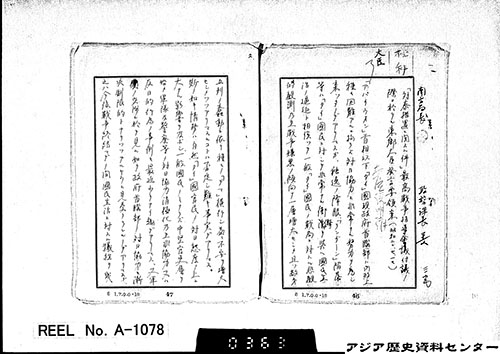
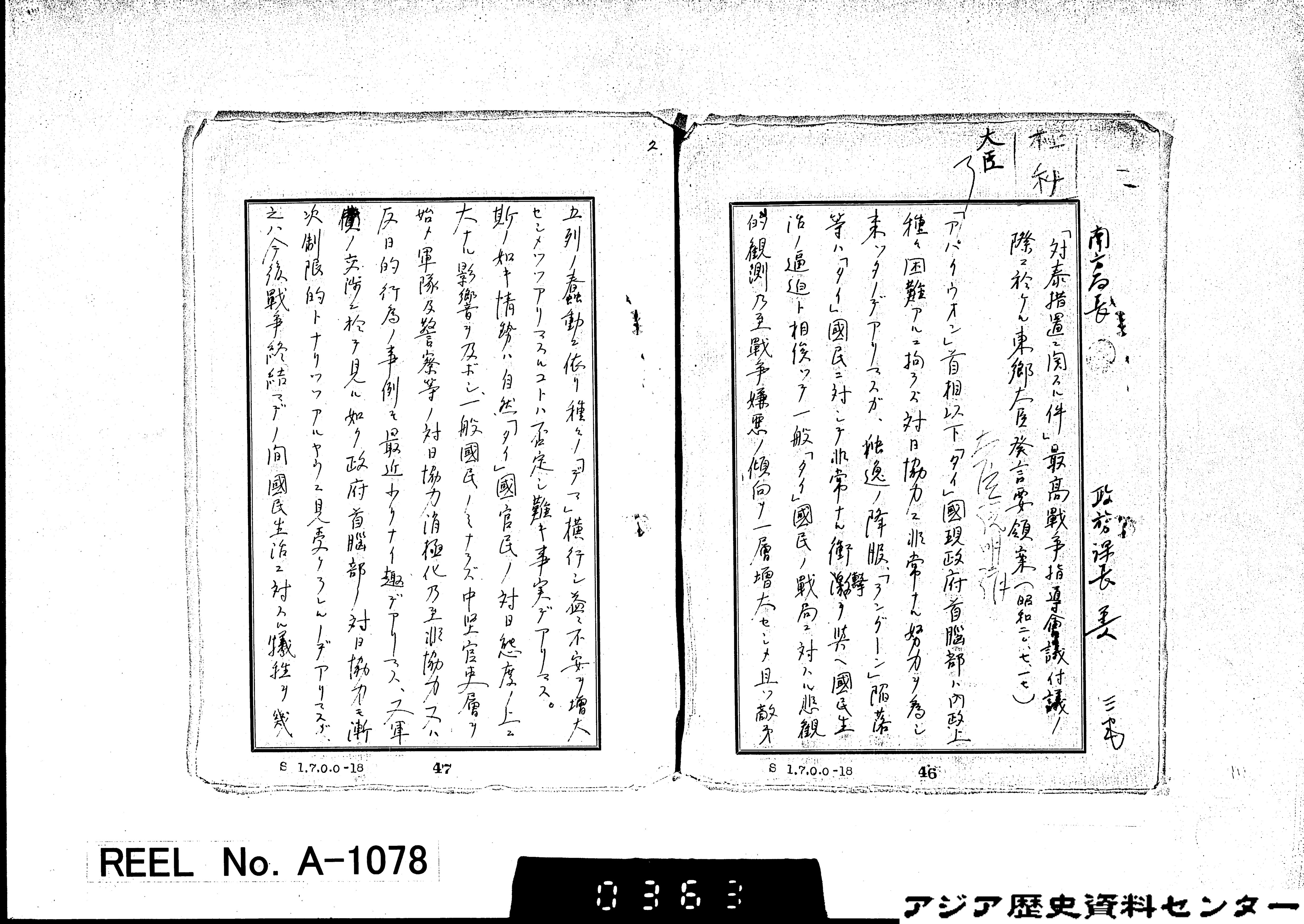
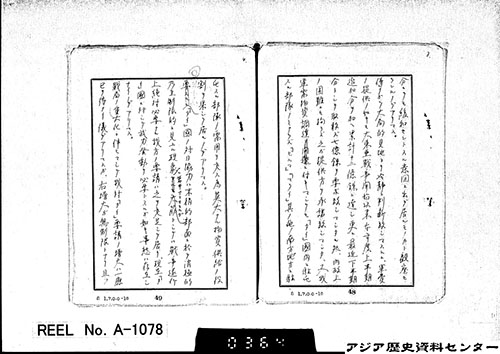
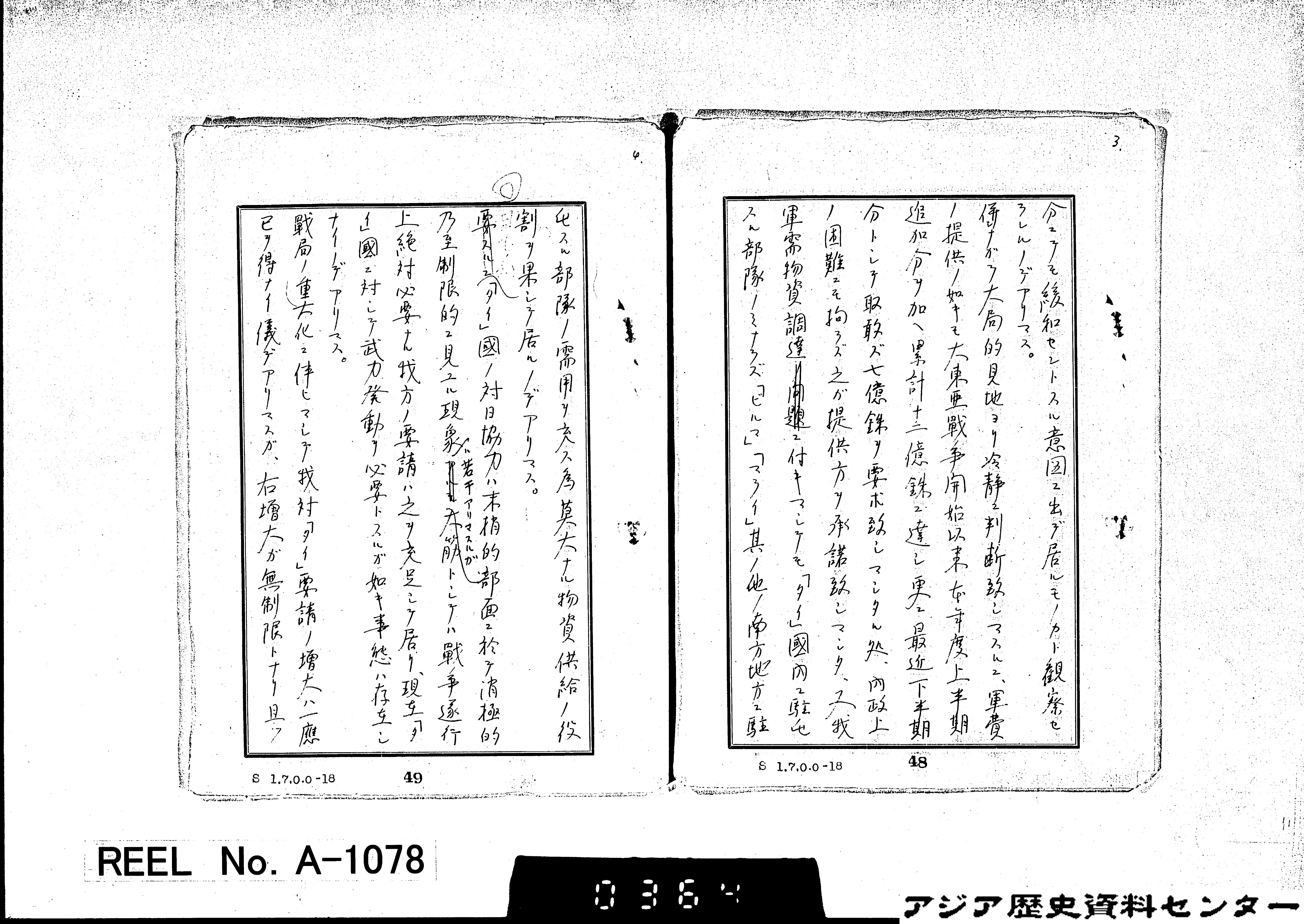
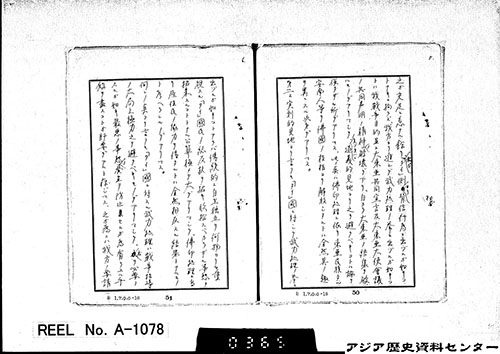
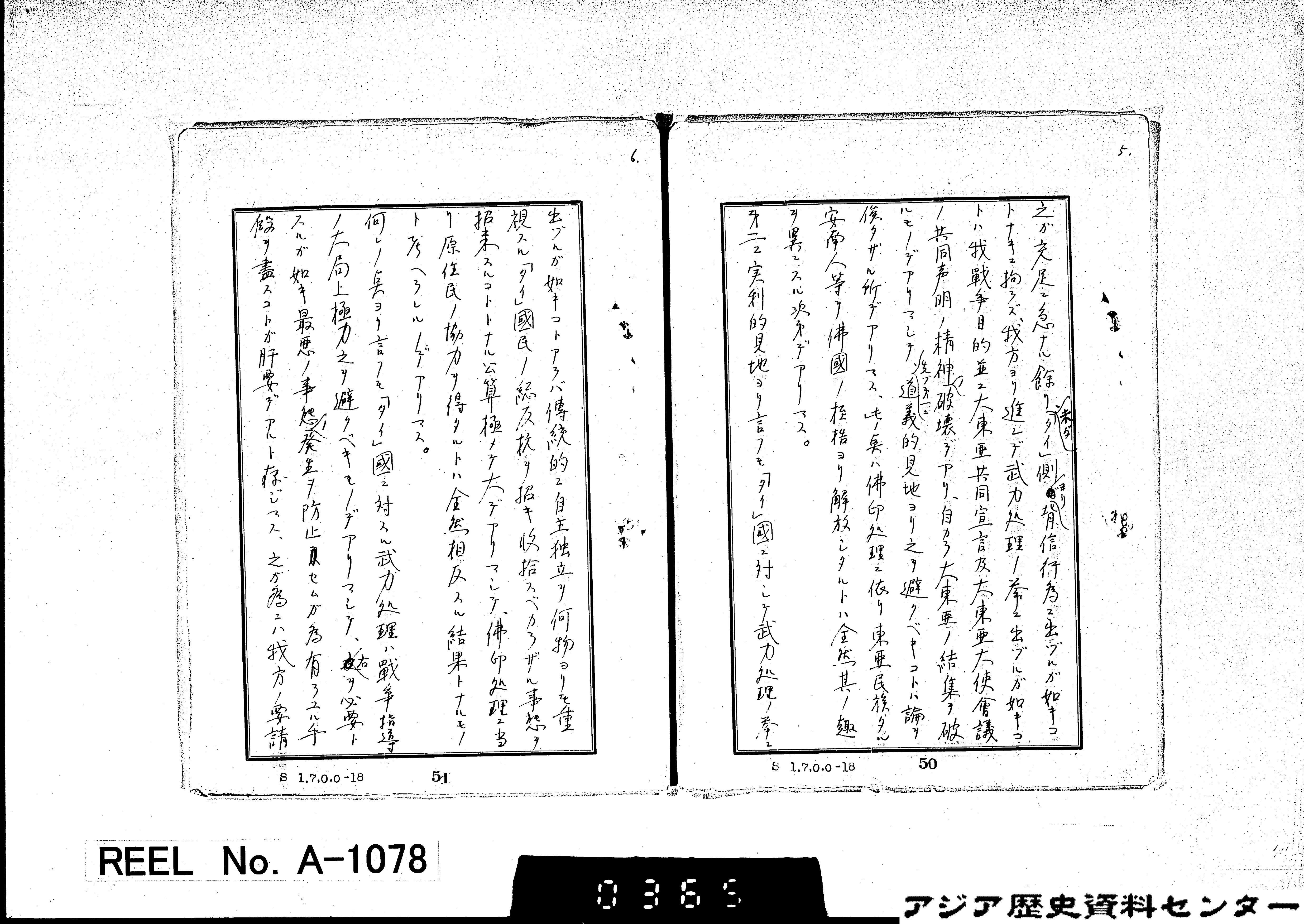
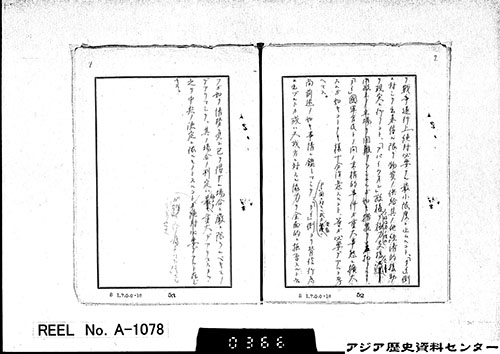
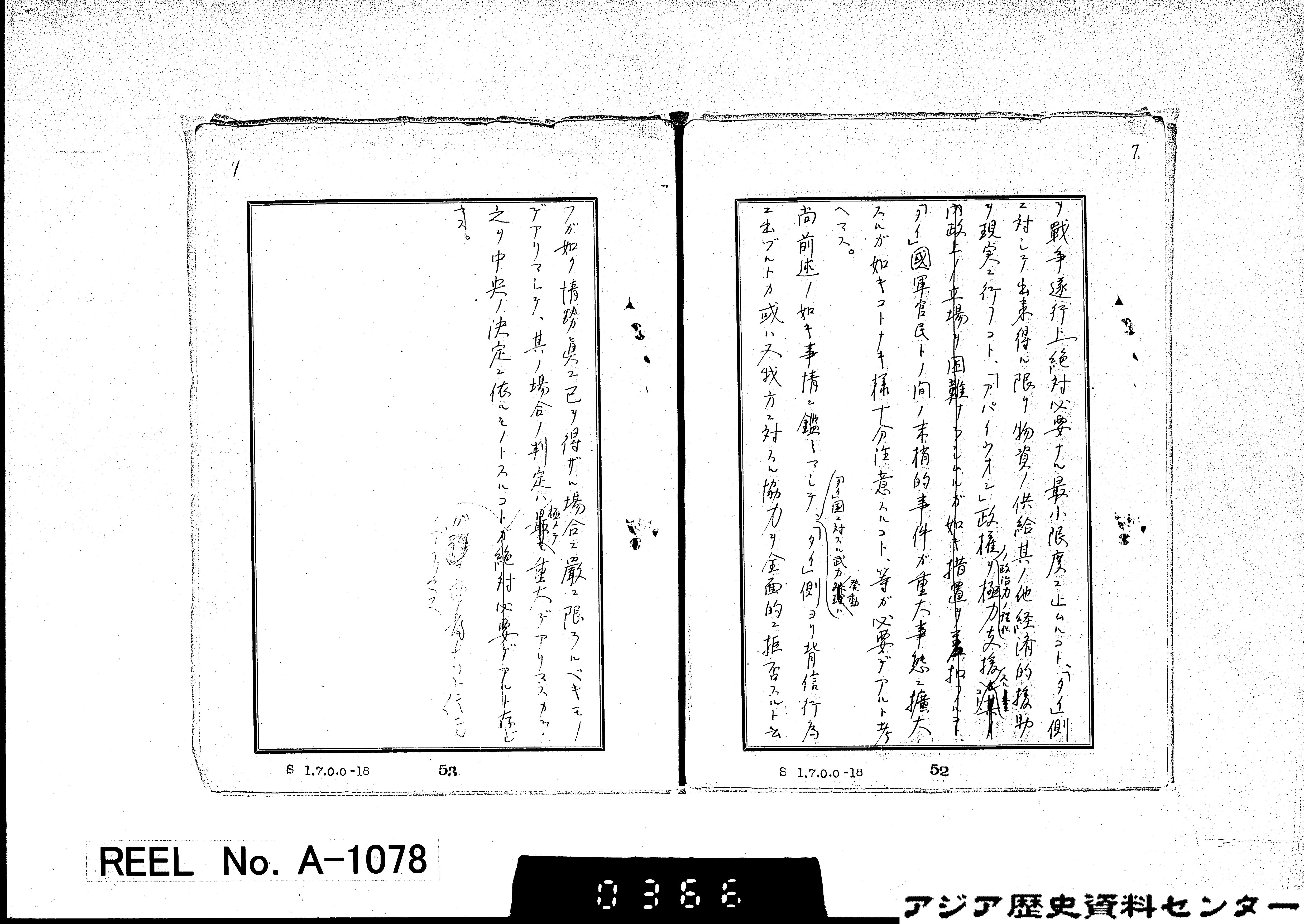
While Army headquarters considered a “military solution” regarding Thailand, Ambassador Yamamoto in Thailand and Tōgō Shigenori, Minister for Foreign Affairs and Minister for the Greater East Asia Co-Prosperity Sphere, opposed this. The image shows a draft outline of Minister Tōgō’s remarks at the Supreme War Guidance Council meeting on July 17. It notes that Germany’s surrender and the fall of Rangoon had shocked the Thai people, leading to a growing reluctance to cooperate with Japan; however, they were generally still complying with Japan’s requests. It also states that a military solution would shatter the unity of the Greater East Asia Co-Prosperity Sphere and was highly likely to provoke a general uprising among the Thai people.
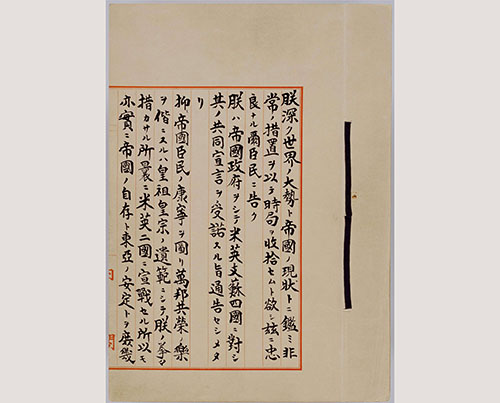
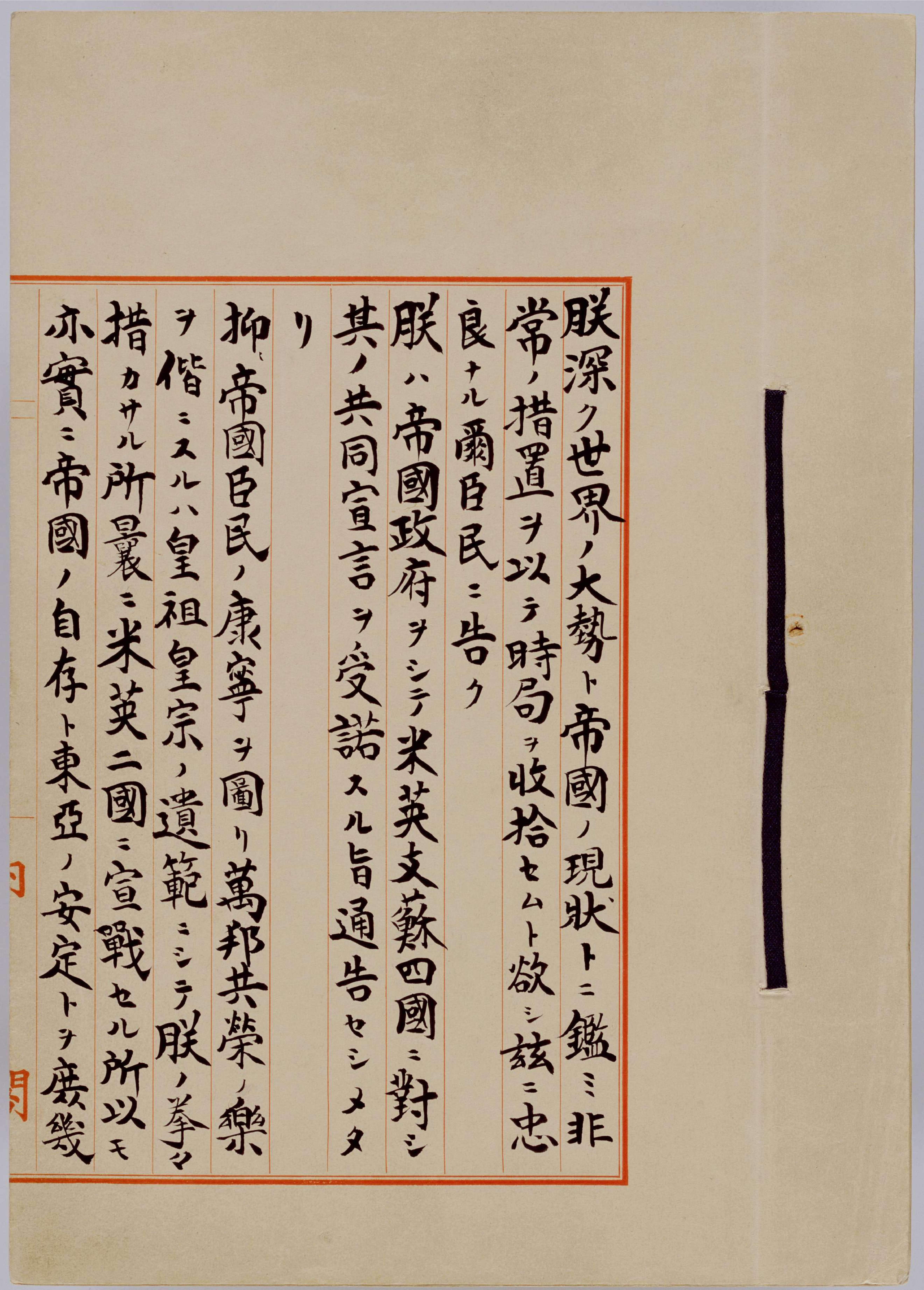
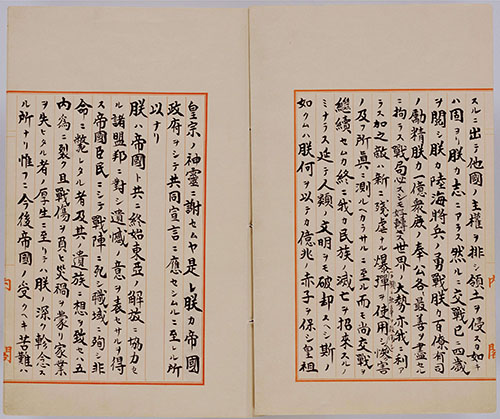

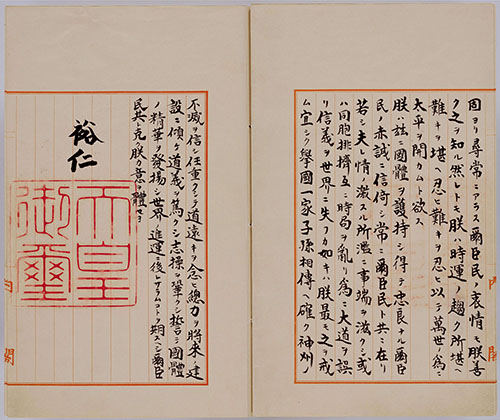
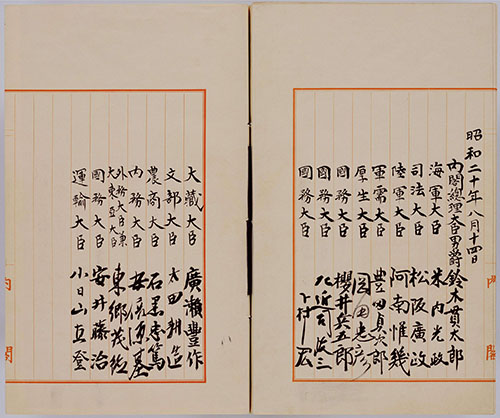
[Document 44] Imperial Rescript on the Termination of the War
“Original Signed Copy—Shōwa 20 [1945]—Imperial Rescript of August 14—Imperial Rescript Concerning the Termination of the Greater East Asia War” (Ref. A04017702300) Images 1–4