3. The Return of Japan to the International Community and Asian Countries
In the postwar years prior to joining the United Nations (UN) in 1956, Japan actively participated in frameworks for multilateral cooperation with Asian countries as it aimed to return to the international community.
In 1952, Japan was granted associate membership in the United Nations Economic Commission for Asia and the Far East (ECAFE) and became a full member in 1954. The fact that Japan was granted membership in ECAFE prior to joining the United Nations is widely regarded as highly significant in the sense that a Japan cast down by its defeat in World War II had been accepted by the international community.
Also in 1954, Japan joined the Colombo Plan and began providing technical cooperation to Asian countries. This became one of the origins of Japan’s later Official Development Assistance (ODA).
The Bandung Conference (Asian-African Conference) held in 1955 was the first international conference in which Japan participated after the war.
In October 1956, Japan and the Soviet Union normalized diplomatic relations. That December, the UN Security Council recommended Japan’s admission to the United Nations, which the UN General Assembly unanimously approved Japan later that same month. Japan became the 80th member state of the United Nations, thus marking its full-fledged return to the international community. In his statement to the General Assembly on that occasion, Foreign Minister Shigemitsu Mamoru spoke of Japan and Asia sharing a common destiny.
◆ECAFE General Assembly and Guide book
[Document 23] Item: “(18) Guidebook / Partition 1” B22010234800 (Images 32, 46, 56)
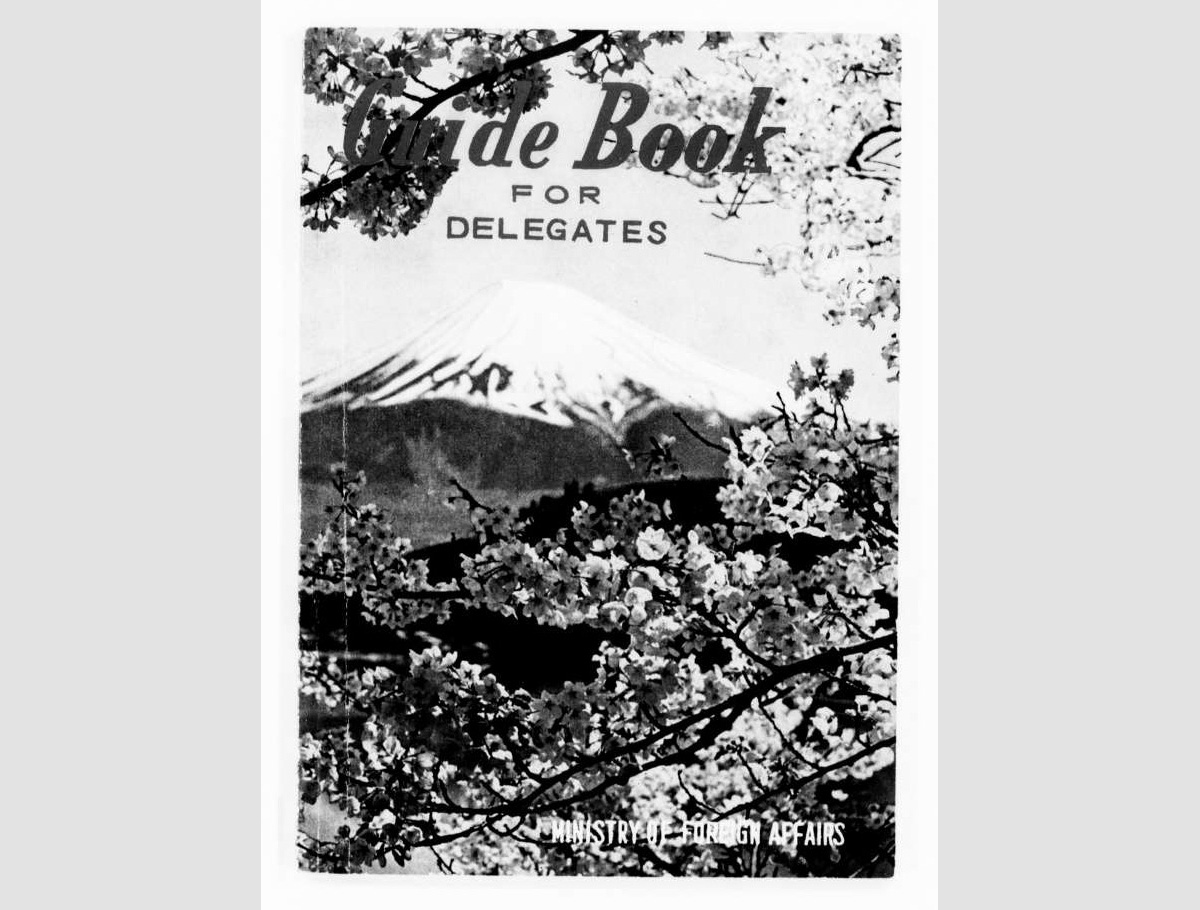
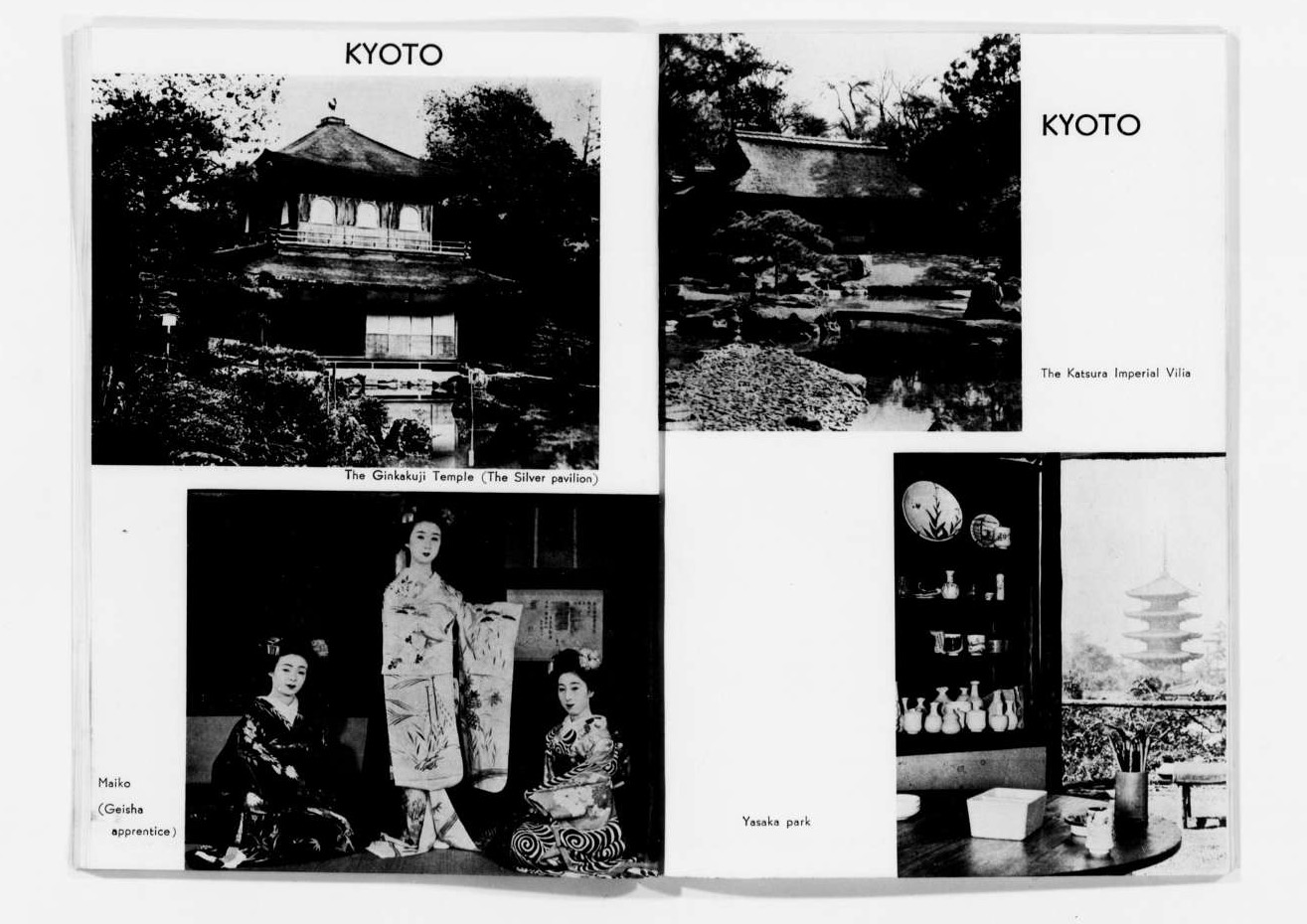
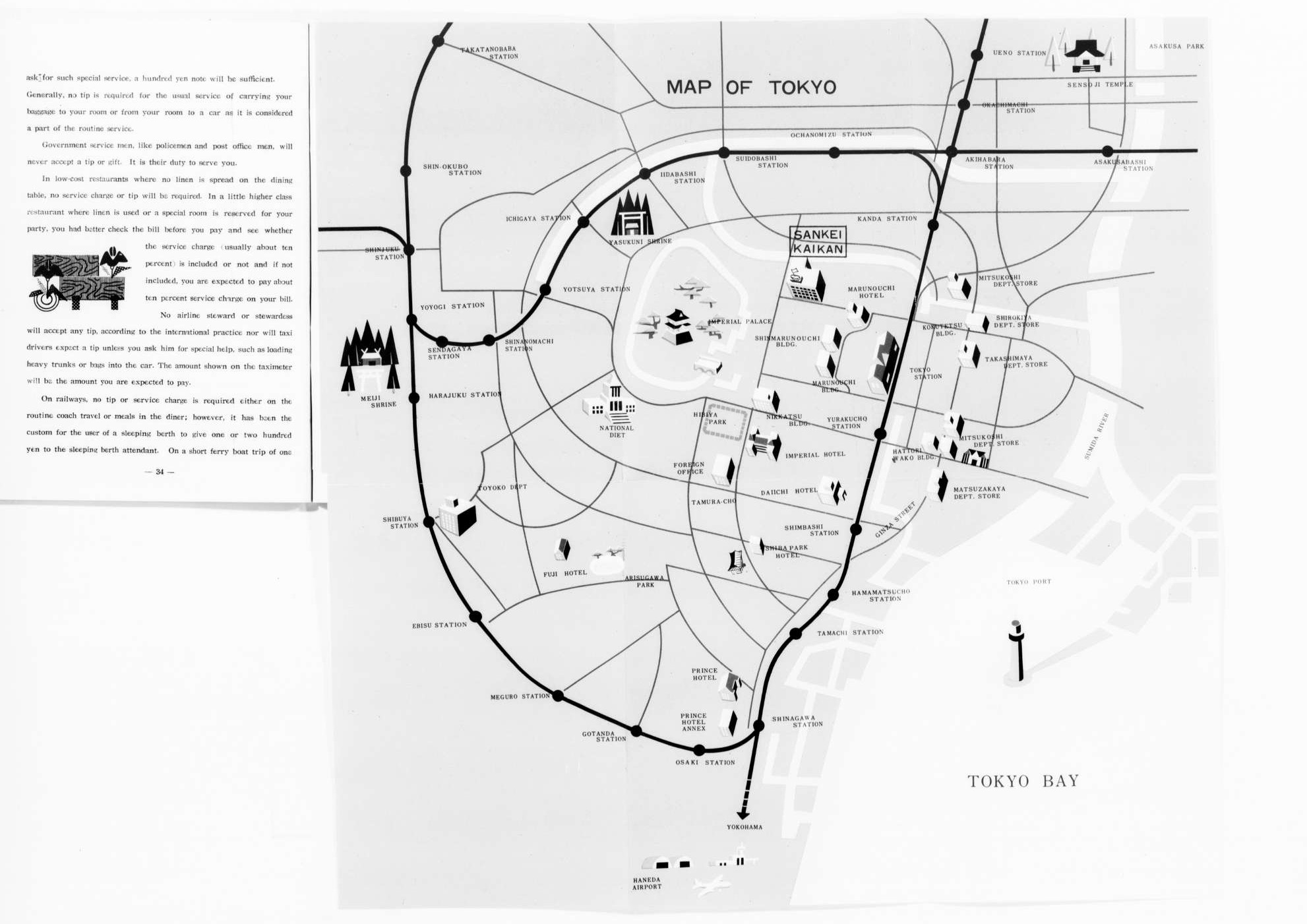
In 1954, Japan became a full member of ECAFE. The following spring, the 11th Meeting of ECAFE and the 7th Session of its Committee on Industry and Trade took place at the Sankei Kaikan in Tokyo’s Otemachi neighborhood. [Document 23] is a guidebook compiled by MOFA and distributed to ECAFE delegates (Images 32–68). It includes information on travel, dining, and shopping around Japan.
ECAFE was established in 1947 as a subsidiary body of the United Nations Economic and Social Council. It was renamed ESCAP in 1974. Its aim was to promote economic and social development in the Asia-Pacific region; it was involved in initiatives such as the establishment of the Asian Development Bank (ADB) and the construction of the Asian Highway.
◆Colombo Plan 10th Anniversary Pamphlet
[Document 24] Item: “(9) General Matters / Story of the Colombo Plan / Its History of the Decade / 1951-1961” B22010372900 (Images 1, 2, 7, and 11)
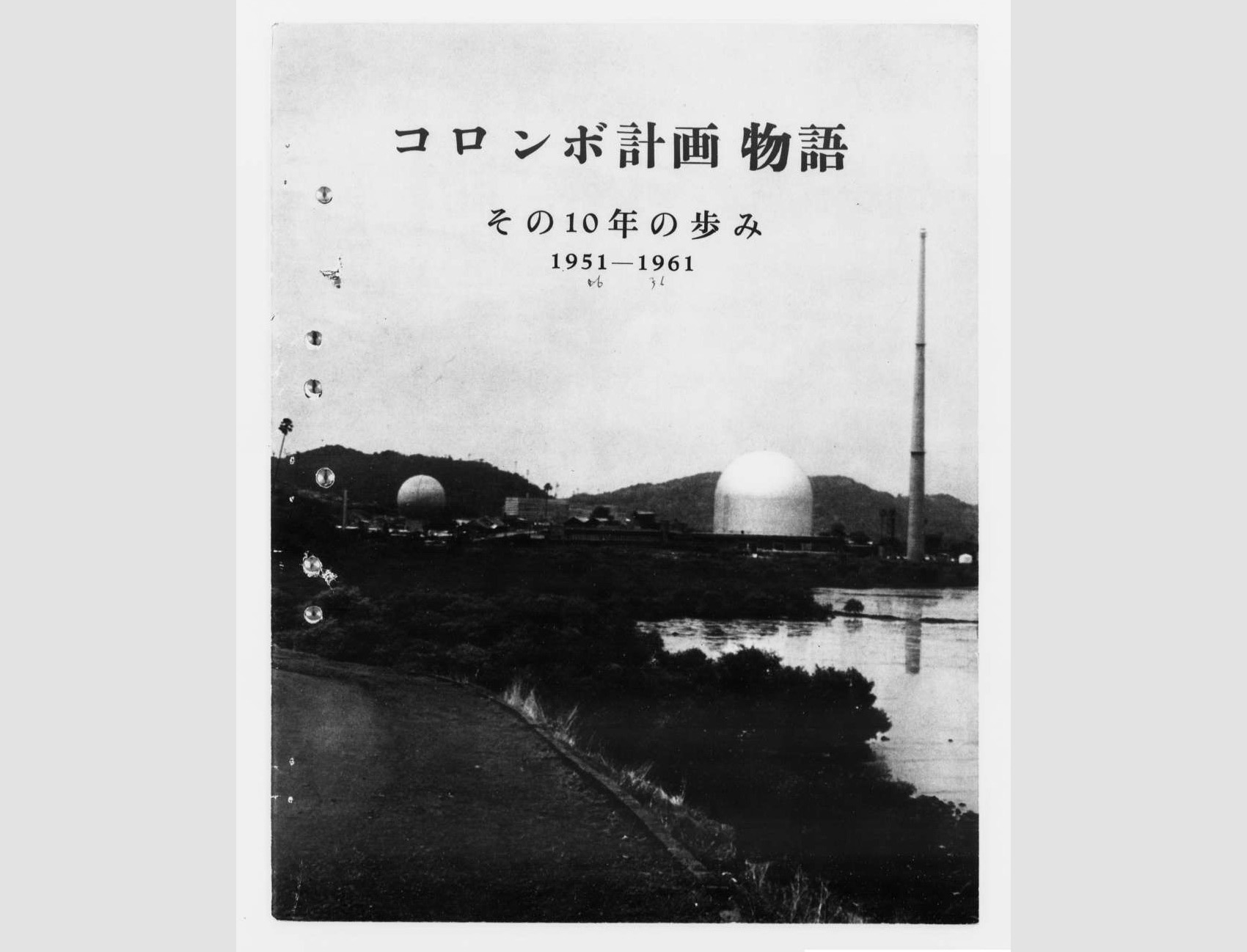
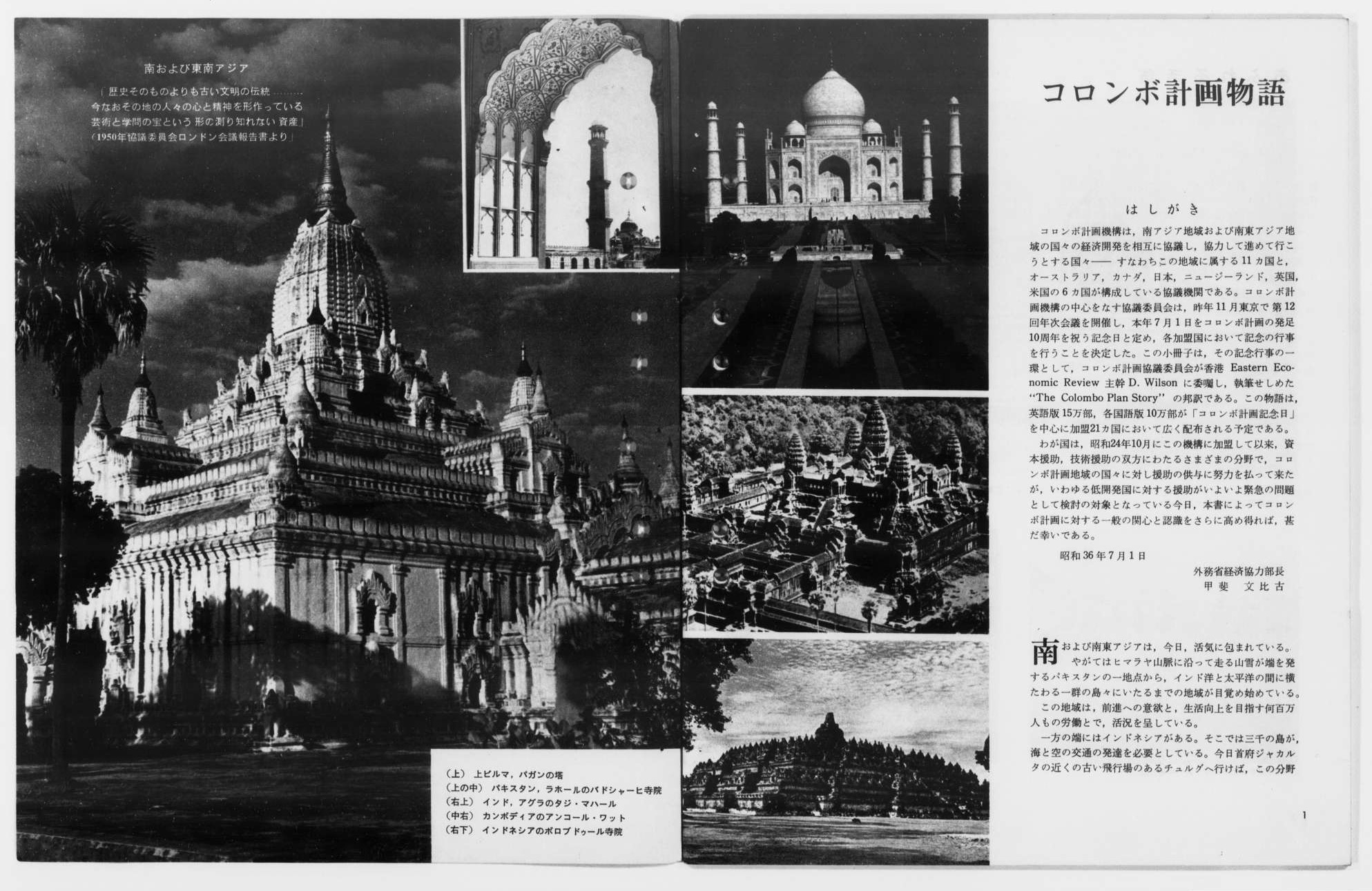
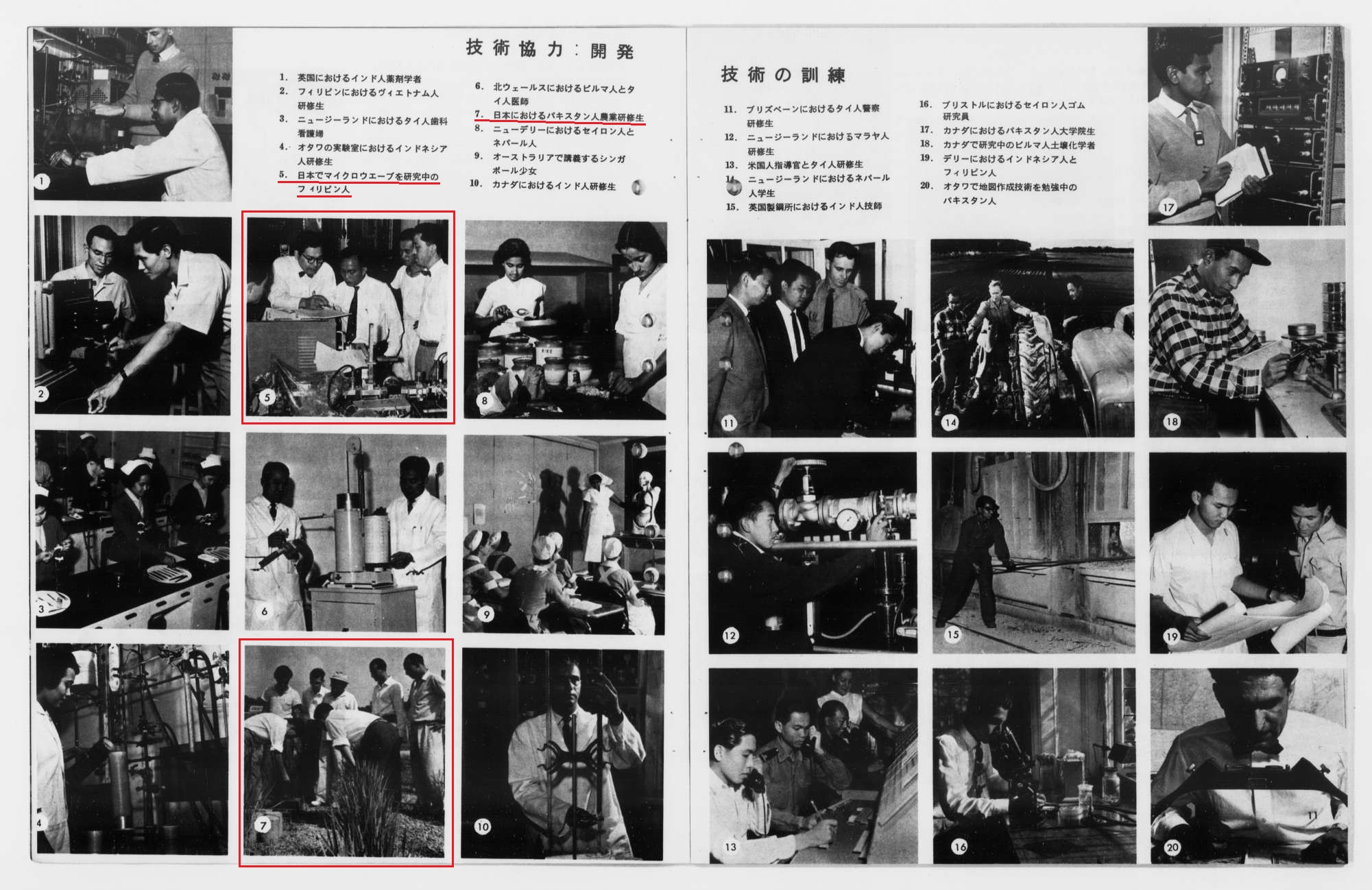
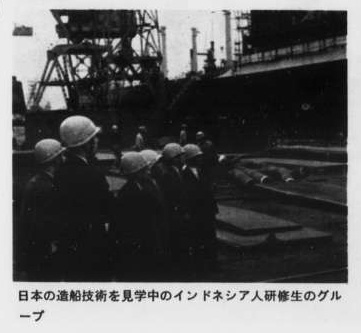
The Colombo Plan for Cooperative Economic and Social Development in Asia and the Pacific (“the Colombo Plan”) was a regional cooperation organization launched in January 1950. Its aim was to promote the economic and social development of countries in the Asia-Pacific region. Japan’s Cabinet decided to join the Plan in 1954. [Document 24] is a pamphlet produced in 1961 to mark the 10th anniversary of the Colombo Plan. It features photographs and other information regarding Japanese technical cooperation.
◆Participation in the Bandung Conference
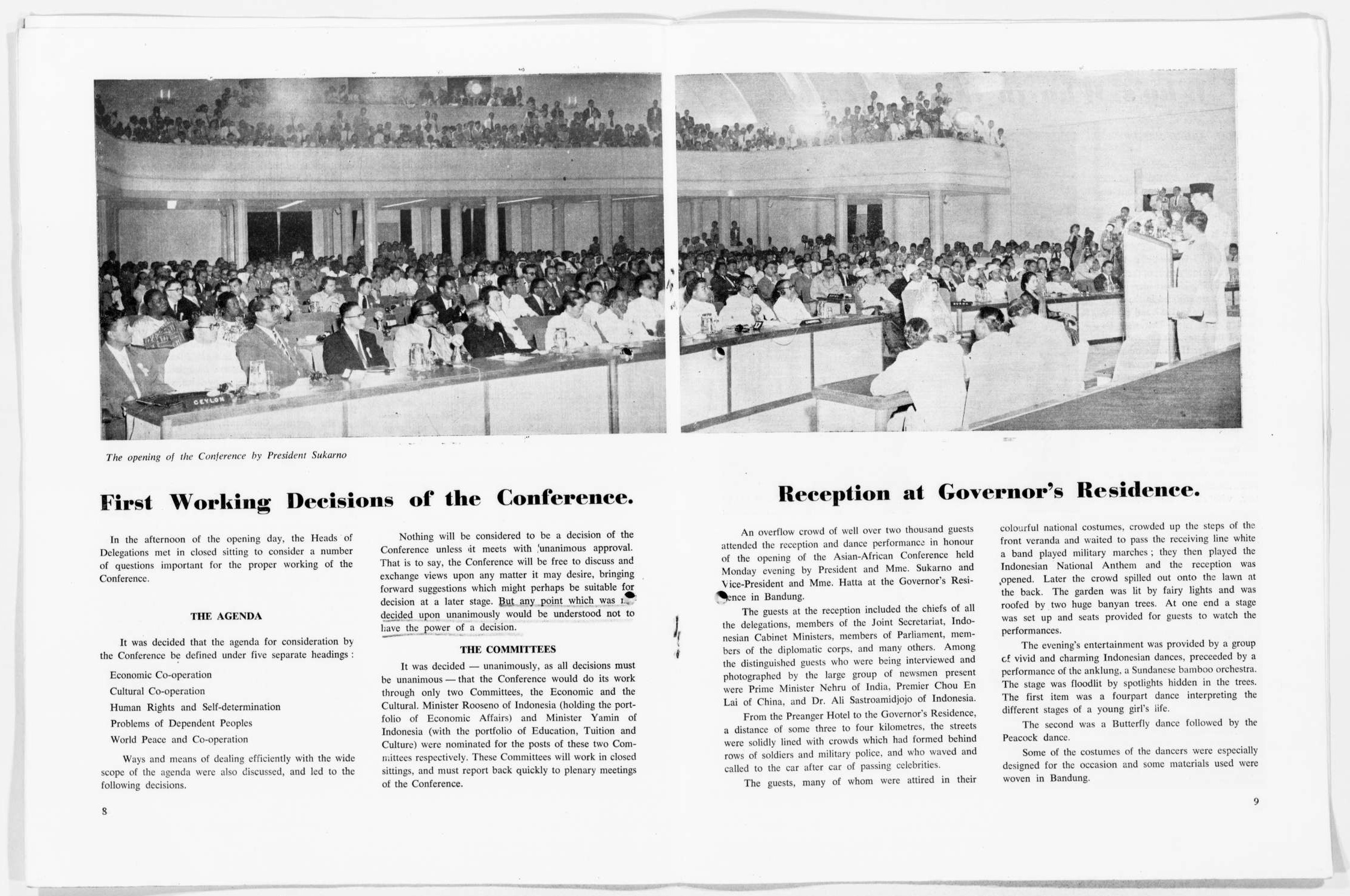
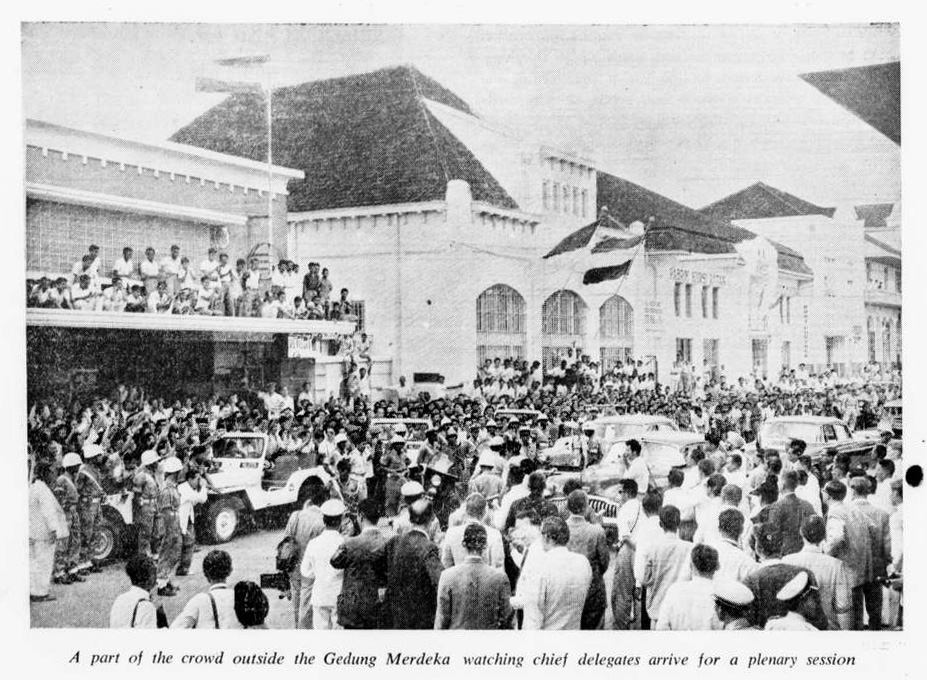
[Document 25] Item: “(No Title)” B22010343300 (Images 105, 110, 112)
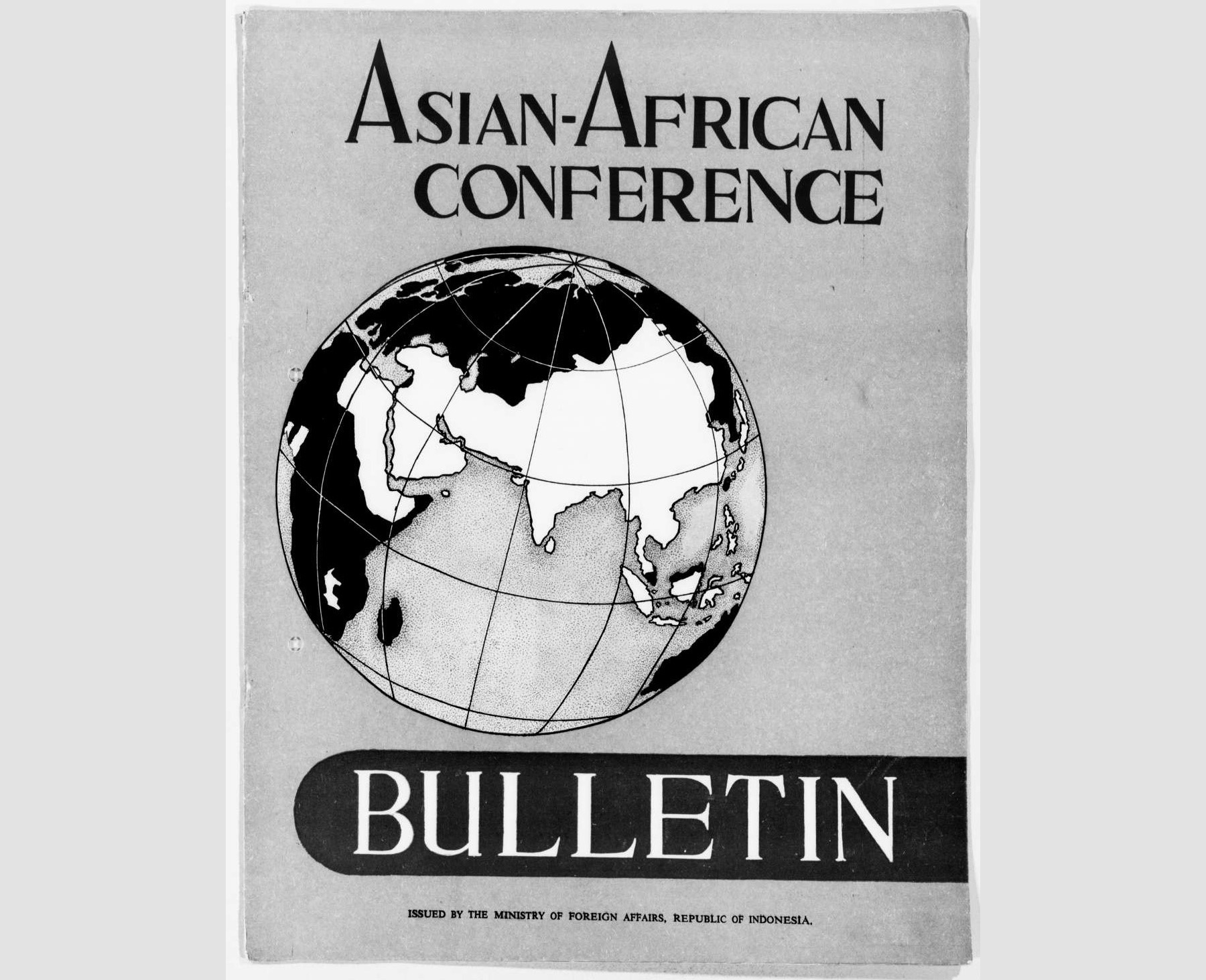
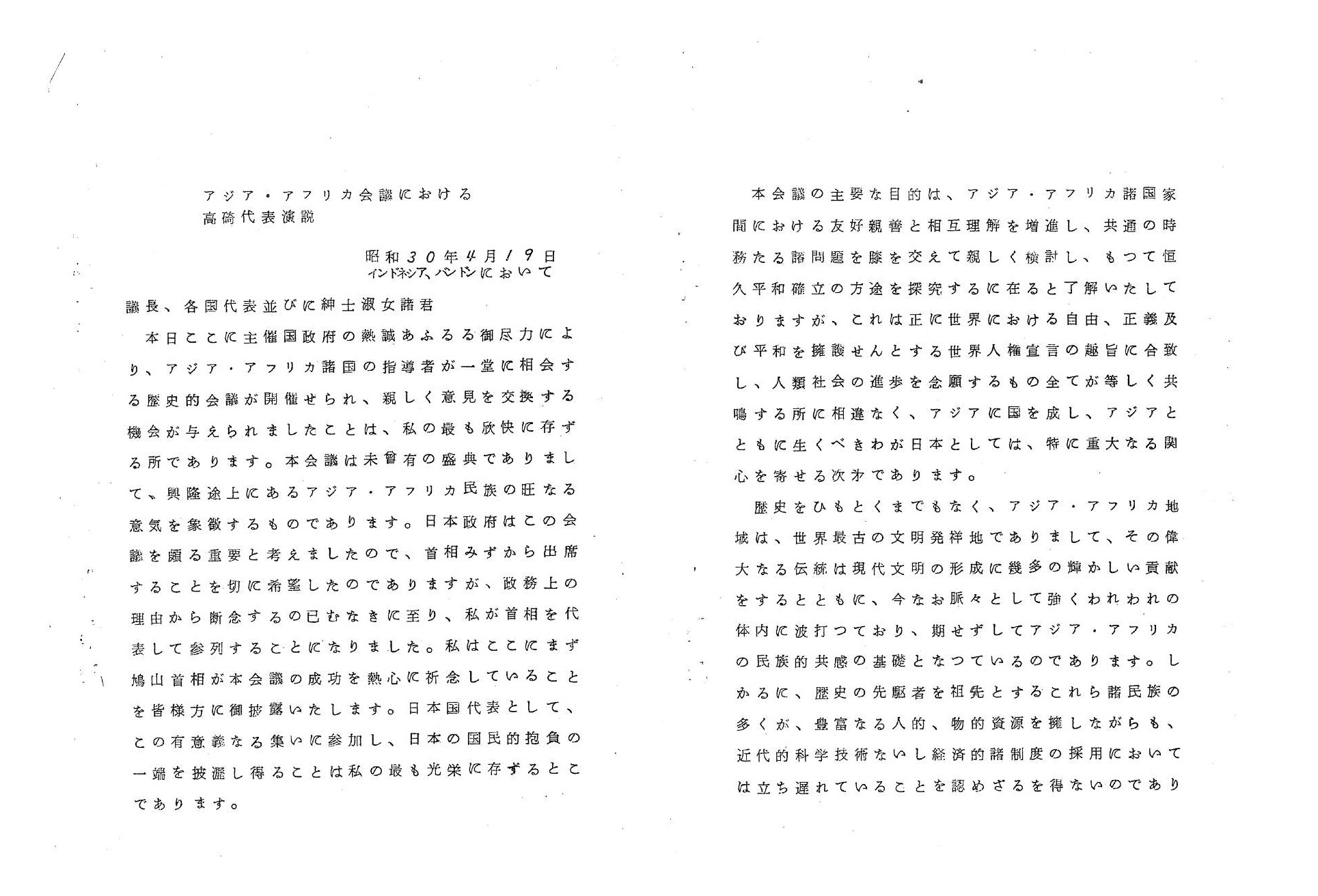
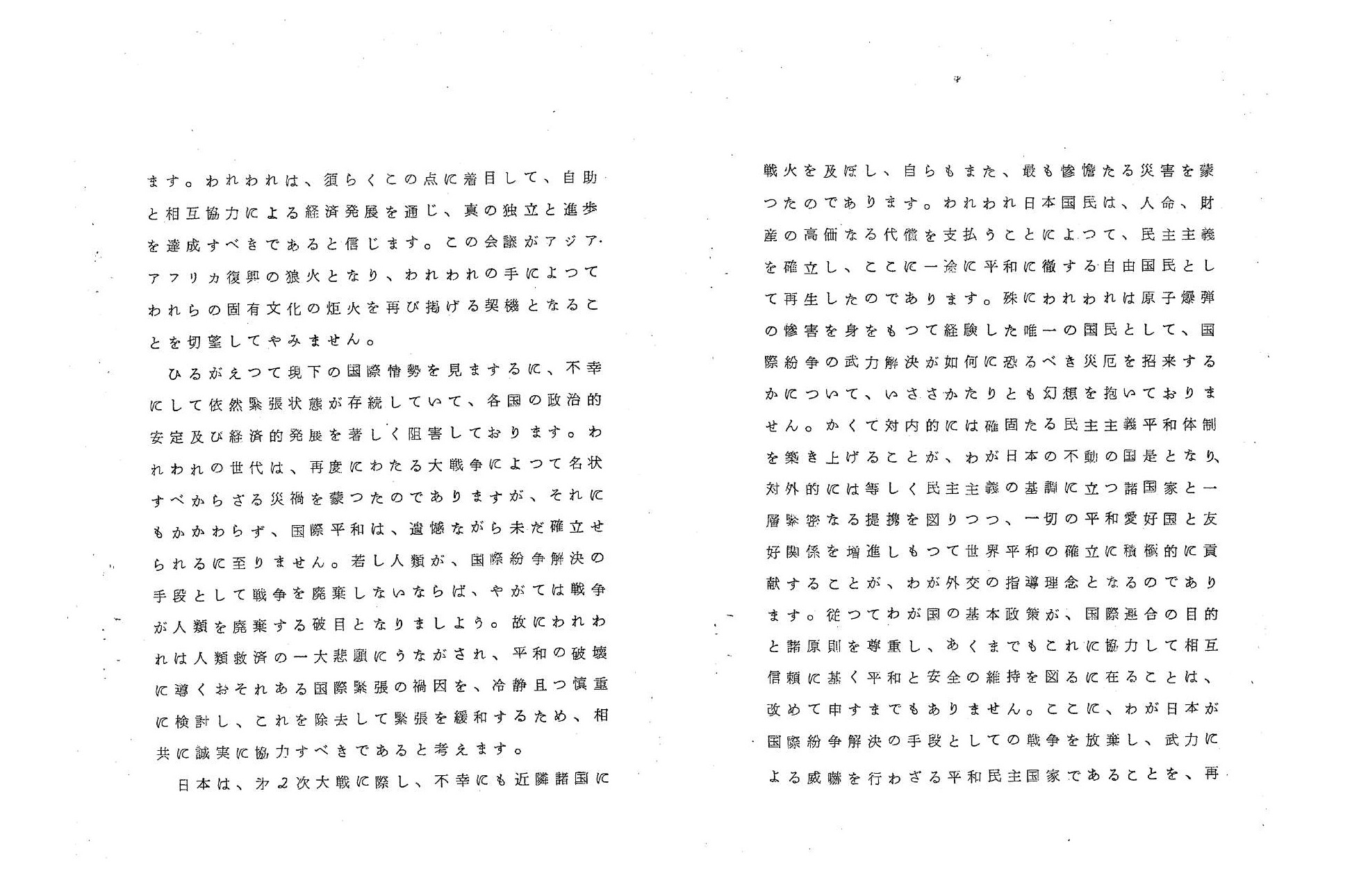
[Document 26] Item: “11 Materials of the AA Conference” B22010348500 (Images 10–13)
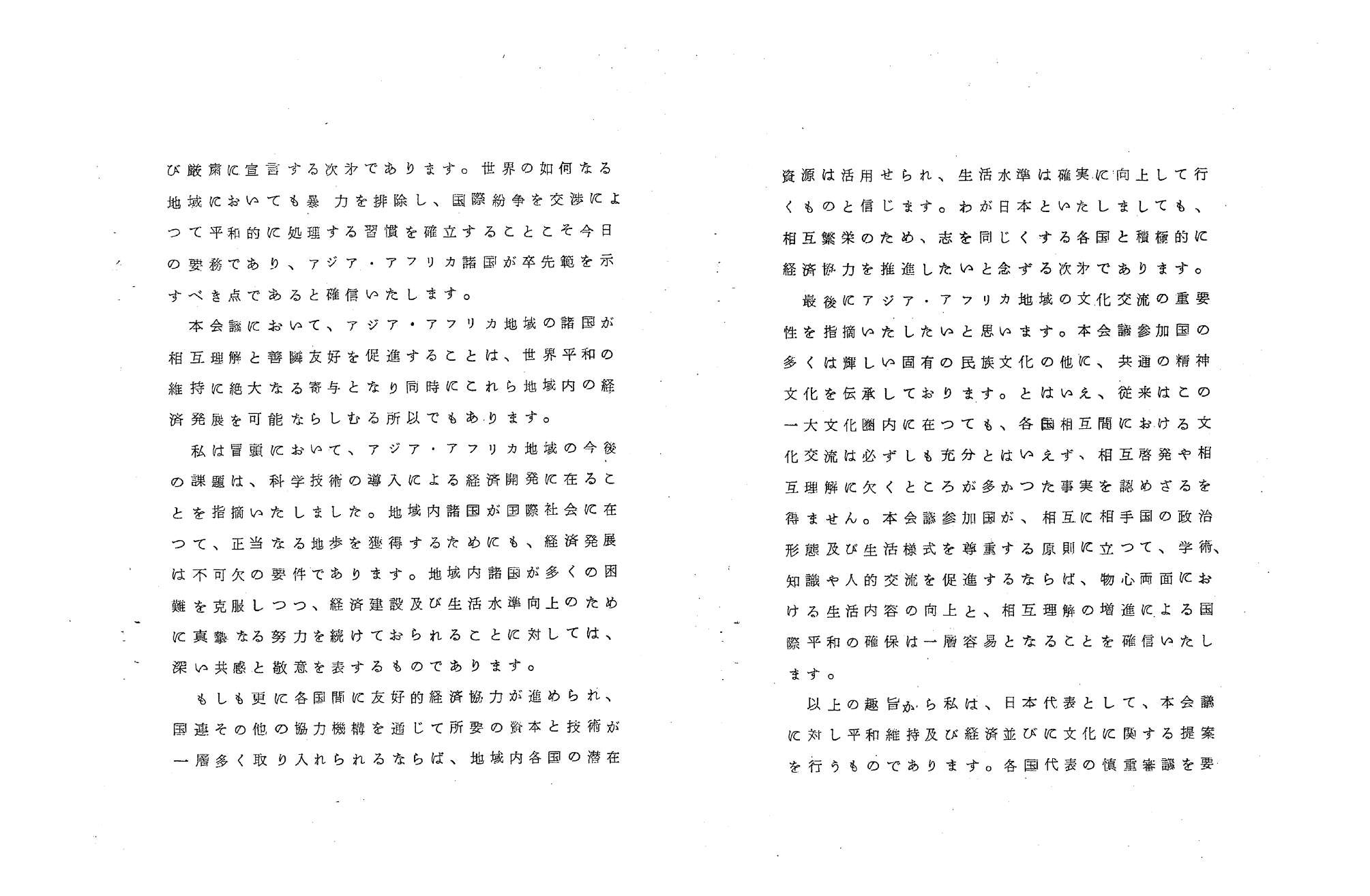
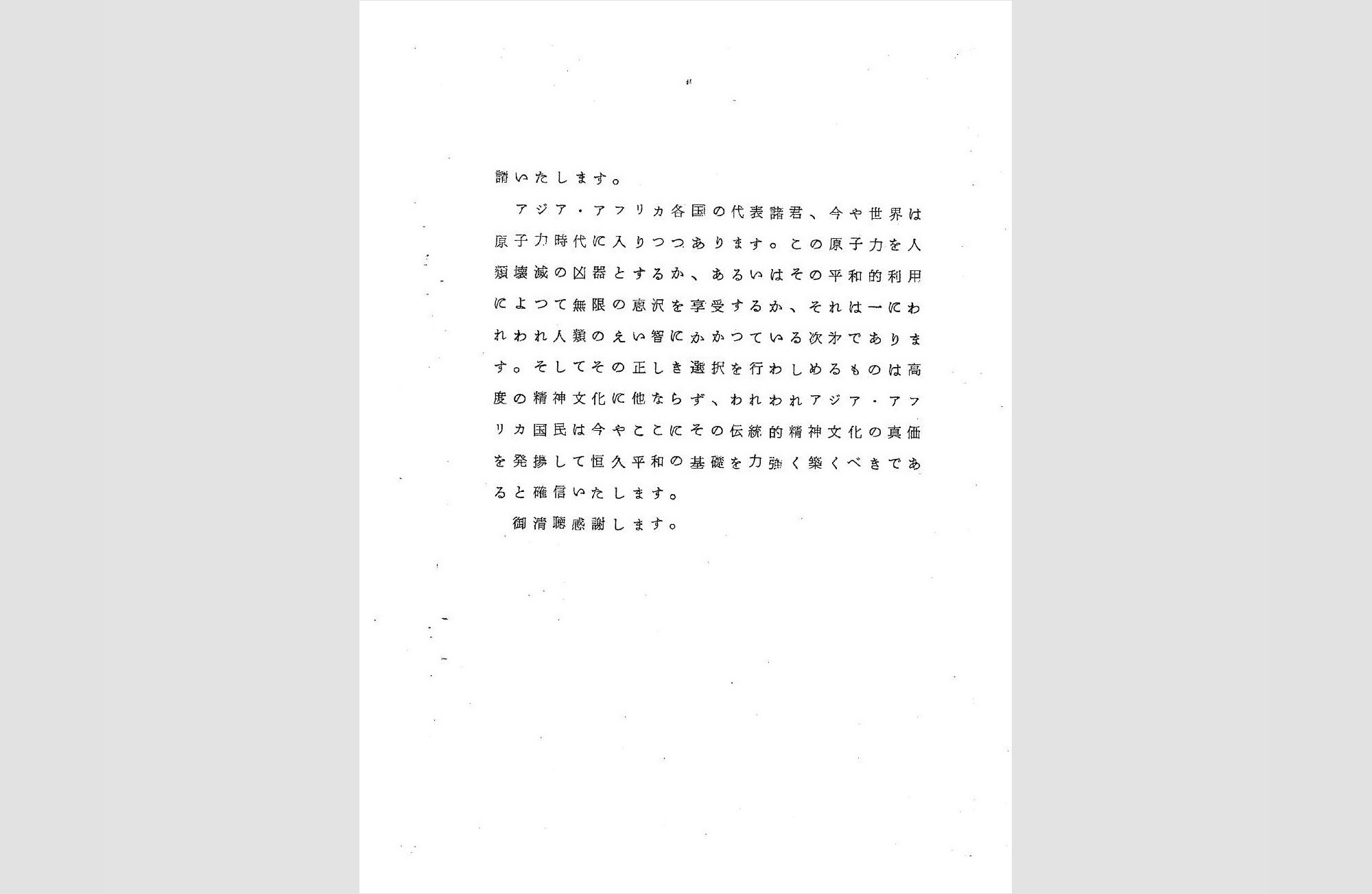
In 1955, an international conference was held in Bandung, Indonesia, that brought together representatives from Asian and African nations that had gained independence after World War II. The conference adopted Bandung’s Ten Principles calling for peaceful coexistence. Japan was also invited to the conference, with Economic Planning Agency Director-General Takasaki Tatsunosuke attending as the representative. Takasaki made proactive proposals regarding economic cooperation and cultural exchange.
[Document 25] is Issue No. 4 of the “Asian-African Conference Bulletin,” a news bulletin published by the Indonesian Ministry of Foreign Affairs during the conference (issued on April 19, 1955; images 105–115). It includes photographs such as one showing the assembly hall for the opening ceremony. Other issues (Nos. 2–8 and No. 10) were also bound together before and after in this same file.
[Document 26] is Representative Takasaki’s general address at the conference. In it, he states, “Japan as one of Asiatic nations whose destiny is indential (sic) with that of Asia cannot but attach the greatest importance to this Conference.” It is included in a document compiled after the conference concluded.
◆Meeting with Zhou Enlai at the Bandung Conference
[Document 27] Item: “3. 1955 / (Untitled)” B20010004000 (Image 17)
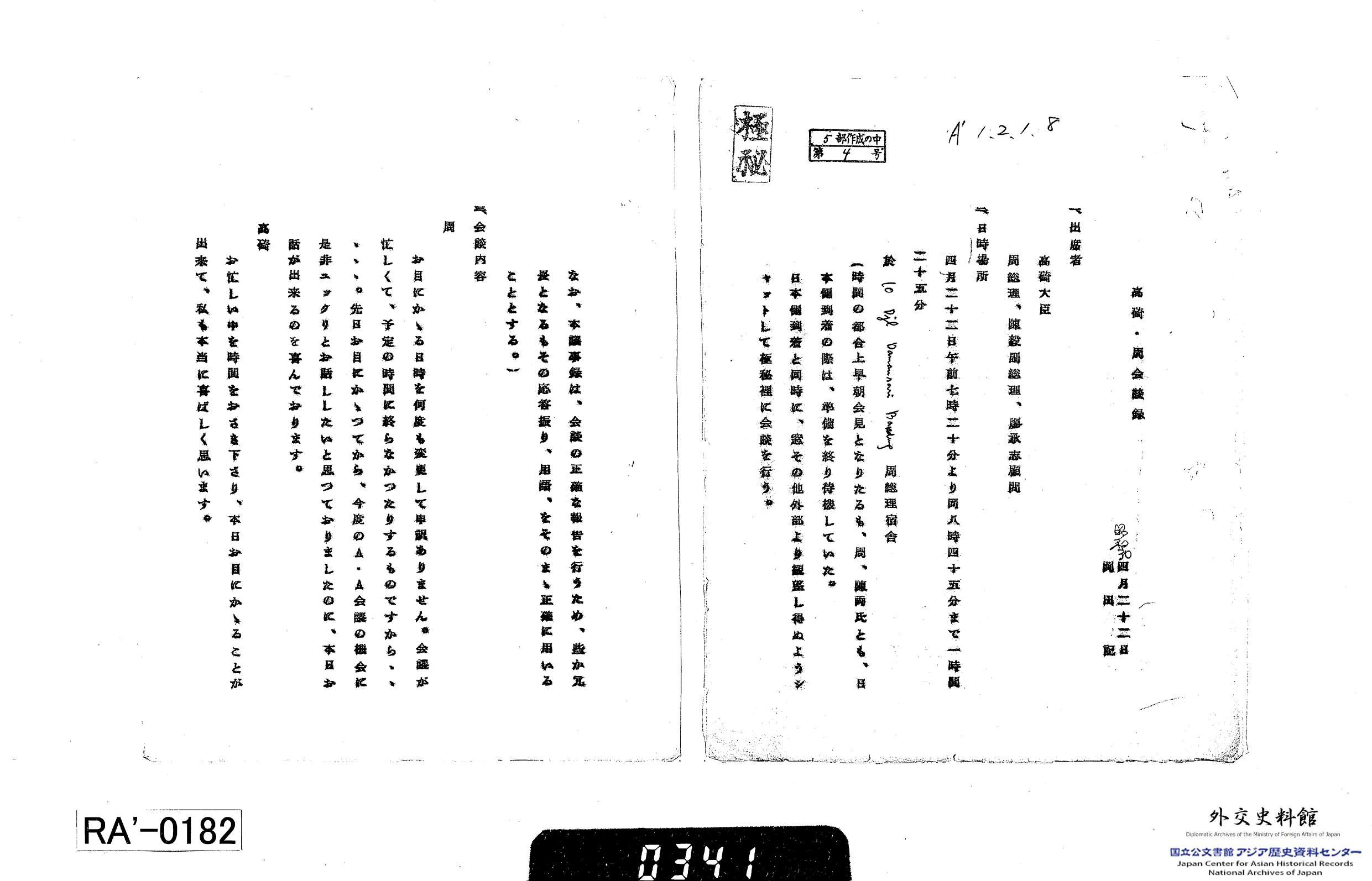
At the Bandung Conference, Representative Takasaki met and held talks with PRC Premier Zhou Enlai. This was the first ministerial-level meeting ever held between the two countries. On the opening page of the record [Document 27] of meeting; it notes, “The windows and such are to be closed so that the meeting can be conducted in strict secrecy, out of sight from the outside.”
Although this was not a meeting where any special agreements were reached, it served as the starting point for subsequent relations with China such as the exchange of the LT Memorandum in 1962 between Takasaki and Liao, who had also attended the talks.
◆United Nations Membership and Foreign Minister Shigemitsu’s Statement
[Document 28] Item: “5. Issues about Japan's Accession to the United Nations, December 1956 - February 1957 / (2) Resolution for Japan's Accession to the United Nations at the 11th Session” B20010167800 (Images 17 and 22)
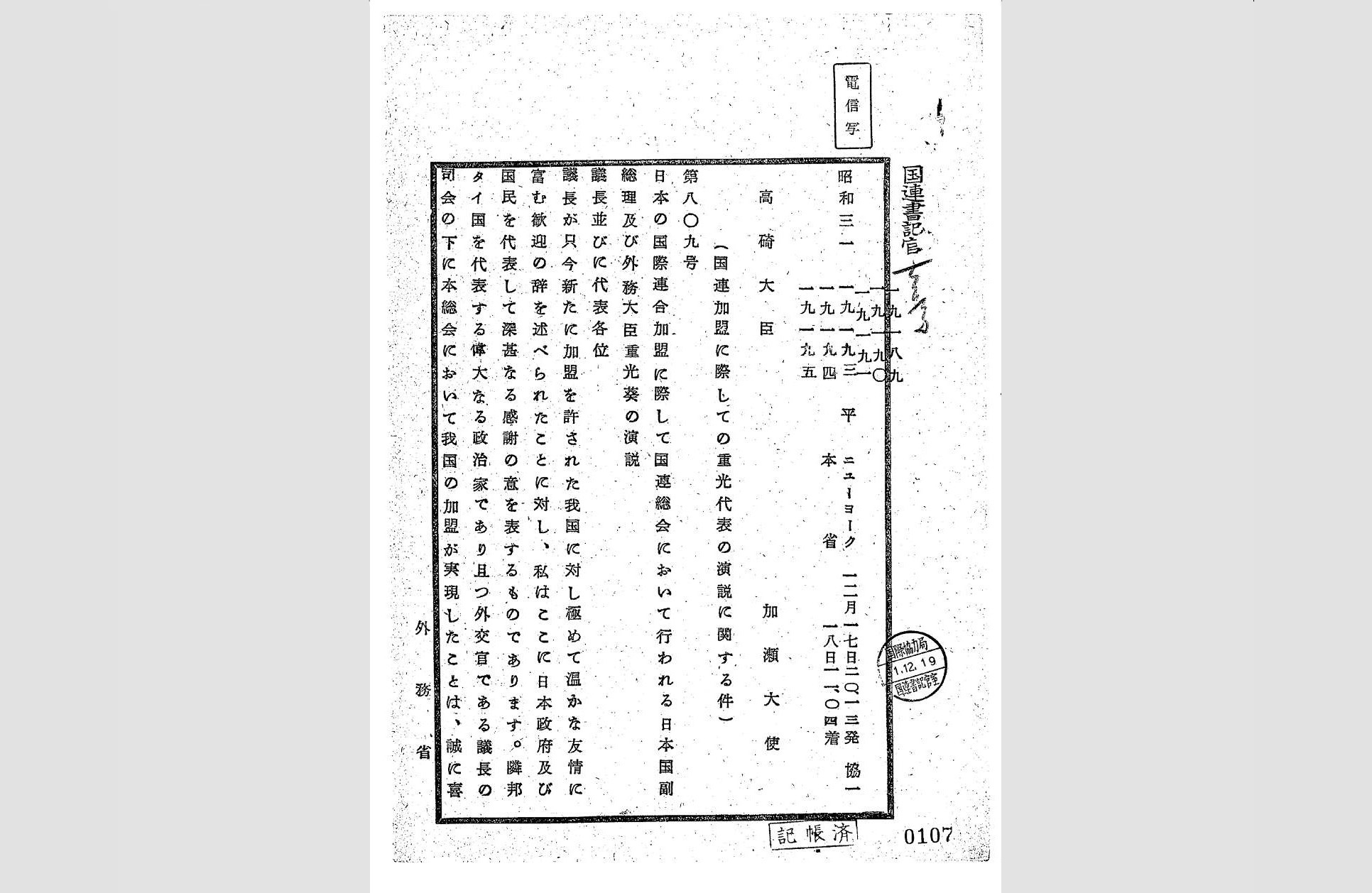
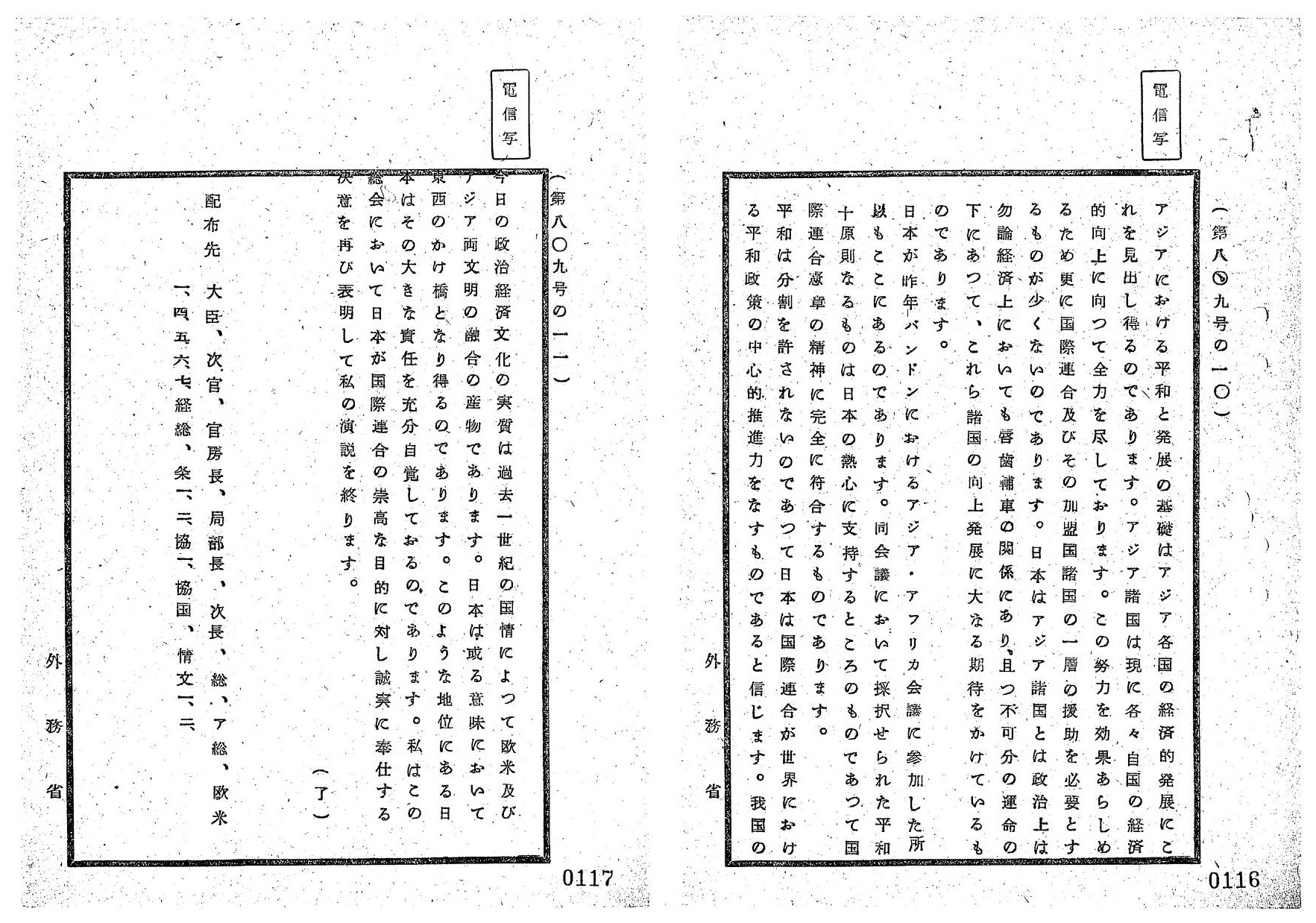
In December 1956, the UN General Assembly unanimously adopted a resolution on Japan’s admission to the United Nations. In a statement to the Assembly, Foreign Minister Shigemitsu Mamoru said that Japan and the Asian nations share a common destiny, expressed his hopes for the progress and development of Asian nations, and noted that Japan could, in a sense, serve as a bridge between East and West. [Document 28] shows the opening and closing sections of a telegram (Images 17–22) conveying the text of Shigemitsu’s statement.
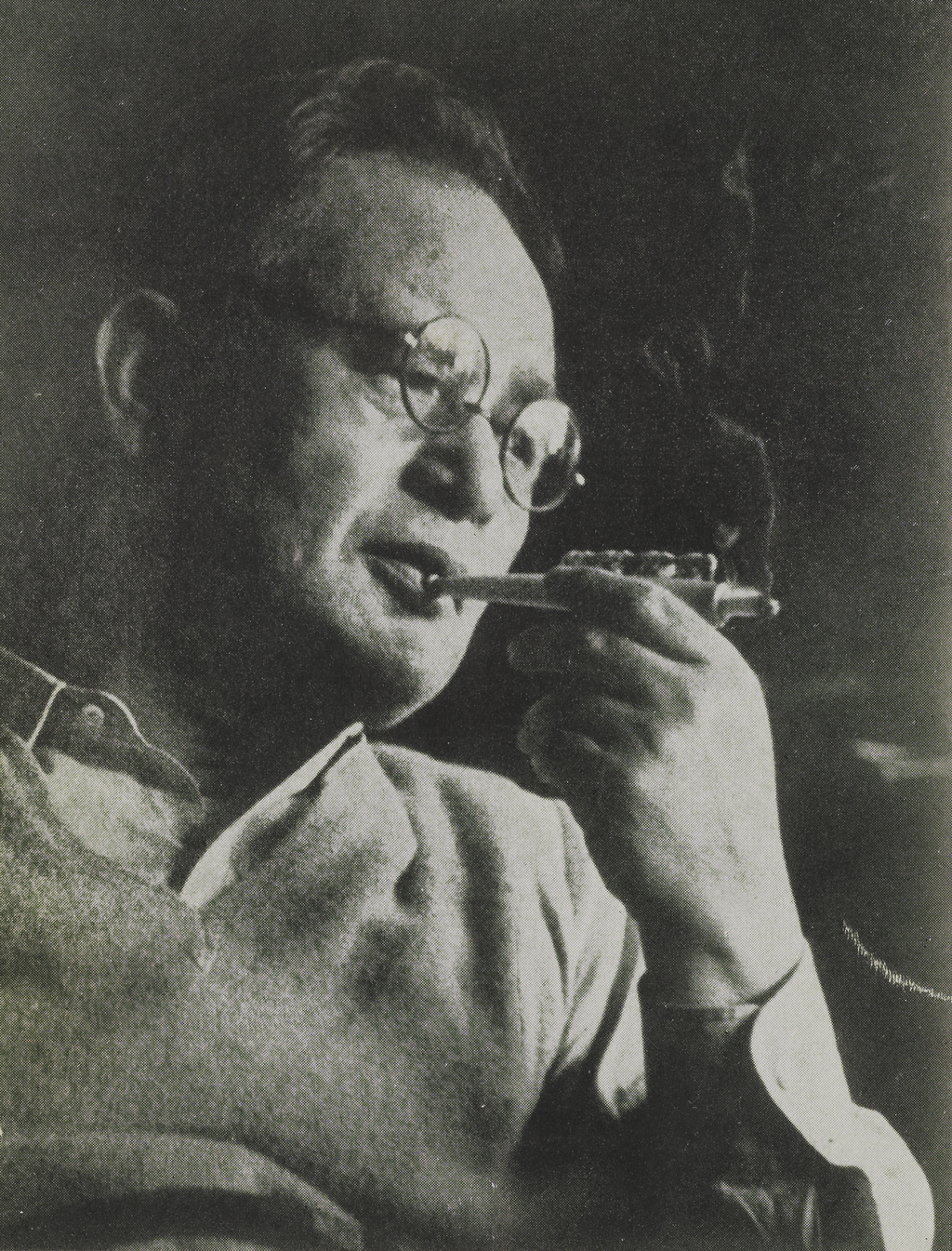
(Reference: Shigemitsu Mamoru (from the National Diet Library’s “Portraits of Modern Japanese Historical Figures”))
